‘Cool Hand Luke’: What “Failure to Communicate” Truly Means
This line is not just a quip but a chilling reflection of power and control in one of cinema’s greatest prison dramas.
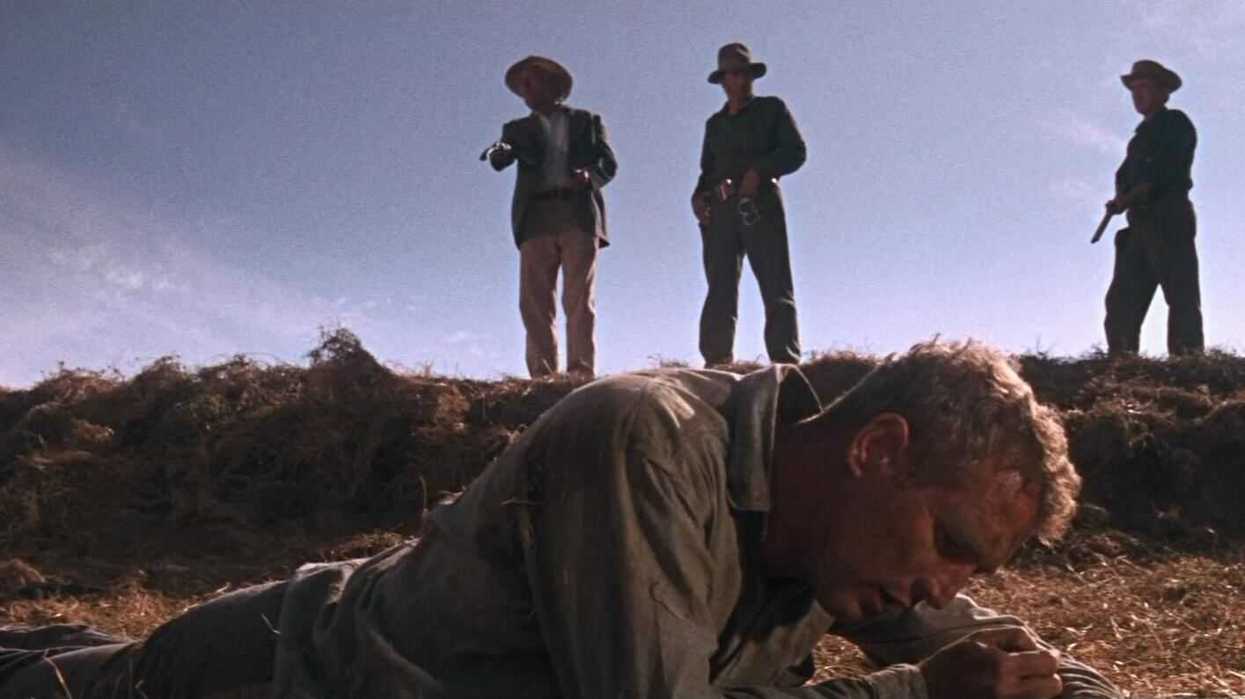
Cool Hand Luke (1967)
We are often in situations—a stuttering political speech, misunderstood hand gestures at a restaurant, or your regular “I thought you had the keys” moment—where we may express our amusement with these simple words: failure to communicate.”
What if I said a prison camp’s Grim Reaper-like warden—our villain—says this to a bunch of chain gang prisoners right after assaulting a new recruit?
“What we’ve got here is failure to communicate.”
Unlikely? Think again. Over the years, we have casually tossed this phrase around, as a pop-culture shorthand, so often that its core meaning is lost on us.
But when the Captain (Strother Martin), the prison camp warden in Cool Hand Luke, tosses it at you, it’s not trying to put a comically sophisticated spin on a chaotic situation. In fact, anything but that. When he assaults the irreverent Luke (Paul Newman) and utters these words to the bystander prisoners, he isn’t making a clever comment. He is making a chilling example out of Luke.
And that’s exactly what we are going to do: explore the bone-deep menace in what appears to be a gentlemanly line.
The Scene: Cinematic Power Dynamics
In Cool Hand Luke, we come across a prison where prisoners do arduous labor while constantly being monitored. The Florida heat is not their friend either; in fact, it’s an accessory to the prison’s correctional system.
As Luke is brought to the labor site and is chained up, the Captain, with a smug southern drawl, explains how it’s going to go for him: “You gonna get used to wearing them chains after a while,” he says. But when Luke mocks his almost detectable fatherly patience, the Captain loses his cool and angrily hits him with a billy club.
Now, as he has had his quick, instantaneous revenge for the mockery, he gathers his cool and lays down the ultimate rule for the benefit of other prisoners—enter, these refined words placed in an iconic line and delivered with a crude smile that has since become the hallmark of the movie.
Kudos to Martin’s performance. He is the soul of the scene. Using a rustic, gentle tone, but with an unflagging stare and a crooked lip curl, he materializes a man who relishes the power disparity, which, of course, favors him. Beyond the words, it’s 100% Martin who makes unconditional submission sound like common sense and violence like a fair consequence.
Digging Deeper into the “Failure to Communicate” Line
At first glance, the line appears to be an understated threat: obey or pay. And perhaps because of that understatement, it comes off as something said to lighten the mood. It’s no wonder that some viewers think of it as a simple sweetening of the communication that went sour.
But the thing about “communication” is that it’s always two-way, something the Captain clearly doesn’t entertain on his turf. For him, it’s his way or the highway. What he means by “failure to communicate” is not that he couldn’t make himself clear—not that he believes he has to—it’s actually much simpler than that: it’s that prisoners, like Luke, think they have the liberty to assert their individuality.
This phrase, in this film, carries violence with it. It goes where the “failure to communicate” goes. It’s a blunt declaration: the state doesn’t allow resistance. The words are simply the velvet lining on the iron fist.
The Second Misunderstanding: Who Really Said It?
We have a tendency to put things together with other things that are in the same league. The same goes for repute. A quote becomes iconic, and we just assume it must be the star (Newman, in this case) who must have said it. Some viewers will even swear they have “watched” Newman delivering it in the movie; a case of false memory, obviously.
But what if it had indeed come from Newman’s Luke? Would it be as celebrated as it is now? It’s No. 11 on the AFI’s 100 Best Movie Quotes. That’s pretty high up in the rank. So, what then?
You see, the line’s legendary status is the product of its delivery. Martin’s delivery, cold and a bit unhinged, is what makes it hit hard. And the fact that it's coming from someone like Captain makes it feel organic. If it came from Luke (which it does later in the film), it would sound like dry humor (which it does).
The suave and polished, almost courtly, line, in its present form, sticks because it comes from someone who is not suave, polished, and courtly—not even charming. It comes from someone who is unrefined and boorish—and drunk on power.
Regardless, even though its appeal is due to the Captain’s rough-and-ready personality, Luke’s delivery manages to tweak it. After he says it and is instantly “dealt with”—which, by now, we know how Captain handles cockiness—Luke turns this statement, originally rooted in tyranny, into a badge of resistance.
Strange Afterlife: From Censored Quote to Cultural Staple
Today, however, the line has taken a slight detour from its intended cultural impact and landed in a place touched with irony. People in power, the likes of corporate managers, military trainers, and police officers, cite it in jest, while ignoring its darker undertones of tyranny and exploitation. Thus, as we established at the beginning, the line’s impression is something to say in “good humor.”
You might say, “What’s the big deal if it has become a little cultural meme? It’s harmless.” But think about it. When someone in a position of power uses it as a catchphrase and inadvertently turns it into a parody, its intended context is lost.
Be that as it may, aside from being a pop-culture meme, the line has made a thematic connection in a more meaningful way. In Pink Floyd’s “Another Brick in the Wall,” the themes of institutional oppression and loneliness draw a parallel to the line.
The Unforgettable Chill of Absolute Control
If you can look beyond the memes, the misquotes, and even the musical recycling, you can see the line still blazing with its raw, inhumane power from the original scene: a tyrant denying men their basic human rights. That dark power is why the line still resonates. The line may sound clever and sassy, but it endures because it eerily abbreviates institutional power into just eight deceptively polite words.
The quote’s talent is in exposing the reality of authority structures: the “failure to communicate” refers to the failure to understand the one-way nature of the communication between the powerful and the powerless.
Therefore, in a way, the line is less a dialogue and more a warning that language can be the first blow in any act of violence.