The Paul Newman Line From a 1967 Prison Classic That Suggested Not Every Situation Demands Action
Cool Hand Luke is an all-time great movie.
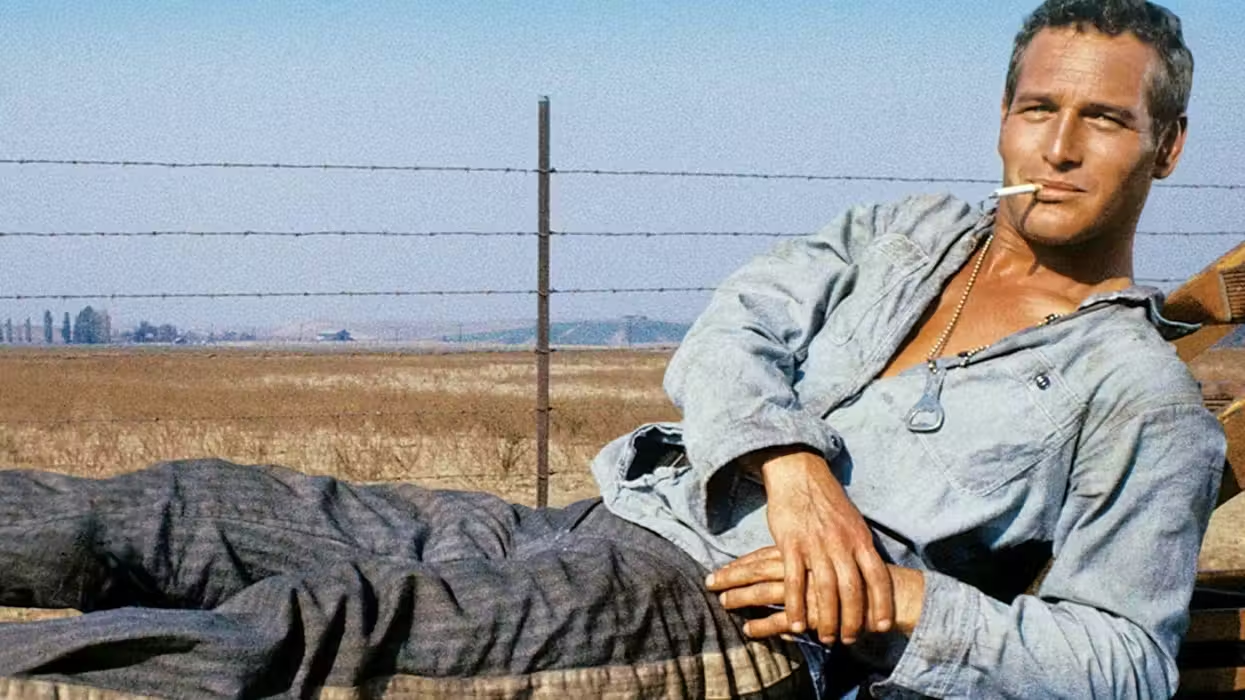
'Cool Hand Luke'
When you're writing a screenplay, you should know that one of the first things a reader is looking for is the stakes. People want to know what's at risk for the characters in the story and why they're setting off on this journey.
But what if you're up against...everything? What if the whole world is sculpted in a way where you know you can't succeed, but you're willing to fight back anyway?
Well, then you've got the plot to Cool Hand Luke, a movie about inevitability. This classic contains a single line delivered by Paul Newman that flips the entire concept and offers a profound lesson for writers, directors, and anyone trying to survive an oppressive system:
"Sometimes nothin' can be a real cool hand."
Let's dive in.
- YouTubewww.youtube.com
The Scene: Winning With Nothing
Okay, so let's track this line to its origin. It comes during an intense, sweaty poker game in the prison barracks.
It's an intense standoff in which Luke faces Dragline (George Kennedy) and the rest of the chain gang. The bets keep rising, and Luke keeps raising.
The tension here is that we know these guys have been bullying Luke, and we also know, win or lose, Luke might lose because they'll beat him up.
As the stack gets higher, Dragline folds. He's convinced Luke is holding a monster hand, but when we see the cards, we get the reveal that Luke was bluffing the whole time.
Dragline laughs, exasperated, and says, "You ain't got nothing!"
Newman smiles that iconic, half-smirk, rakes in the chips, and drops the line: "Sometimes nothin' can be a real cool hand."
This is a turning point in the movie. It explains the title, "Cool Hand Luke," but it also gives us his entire worldview and the point of view of the movie.
Sometimes when you have nothing, you still have something. And that's all it takes.
- YouTubewww.youtube.com
The Philosophy of Resistance
In screenwriting, your protagonist’s philosophy needs to be tested by the antagonist. For Luke, the antagonist isn't just the Captain or the Bosses; it’s the entire institution designed to break the human spirit.
This is set from the very beginning of the movie.
When we meet him in the first scene, he's smashing parking meters. Those are the very definition of institutional oversight, and he's breaking them apart to fight the system.
That doesn't change in jail; even when he's not holding any of the cards, he's always going to play as long as he's alive.
So, how do you rebel when you have zero leverage?
You play your hand with total composure and confidence.
Luke’s rebellion throughout the film is defined by this resistance. Think about the boxing match with Dragline. Luke is hopelessly outmatched. He gets knocked down over and over again.
But he always gets back up, and that's why they love him and how he wins everyone over. It's not about the winning hand; it's about playing.
And guess what? Eventually, Dragline is too tired to go on, and that's a win in and of itself.
Filmmaking Lessons
I don't have to tell you this, but Hollywood is not easy. Breaking into film and TV is going to take a long time and have a lot of moments of defeat. You may not feel like you're holding any of the cards to get inside.
Well, I'm here to tell you to just get back up.
And if you're already there and writing a script, make it hard on your protagonist and have them get back up too. Then we can learn something about them and how they deal with obstacles.
Summing It All Up
Life is hard and will knock you down. Even if you have no cards, sometimes you have to bluff and keep playing. You never know when others will back down.
Let me know what you think in the comments.