‘The Matrix’: Cypher’s “Dorothy” Line Decoded
A closer look at how Cypher’s “Buckle your seatbelt, Dorothy” line connects The Matrix (1999) to a classic cinematic illusion.
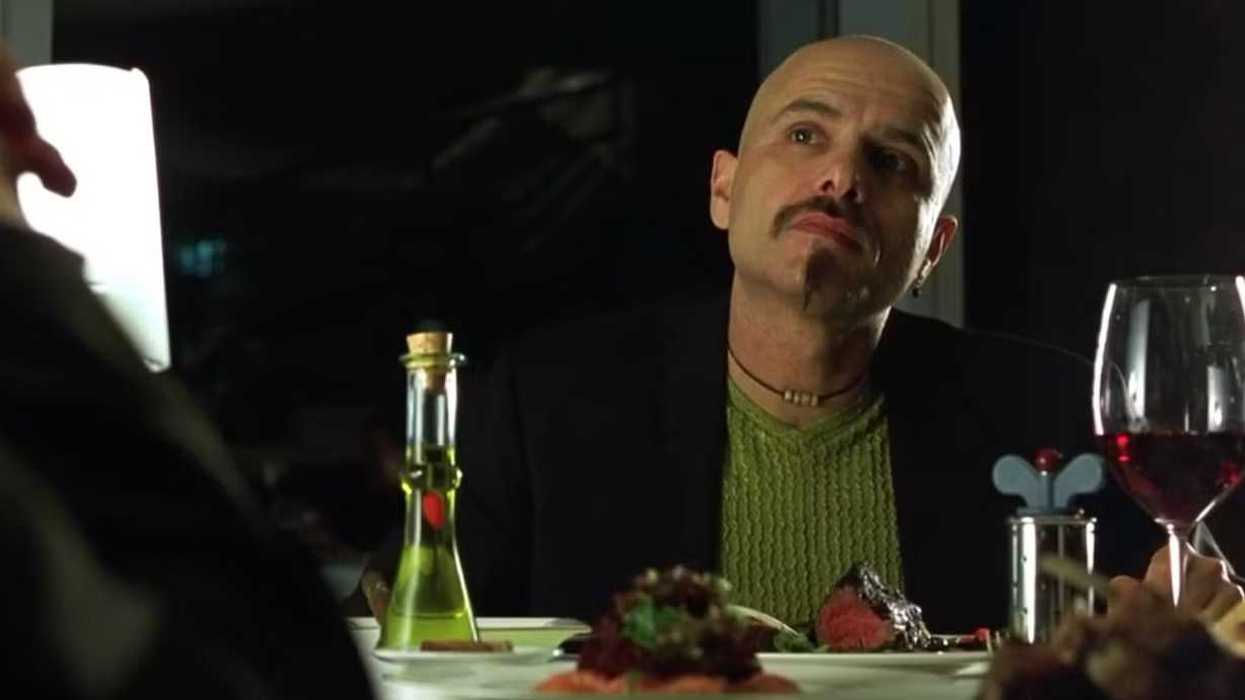
'The Matrix’ (1999)
What The Matrix (1999) offers, a transition from the illusion of a comfortable mundanity into the hard-hitting truth that finally lets you breathe as the real you, is a priceless gift, but not the easy kind. It requires quite a bit of mental preparation.
When Neo (Keanu Reeves) is about to see for himself that the world, the life he knew so far, is nothing more than an elaborate screensaver, Cypher (Joe Pantoliano) offers him a sassy warning. A warning that brings together a 1930s Technicolor dream and a 1990s cyberpunk dystopia.
There is nobody who doesn’t know Dorothy and her journey to the magical fairyland. And if you know The Matrix, you might be able to guess where I am going with this. It is a cheeky, snarky moment within the film and a memorable, quotable moment in cinematic history. In essence, it’s a repetition of Morpheus’ (Lawrence Fishburn) previous warning that there is no going back. It’s just that Cypher does it rather colorfully.
But aside from being a warning meant for Neo, the line’s nod to the past serves another purpose. It’s also a signal for the audience to prepare for a visual shift and a shakedown to their idea of a “home.”
The Moment
After waking up from (what he thought was) a nightmare, Neo realizes the surreal events, such as bizarre agents chasing him, sealing his mouth shut, and planting a robotic tracking device in his abdomen, were not a fever dream but very much reality. Trinity (Carrie-Anne Moss) proves it by extracting the tracking device from his body.
He is then taken to the mysterious and legendary Morpheus. Morpheus tells him that the life he knows is a lie, not just a metaphorical one, but an actual, literal lie. He says that Neo was born into bondage as a slave in a massive, AI-generated virtual reality simulation called the “Matrix.” He gives Neo two choices: to liberate himself and discover the truth (the red pill) or stay bound inside the deceptive virtual reality and continue to be ignorant (the blue pill). Neo takes the red pill.
Now, to start his actual transition into reality, Neo is brought into a room with high-tech equipment. As he is being prepped, Morpheus informs him that the red pill he took is essentially a tracking and disruption device that will sever his connection to the simulated reality.
Confused, Neo asks what that means. Cypher, a crewmember and a human who Morpheus previously freed from the Matrix, replies, “It means buckle up, Dorothy, because Kansas is going bye-bye.”
The Narrative Bridge of a Golden Age Classic
Leaving the Sepia-Toned “Reality” Behind
One of the most iconic cinematic moments comes from The Wizard of Oz when Dorothy (Judy Garland) gets transported from her sepia-toned Kansas reality into the colorful, magical world of Oz.
In The Matrix, Cypher riffs on that legendary Oz vibe. He uses Kansas as a metaphor for the simulated world run by sentient machines. What Kansas is to Dorothy, the Matrix is to Neo: the home. Cozy and comfortable.
Contradicting Destinations, But Synonymous Journeys
Technically, Kansas is Dorothy’s reality, and the Matrix is Neo’s illusion. While Dorothy journeys from her reality to a wonderland, Neo journeys from an illusion to his reality. But to understand the comparison in its essence, focus on their “journeys.” Both of them are traveling from the mundane to something revealing and enriching. That’s how (and where) Dorothy leaving her sepia-toned reality, and Neo leaving his green-toned digital illusion, come together.
The Narrative Parallels
The Puppeteer Behind the Curtain
The narratives of both films draw heavily on the idea of a powerful entity controlling the perceived reality. In The Wizard of Oz, it’s the Wizard of Oz (Frank Morgan), a man with a megaphone, sitting behind a curtain, and calling the shots. In The Matrix, that puppeteer is a complex AI system.
When the writers wrote this Wizard of Oz reference, they basically invited us to look for the “curtain” in this simulated world. In short, this reference is a suggestion that what Neo sees and perceives as reality is just a virtual, AI-generated “projection” designed to keep him ignorant and compliant.
A Legacy of Cinematic Homage
You must have noticed famous movie lines being repurposed in newer movies. That’s how filmmakers pay tribute to the legacies of the older films. When The Matrix used a line from a then-60-year-old movie, it showed how deeply ingrained it still was in our collective memories. This practice also creates a sense of continuity in storytelling.
In the futuristic world of The Matrix, dominated by machines and green code, the human experience is still defined by the stories we told nearly a century ago.
Conclusion
Why does the “Dorothy” moment stand out? Is it because of nostalgia, or is it because it’s an obvious, convenient comparison?
It stands out because it perfectly encapsulates the feeling of total upheaval, the moment when one dimension shatters to reveal another. And also because it reminds us that our understanding of our own world can change in a heartbeat.
It just pulls a narrative thread from a familiar story to put Neo’s journey into perspective. Simple and smart.