Can AI Really Learn Method Acting? Timur Bekmambetov Thinks So
Stanislavsky AI is creating AI method actors. No news yet if they're annoying to be around on set.
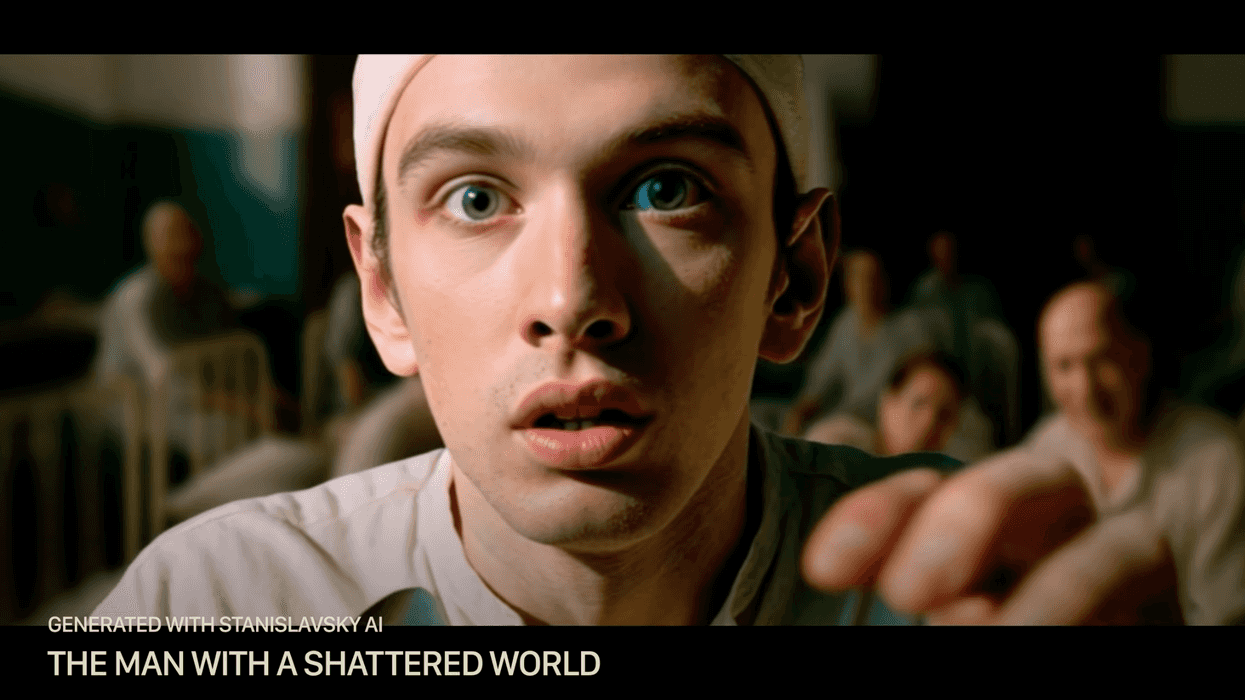
Stanislavsky AI
When I hear the term "method acting," I think about Daniel Day-Lewis and Marlon Brando never breaking character on set. They found this using the Stanislavski method, which looks for the internal method that actors can make external.
Well, now that is tainted by Stanislavsky AI (named after the Russian acting teacher), a new program from director Timur Bekmambetov that he poured $5 million into and has been developing for years.
The general idea that sets this AI apart is that it takes prompts like the ones you'd give actors. They break the whole thing down in Variety.
As Bekmambetov states, “If a character is staring out a window with a sad look, I won’t just tell the AI, ‘He’s sad,’” Bekmambetov, explains, “In the prompt I’ll use the Stanislavski system and write something like ‘His dog died yesterday, and the sunset is reminding him of what it was like to play with his dog in the park.’”
“It’s not about what you want a character to do; it’s giving them a map for how to get there,” Bekmambetov added.
How Does the AI Work?
It feels like everyone is trying to find or make their own proprietary AI. So what makes this one better than any other one?
For Bekmambetov, it has to do with the way you prompt.
Basically, the product is a comprehensive filmmaking tool. Its functions include:
- Script-to-Shot Breakdown: Producers feed a script into the "Stanislavski system," which analyzes it and suggests initial shots and sequences. These are later refined by the filmmakers during production.
- Centralized Collaboration: The program serves as a single interface for all key department heads (cinematographer, production designer, editor, etc.).
- Feedback and AI Direction: This platform allows the team to share notes, provide feedback, and directly instruct the AI on how to fine-tune the film or show.
Why Use It?
The basic pitch for pro to use AI is always the same, and I don't feel like Bekmambetov has a revolutionary reason. He said, “It’s too late — AI is here to stay, so we have to train it responsibly.” Bekmambetov continued, “Don’t think of AI as an angel or as the devil. Yes, it will take jobs, but what we need to focus on is how do we direct it and use it properly.”
I think this is pretty weak, but if the tool makes your life easier, maybe I would try it. And that's his real selling point. You can use this AI to previs the whole movie and show cuts to producers for notes.
That seems like a better pitch to me. It saves time and money, and you can get notes before you do the real thing.
But when it comes to the AI actors in these scenarios, Bekmambetov himself doesn't seem sold on the idea.
He said, “Someone like Angelina Jolie, you can instruct her, but there’s a magic there that can’t be entirely replicated.” And he finished with “Maybe actors will train their own AI models, which will allow them to work in different ways, but creative people can never be replaced.”
Summing It Up
This is an innovative way to train AI, but the only thing I thought made sense about using it was all the previs stuff. And I wonder if that actually saves that much money in the long run.
It's sort of fun to think you're teaching AI how to feel and think like someone, but it might just be easier to use humans forever, because I do find we care way more about them than we do replications of them.
Let me know what you think in the comments.