This 'Donnie Darko' Line is Both Unhinged and Unexpectedly Deep
“Sometimes, I doubt your commitment to Sparkle Motion” is not just a line; it’s the essence of the movie’s unsettling brilliance.
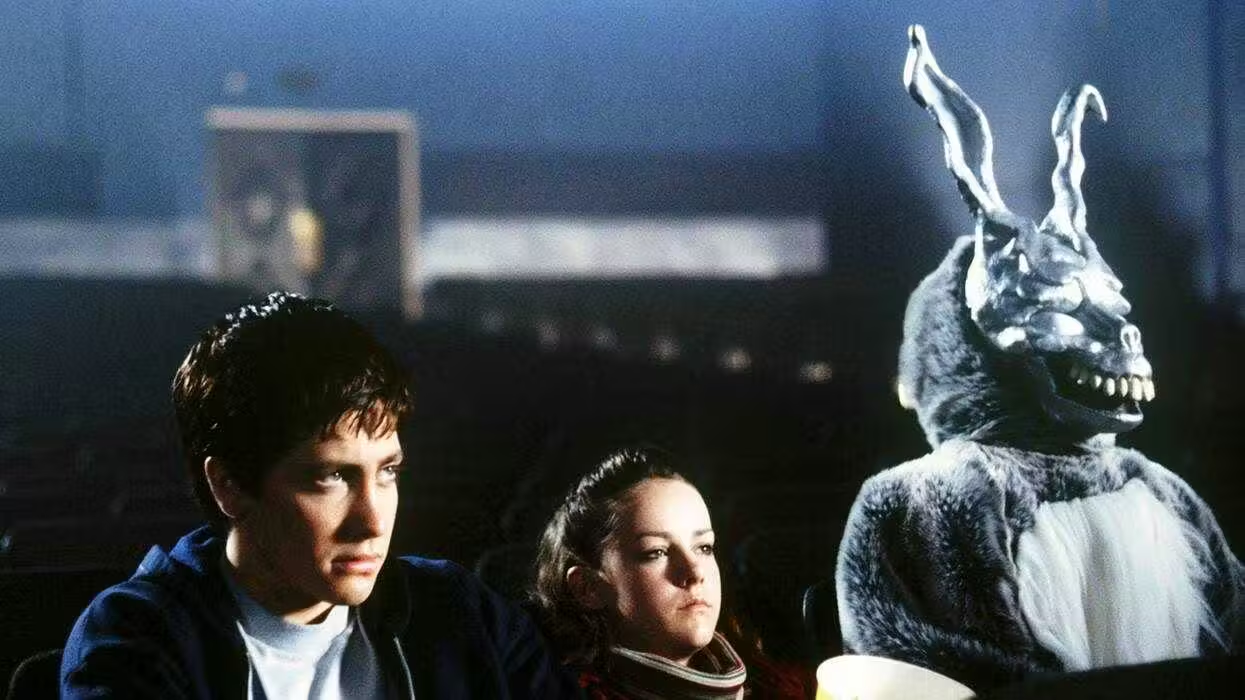
Donnie Darko (2001)
In Donnie Darko (2001), a movie that is as absurd as it is profound, there are several quotable moments. Still, none stand out as prominently as Kitty Farmer’s (Beth Grant) emotional outburst to Rose Darko (Mary McDonnell):
“Sometimes, I doubt your commitment to Sparkle Motion.”
For the context, Sparkle Motion is the school’s all-girls dance troupe that Kitty, the gym teacher, obsessively manages, and Rose’s daughter is part of it. With the group heading to Los Angeles and Kitty unable to go, she tries to rope Rose into chaperoning instead.
The line practically parodies the American suburban sincerity from the early 2000s. And while doing so, it distills the world of the movie perfectly: morality is nothing more than a staged act; kids are props, and delusion is behind each inspirational poster.
Today, revisiting this quote feels like we are unwrapping the era that thought everything was sorted out. But behind this pomp and glory is nothing but sheer panic. The kind of panic that makes you think a dance troupe called “Sparkle Motion” can set things right.
And that’s why, in today’s world, which tries to glam up for the Insta posts so it can hide the unruliness behind, the line still holds true. Because it captures the hapless absurdity of trying to stay perfect in a world that is falling apart.
The Scene: Suburban Madness of Donnie Darko
The Facade of Perfection
Donnie Darko unravels against the backdrop of Middlesex, Virginia, a pristine suburban neighborhood. So pristine that it’s almost sterile. The lawns are immaculately mowed, people are courteous, and gossip is polite enough to sound like genuine concern. The craze for “normalcy” is so rife that no one notices the moral hysteria it is breeding inside.
Kitty Farmer, the Moral Crusader
Every neighborhood has someone who you can call a poster child of morality, even motivational speaking. In Middlesex, that someone is Kitty, the gym teacher in Donnie Darko’s (Jake Gyllenhaal) school. She is not dumb, but when it comes to intellect, she is not very nuanced. She doesn’t recognize the finer distinctions in life; it’s either fear or love for her. Subtleties and intricacies of life confuse and terrify her. Kitty, from top to bottom, is all about spreading (even imposing) optimism and virtue. And her tools? Either the school’s moral curriculum or Sparkle Motion, the girls’ dance troupe.
The “Sparkle Motion” Moment
There is already friction between Kitty and Donnie over their worldviews. The tension escalates when Kitty starts giving “attitude lessons” in school, which are based on the teachings of a local motivational speaker, Jim Cunningham (Patrick Swayze). After Donnie burns down Cunningham’s house and the firefighters find child pornography in the rubble, Cunningham is arrested, much to Kitty’s distress. She wishes to testify in court in his defense, but she is scheduled to travel to LA with Sparkle Motion as a chaperone. So, she urges Rose to go to LA in her stead. Sensing Rose’s hesitation, Kitty has a nervous breakdown and says that she doubts her commitment to Sparkle Motion.
The scene is as unhinged as it sounds. Donnie is publicly mocking her worldview. Her idol is arrested on a heinous charge that she’s certain is erroneous. For Kitty, her world, everything that gives meaning to her life, is falling apart. So, she is desperate to save Sparkle Motion, the only remaining thing that is still intact. Her accusation of Rose comes off as intense and serious, as if it’s happening in a courtroom. And it is—in her moral court.
Why the Line Works
Beth Grant’s Delivery
As Kitty, Grant’s bearing is of a woman who is stuck in her own little world. Kitty is not aware how trivial the Sparkle Motion issue is or how flawed her defense of Cunningham is. So, when she tries to convince Rose, she puts in everything she has. The contrast between her misplaced sincerity and conviction and the absurdity of it all is what makes this moment very funny.
The Darkness of the Funny Moment
As does the entire movie, this line, too, walks a tightrope between satire and despair. It perfectly walks along the movie’s thematic tension: a world that is craving order but is agitated over complexity. The ridiculousness makes it funny, but the truth that’s hidden inside it makes it grim.
Conclusion
What stands in as a girls’ dance troupe within the narrative, Sparkle Motion, has since become a symbol for many things: our obsession with frivolity, our blind devotion to undeserving aspects of life, performative morality, something that seems like the last strand of meaningfulness, and the quiet but constant disarray that defines our lives.
More importantly, it stands in for our fixation on looking composed and together when everything around us is falling apart.
- Jake Gyllenhaal on How to Make World-Changing, Character ... ›
- 11 Box Office Bombs That Became Cult Hits ›
- How Did Christopher Nolan Help Keep 'Donnie Darko' Alive? | No ... ›
- Watch: How 'Donnie Darko' Depends on Sound | No Film School ›
- Lessons Learned at AFF Script-to-Screen: Donnie Darko with Writer ... ›
- An Oral History of 'Donnie Darko': Richard Kelly on the Film's Initial ... ›