5 Screenwriting and Storytelling Tips From 'Dungeon Crawler Carl'
The book sensation has lots of great lessons for writers of all kinds.
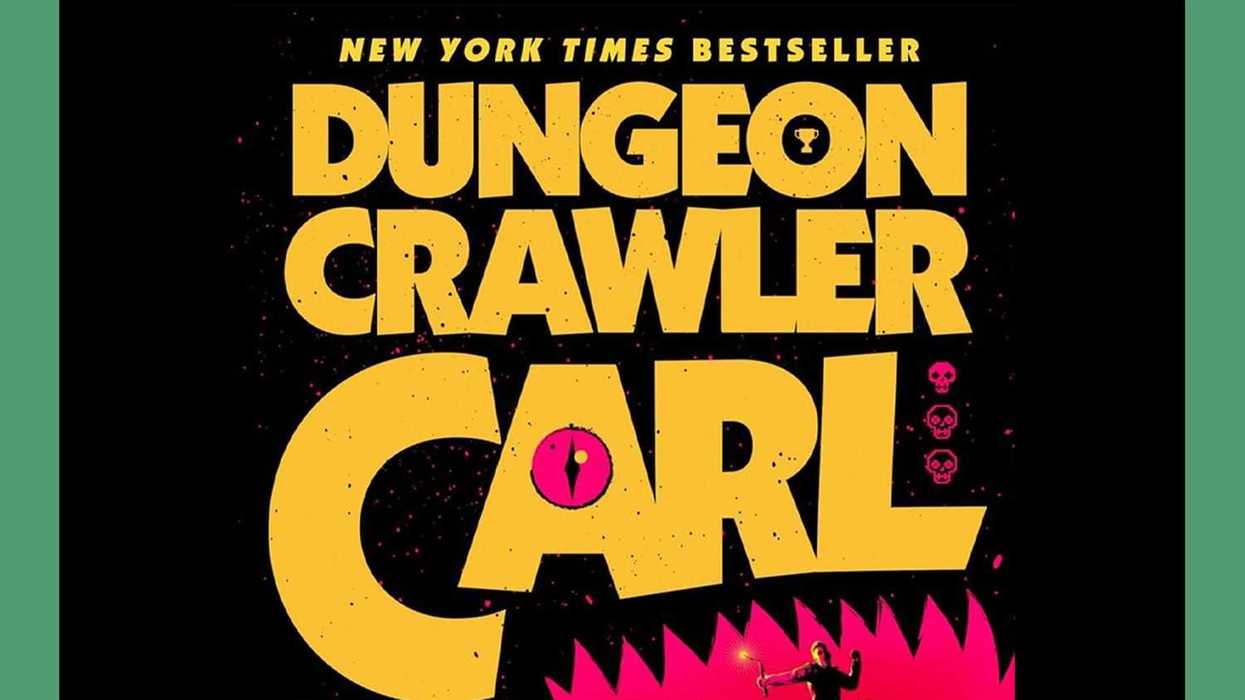
'Dungeon Crawler Carl'
It's kind of crazy to think about, but maybe the biggest panel at this year's Comic-Con was for a giant book series that just sold to Peacock and will become a live-action show very soon.
Yes, I'm talking about everyone's favorite boxer-clag hero and his loyal feline friend.
If you haven’t wandered your way down the staircase and into Matt Dinniman’s explosive LitRPG series Dungeon Crawler Carl, you’re missing out.
These books are immensely popular. They spawned from an online series and now have found their way onto Bestseller lists and into the hearts of millions of fans across the globe.
The premise is wholly unique and drew people in right away.
Earth is flattened by an alien corporation to make way for a syndicated reality TV dungeon crawl. And our hero is a shirtless guy in heart-patterned boxers (Carl) and a pampered Persian cat (Princess Donut), who fight their way through 18 terrifying floors in order to save all of Earth.
There have been eight books released so far, with two more on the way.
I find them to be very fun and really recommend the audiobook because Jeff Hays rocks it. Anyway, today, I want to go over some writing lessons from the book I think we can all embrace.
Let's dive in.
- YouTubewww.youtube.com
1. Contrast Absurdity with Devastating Emotional Stakes
I'll be clear up front. I am only four books in. And I have to tell you, the thing I love the most is how every character feels like they could die at any moment, and the ones who do completely rock my heart.
Even the enemies come back not only with a fury, but with backstories that make you understand the moral complexity at the center of a lot of laughs and violence.
Well, one of the hardest tones to pull off in screenwriting is blending dark comedy with genuine drama. And this book does it so well that it's worth taking a closer look.
It works because no matter what crazy things happen, it still grounds everything in a personal journey and emotional stakes.
If you’re writing dark comedy or genre satire, anchor the emotional beats in absolute, deadly earnestness, and you can get away with anything. The lighter and weirder the surface mechanics are, the more grounded the character motivations need to be in order for people to identify and become fans.
2. Turn Plant and Payoff into a Science
In screenwriting, we talk constantly about Chekhov’s Gun. And you know my stance: the only rule in all of writing is if you plant it, you gotta pay it off.
Well, one thing I got from the first pages of Book One was that Dungeon Crawler Carl takes that rule and turns it into a full arsenal to be deployed in every chapter.
These payoffs reward reading and reading closely.
They make you feel good for being involved.
Dozens of chapters (or scenes) later, three minor setups combine in a wildly clever solution to defeat a boss that seemed unkillable, or explain why a character died, or what people are mad at Carl.
These are not just based on action but also emotional payoffs that explain characters' wants and desires.
So...
- Don't just plant a gun: Plant a battery, a wire, and a chemical compound across three separate scenes. Plant emotional trauma or change the point of view on what we saw before.
- Earn the climax: When your protagonist solves a major problem, it should feel like a genius realization of clues laid right in front of the audience, never a deus ex machina. We want to earn our stories.
3. Establish Character Voices
Man, I cannot tell you how many people overlook this very basic thing when writing. Your characters need to be distinct not just from the rest of the world, but from each other as well.
Put Carl and Princess Donut in a pitch-black room with no character tags, and you will still know instantly who is speaking thanks to the cadence and word choice.
They feel like real people with their own personalities.
Carl is pragmatic, exhausted, blue-collar. And Donut’s refined, theatrical, caps-lock-heavy high-society ideations.
These are kind of old ropes with new flavors, and they pop off the page.
4. Build a Pressure Cooker
Carl and Donue have a very clear overall objective: get through 18 levels of madness to save the Earth. Inside each book is a micro set of goals, which is surviving the levels they're on, or completing different objectives chapter to chapter.
But as they get deeper, things must get harder, and we see the pressure turn up on them as the villains get harder, the casualties rise, and their own nerves fray.
Every great story needs a clear structural engine pushing the story forward. In DCC, the system itself provides built-in narrative acceleration, sometimes even literally, like when they're on a train,
- Floor-by-Floor Mechanics: Each new level changes the environmental rules, enemy scaling, and survival conditions. This worldbuilding gets our imagination engaged so nothing feels repetitive.
- Ticking Clocks: Stairs close, boss timers count down, and resource meters drain. We have time locks that keep the story moving, too.
5. Give Your Protagonist Agency Against the System
What I think has made these books so popular and what got them a TV show is that the journey is not only exciting,b but it feelsl ike it means something.
I find these books to have an impeccable moral center that really digs into the story and gets us rooting for Carl to save mankind.
Carl is actively looking for ways to break the game engine, exploit the corporate sponsors, and turn the show's mechanics against its creators.
He's not just trying to win but to tear the system of oppression down.
Who doesn't sympathize with that?
The Takeaway
High-concept writing doesn't mean sacrificing narrative; it means exploiting your big ideas to make them easier to identify with as a human.
Dungeon Crawler Carl is another in al ong line of genre books that understands that, plus many more lessons, and has exploited it to be the next big thing.
I can't wait to see where the next level takes us.
Let me know what you think in the comments.