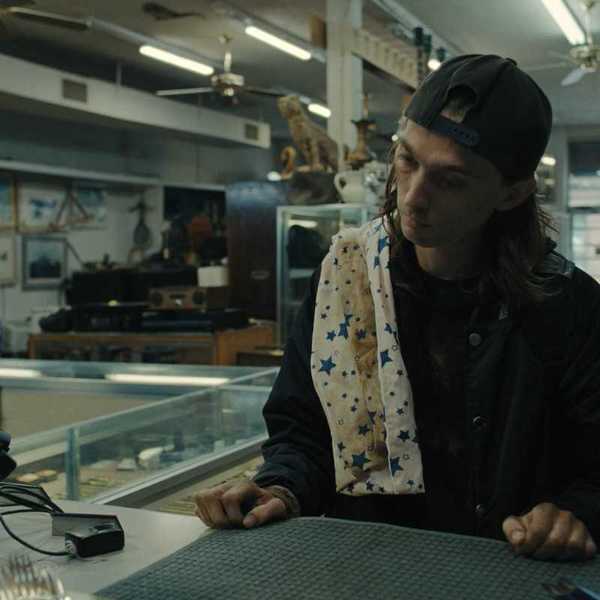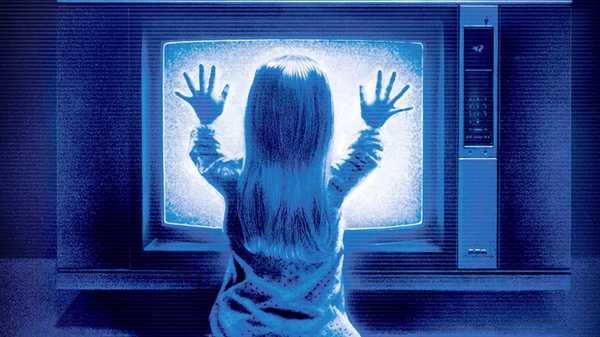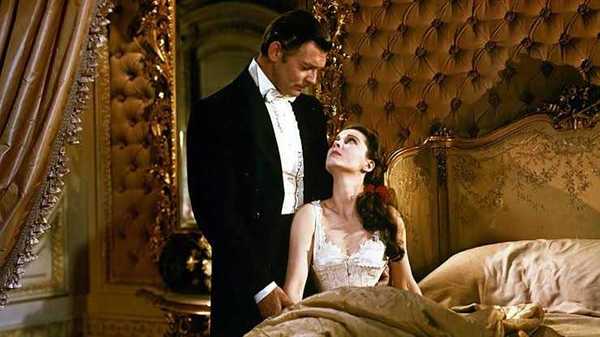
Alongside director Yorgos Lanthimos, cinematographer Robbie Ryan has crafted a visual signature that many will recognize. Low angles, wide lenses, rich colors, a camera that moves when motivated and sits when characters sit, capturing rich colors and contrast in natural lighting.
Ryan has shot critically acclaimed films like The Favourite, Poor Things, and Kinds of Kindness. His collaborations with Lanthimos have become some of the most distinctive works in contemporary cinema, combining precision with a willingness to embrace the unexpected.
With Bugonia, Ryan and Lanthimos pushed into new territory, shooting the entire film on VistaVision format, mostly using the Wilcam W11 camera. It's a format that's seen renewed interest as of late (ahem, One Battle After Another), but their decision came after much testing and some failed experiments, but ultimately serves their determination to work exclusively on celluloid.
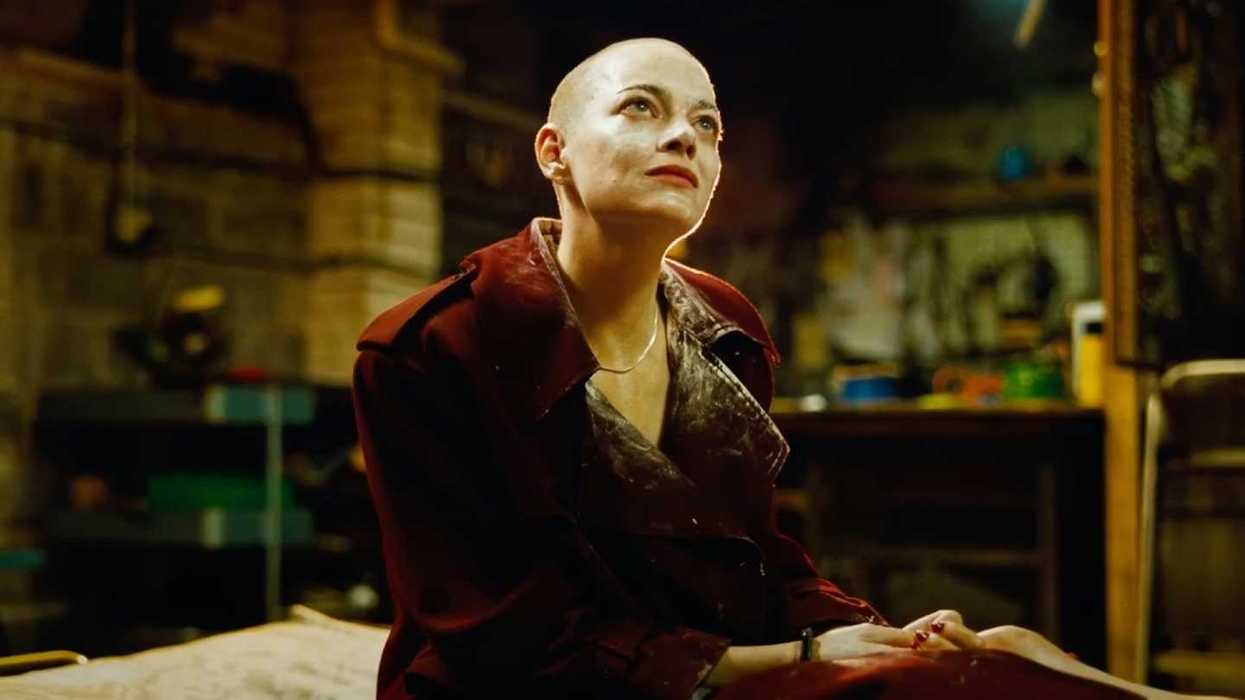
In the film, two conspiracy-obsessed men (Jesse Plemons and Aidan Delbis) kidnap Michelle Fuller (Emma Stone), the powerful CEO of pharmaceutical megacorporation Auxolith, believing she's a member of an alien species called the Andromedans who are intent on destroying Earth through environmental collapse.
No Film School recently spoke with Ryan about what it took to make Bugonia happen. He discussed the technical challenges of the Wilcam W11, the creative freedom that comes from working with a director who lights entirely with practicals, and why he's now "militant" about shooting only on film.
Editor's note: The following conversation has been edited for length and clarity.
- YouTube www.youtube.com
No Film School: I know you're probably getting a ton of questions about VistaVision. It's very popular right now. I know you tested it on Poor Things, but what led you and the team to commit to it fully for this film?
Robbie Ryan: I guess it had a lot to do with Poor Things. Basically, when we were doing Poor Things, Yorgos was like, "I think because we're filming 1.66, we should try and shoot VistaVision." And I was like, 'I always thought VistaVision was widescreen." I always imagined the Hitchcock movies being wide. So, I was completely dumbfounded, and he's so much more clever than I am. He's like, "No, no, it's a 1.50 ratio." Okay.
So, we got talking, and I started doing as much research into trying to get it because we actually thought we'd shoot potentially the whole thing on VistaVision. And I talked to Scott Smith, who's an IMAX technician, and he was going, "Well, really the only cameras that are available at the minute that are usable are these cameras called Beaucams. You could get one of those."
And we talked about this other camera that was a sync camera. I was like, "Oh wow, that's a great one." And he goes, "Oh, but unfortunately we've just got that and we're re-fixing it, so it's not available." So I was like, "Oh, well, we should talk again." And anyway, we endeavored, we shot on the VistaVision, and obviously, the Beaucam was very noisy, so Yorgos is really anti ADR, so he was like, "That's a shame. I would've liked to do more on that, but I can't because I want to have sync sound."
And it was a little bit janky, as the Americans would say, as a camera. It was a little bit of a Frankenstein of its own. Since we shot Poor Things, it's been reconfigured a bit better, that cam. So, Beaucam has now been Panovized, and it's a lot more shoot-friendly, shall we say.
But back in that day, it was like the lenses were Leica lenses. The battery system was really shoddy. And the whole thing just didn't give confidence. So, we ironically shot a reanimation Frankenstein scene with a Frankenstein camera, and the results were amazing. We shot on Ectochrome as well. The quality of the picture that came back was really impressive. Both Yorgos and myself were like, "That's cool."
And the seed was planted, and we went and did another film after that, Kinds of Kindness. And then he told me about Bugonia when we were doing Kinds of Kindness, and he was going, "Yeah, I reckon we should try that VistaVision idea again." And I was like, "All right."
And I got back in touch with Scott Smith, and he said, "Yeah, that camera's been fixed up with this guy called Marty Mueller. So yeah, we're putting it through test scenarios. So, I went with Olga [Abramson], the first AC, to LA, and we tested the camera and really liked it.
And Dan Sasaki had done these prototype lenses, so we tested it in early '23, I think—or end of '23, it was. And they were prepping for the Paul Thomas Anderson film there as well. So it was exciting to see another film that was going to be shot on it. So we go, "Maybe we're onto something here." But they didn't use the Wilcam; they used the Beaucam all the time, even for their sync sound stuff. So, we were the only film that shot with the Wilcam W-11, and it's a surprise it's not being used more because it is a great camera. It's a bit unwieldy, it's a bit big, it's a bit unpredictable.
And I think what happened with it when they were testing it for the PTA film—it's got two motors, one motor runs the shutter and another motor runs the transport. So, if one's working, and the other one's not working, you don't fully quite know that, I think. And that's what happened with, I think, with the Paul Thomas Anderson test. I could be wrong, but what I got the sense is that one of the motors wasn't doing its job, so everything came back black. So we were lucky when we did our test that it didn't, and it was like, this is all right.
And then we did a test with Emma and Jesse in LA, and Aidan, to just check out how they felt with the camera noise. Because it's still, even though it's a sync camera, it's a little bit noisy, and they were able to deal with it, no problem, obviously, thankfully. And so we decided to push the button and make the whole film on this Wilcam W-11.
No Film School: What is the solution? When you have a sound like that as the camera's running, how do you fix that on set?
RR: That is a very good question that only Johnnie Burn, the sound designer, seems to have the answer to, and he is not giving out his secrets, but I do think technology and sound design have really come on leaps and bounds. So he was able to dial it out. Even when we were filming with it, he was like, "Look at this. I could dial it out." But his excuse now is that we are in a big studio space in LA when we did it, and he was able to dial it out. And then when we were filming for real and our first few weeks in the shoot, we're in this basement, he was like, "Oh shit, it's actually a lot noisier than I thought." And then all of a sudden there was a little bit—"Could you put maybe a Furnie blanket onto the camera?
I'm like, "Hang on a minute. You said you didn't have to do any of that, and now you're telling me you have to?" So I gave him a little bit of jib about that, but the sound is great in the film, and Yorgos doesn't do ADR, so it's really impressive. And I have to have my hat doffed to Johnnie on how he did that. But it also made me go, "Shit, man, I'm going to buy a cheaper noisy camera now." So I've just invested in a [ARRIFLEX] 235, which is a beautiful 35mm camera, which I've always loved. And I'm going, "I can probably shoot a drama on this and dial the sound out. Because that's what they did on Bugonia."
 Bugonia Credit: Focus Features
No Film School: I would love to hear a little bit about the visual story that you tell in that basement. The lighting does change as you go throughout. You end up in the end with that wash of red.
RR: Yeah, I'm glad you spotted that. That was a bit of a—Yorgos is sort of post-coloring. It always leans into a colorful contrasty sort. And I think he's going back to what he would've liked in film prints back in the day. Film print is inherently a bit more contrasty than what we're used to with digital cinema projection DCP. So I think Yorgos is always leaning into the contrast and the color that he would imagine a film print to want to be. And we have done 35mm prints of the film to be in theaters. So it's almost adding contrast on contrast, but we got it into a good place.
But to go back to the basement, it was, to be fair, James Price, the production designer, who lit the set because Yorgos only uses practical lights as a light source. So when we were designing the house, which is a fully integral house, we went to the countryside, they dug up the ground, they put a basement in, and then they built a house on top of it. So it's a fully working house that was built within 10 weeks. So, very amazing job by production designer James Price.
He always knew that Yorgos would want practical light, so we were going, okay, we'll have fluorescents in there, and we'll also have some other things you might find in the basement, like an LED work light, or there was a tungsten work light as well. So what I love, doing work with Yorgos, is that he's happy to mix color palettes up as well. So you have green fluorescents, there's a tungsten work light, and then a very cool LED work light. And they all mix together amazingly, and we shot on daylight stock in there.
So, I don't know whether that maybe led to a bit more of a warmer tone to it. It's quite a lot warmer than I remember we were going to go with, but we did test a lot.
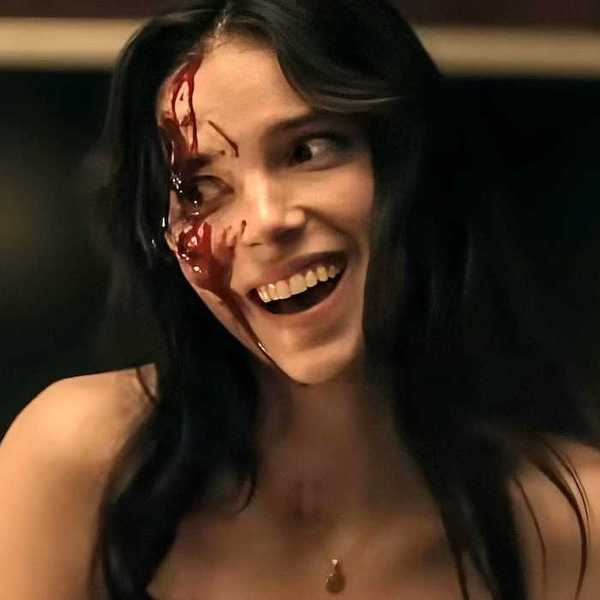
And what's funny is the red at the end is a giveaway, because something happens in the film where somebody does something, but it was still a surprise that that little alcove had a lot of pink kind of finish to it. It was a little bit of, I think it was insulation, or something. The walls in there were a little bit warmer, and we had a tungsten light up there, and for some reason, all the rushes came back really red. So when there's something happens in the film—spoiler alert, I'm not going to go into it—Emma's got a bit of red on her and she goes up and it looks even redder because of this warm womb area in the basement.
So yeah, that was like, I remember both myself and Yorgos going, "That looks really red. Why is that so red?" But it was like, "Eh, that's what it is." So that's why I love working with him. He is open to things being what they are. And if it's different, then that's what it is, and it's kind of, "Let's go with it."
 Bugonia Credit: Focus Features
No Film School: It seems like there's this very interesting set of almost opposites, where he's very precise in some things in terms of movement, but you've talked about this flexibility that he fosters.
RR: Oh, yeah. Is it a paradox or is it a juxtaposition? I don't know. It's an unusual situation, but it's the way he really does work. He will go in and want to see how an actor's going to portray the scene, and then he'll say, "Okay, that's how you're going to do that. Maybe we should try this."
And then I think his technical knowledge and his sensibilities are at such a high level that he doesn't choose boring angles. He's always picking extremely precise thought processes—"That I think will cut with that really well." And his edit mind is really, really super sharp. And his work with his editor, Yorgos Mavropsaridis—he's also called Blackfish—those guys do such a wonderful [job]. I am always excited to see a film that we've shot and not know how it's going to come out, and then go, "Oh my God, look at that." It's so cleverly edited, and they do a lot of things in the edit that are always so surprising and great to see, and it's because he's got a fantastic edit mind, and it helps speed it up, as well. It speeds up the whole day, if you know what I mean.
No Film School: Is it harder for you as a DP to have to think on the fly like that sometimes?
RR: Oh no. I think half of that is the reason I got the job with Yorgos, a little bit, is that I do a lot of that stuff with other directors where they don't like lighting. They don't want to be wasting time watching a DP start getting over their cell value. You're not allowed to do that. So, I think he maybe saw that in my work, that he wanted to have that as a person he'd like to work with. That isn't going to be too, not for a better word, precious. I want to do it right, but I don't like spending time either. I'm quite impatient. So let's go. Come on.
No Film School: Do you have a moment that you're most proud of?
RR: Tough question, to be honest with you. The whole film's a favorite because we chose to pick a format that was a little bit untested, and just the way we got away with it, I guess, is a very heartwarming part of the film process for me now. We're here talking about it, and everybody really likes the way it looks. That's the biggest draw I come away from with it. But I watched it a lot.
I really enjoyed shooting the bees. That was a lot of fun because the beehive was brought to the location that we decided to shoot at, so they installed the beehive about two weeks before we started our main shoot. They got accustomed to the area, and then when we got to go and shoot there. We — the whole crew — had to wear bee suits. So, I never forget, 20 to 30 film crew being told to walk very slowly and had to be all very quiet to go and film a little bee on a flower. I thought that was really funny, and I love the bee stuff in it. I think it encapsulates the film in so many ways... it is the film, what the core of what the film's about.
No Film School: Obviously, you worked with this camera, but is there something else that you learned or took away from the film that you're going to bring into your next work?
RR: Do you know what it's made me do? It has become even more militant that I would really rather not do a feature film on digital. I really only want to do it on film, and I've only got time for that now, so it's great. My agents go, "Oh, that's very exciting. What's the film? Is it going to get a shot on film?" They go, "Oh. Uh." So I've learned that saying that maybe makes me lose some work, but if it means that people are willing to hire me, then they'll hire me with the celluloid film. So, that's great.
 Bugonia Credit: Focus Features
No Film School: Please, please continue doing that.
RR: I almost feel like it's a cause célèbre now. You're like, "All right, we just have to do this. We have to be militant in this regard." And it's coming good. A lot of people are, I think because of the success of it being a bit more used, means it's a little bit more accessible. Producers are a bit more able to get their head around it. Workflows aren't so scary a thing. And there's a relearning as such for a lot of departments within the benefits of shooting on film.
No Film School: Is there one thing that you would say a beginning DP should know? Or a bit of advice you would give them?
RR: I would always say be enthusiastic. Never feel that you should know more than anybody else.
I guess I'm always open to learning new things and trying to figure out... be transparent, be as honest as you can. Honesty, in my head, it's my only way of working. I don't know other ways of doing it. I'm not smart enough to be doing it a different way.
So brutal honesty, I think, is a really important trait as a cinematographer. And I think a cinematographer actually has the option to be able to say, "I don't know if that's great," or "Is that great?" So you can use it in an advantageous way. Whereas if people are honest in other areas of the film, it might get a little bit, it could not go the same way—it might hurt people's feelings—but I find a cinematographer can be true and honest, and that is a good bedrock to move on from.
And then everybody's aware of it instead of, for instance, "I don't know what this lens is," don't try and say, "Oh, I think this is... I know this is going to be great." Saying something that you don't necessarily know is true is definitely going to come back on you. Whereas if you go, "I dunno what's going to happen here, but let's try it." That's a good thing.
No Film School: Is there anything else you wanted to add about the film or your work?
RR: Just a thanks to all the people who worked on it. It was a very collaborative effort. And first AC Olga Abramson is amazing. She had a good team, and they worked really hard to get that through, and nobody really knows the extra work that was involved to do that.
And I really can't say how exciting it is to get a film shot on VistaVision, and I'm sure this year's the VistaVision year. [There is] talk of a new camera getting manufactured by somebody. I don't know if I should mention their name, but that's exciting that there's a new potential VistaVision camera getting made, which is great.
No Film School: Congratulations on the film. I'm sure that you're going to get some attention later in the year.
RR: Oh, who knows? My last thing is please go see it in the cinema because this world where a lot of films are getting—it’s funny, I've been to a lot of promotion for it and a lot of the internet is loving the whole thing about, “Look at how this film would cost this much money, but it's not getting any decent box office.”
This is because the erosion of the window from theatrical to streaming has gone. And it means people, including myself, go, “I'm sure I'll catch it down the line.” So they don't want to go to the cinema. Whereas when that was maybe a little bit stronger, that time where you'd have three months in between or two months in between, that would mean you might go to the cinema to see it.
So please go to the theaters to watch Bugonia because it is designed for theaters, and it is so much more fun watching it on a big screen.
- 8 Movie Roles That Demanded Extreme Physical Changes ›
- 'Kinds of Kindness' DP Robbie Ryan Shares Set Life With Yorgos ... ›
- Emma Stone's 'Bugonia' Earns Six-Minute Venice Ovation ›
- 'Bugonia' Ending Explained: Unpacking Everything It Says About ... ›
- What Bugonia Can Teach You About Building Tension ›
- Yorgos Mavropsaridis Has One Editing Rule: Don't | No Film School ›