Why The A-Bomb Rodeo in ‘Dr. Strangelove’ is the Darkest Joke in Movie History
This is how Stanley Kubrick turned satire into terror.
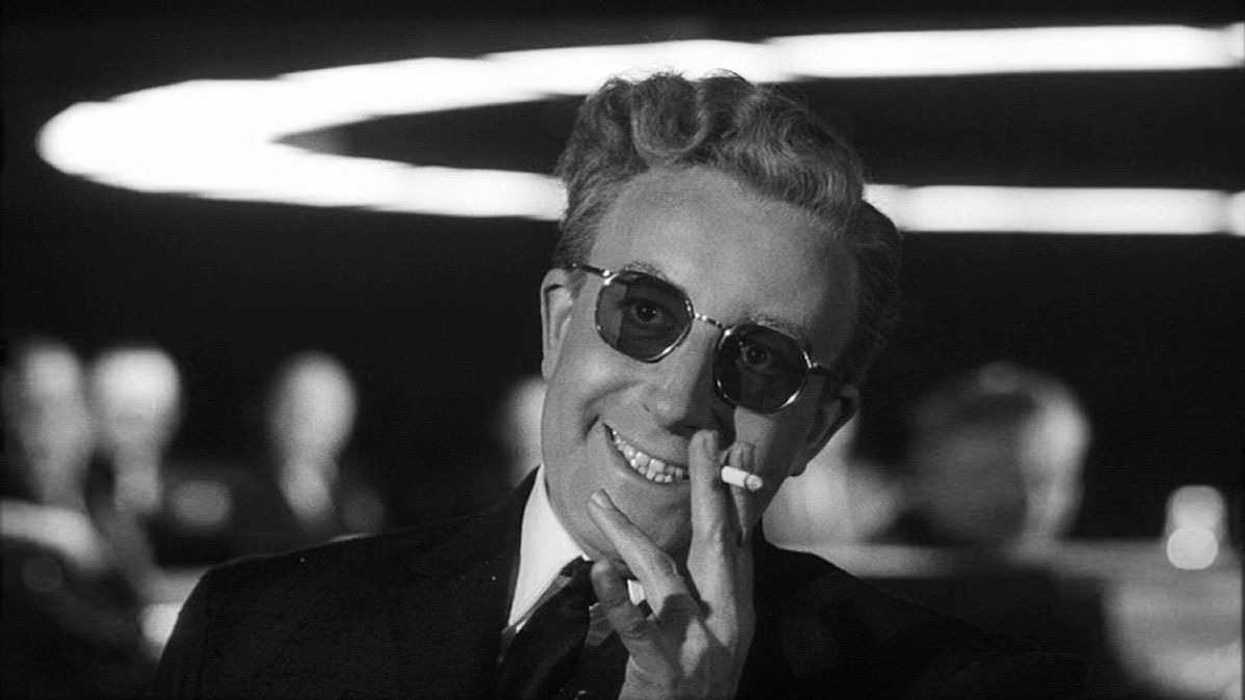
'Dr. Strangelove or: How I Learned to Stop Worrying and Love the Bomb' (1964)
With Dr. Strangelove (1964), master filmmaker Stanley Kubrick crafted one of the most compelling and audacious dark comedies of all time in an era that was all too familiar with the threat of global warfare.
Released during the height of Cold War tensions, the film used satire and dark comedy as tools to explore the threat of nuclear annihilation. Stanley Kubrick’s films are famously known for being spectacularly layered and meaningful. Dr. Strangelove was no stranger to this notion.
The film cleverly leverages absurdist comedy through an ensemble cast led by the incredible Peter Sellers, who played three pathbreaking, different roles. Every laugh generated by the movie is equal parts terrifying and dreadful.
Let’s dive in and explore what makes the A-bomb rodeo sequence in Dr. Strangelove the darkest joke in film history.
Why did Dr. Strangelove Have To Be Funny?
Before we get into the specifics of the A-bomb rodeo scene in the movie, let’s try to analyze why Dr. Strangelove had to be funny.
To begin with, the idea of nuclear warfare, on every imaginable level, is a terrifying one. Kubrick probably thought that the best way to get his message across was by using comedy as a medium and a tool to carry it. The subject of the film was perhaps too grave for a drama or a thriller. Using comedy as a medium would deliver the film’s message subliminally rather than being too obvious and upfront.
The film isn’t just a dark comedy; it’s also cleverly surrealistic. Kubrick consistently allows the audience to confront the absurdity of a geopolitical situation hinging on decisions that could cause irreversible mutual destruction. By placing the audience directly in the decision-making rooms where, essentially, the fate of humanity is being debated, comedy serves as a gateway into potential actions with grotesque implications.
Most importantly, think about the number of people who would perhaps not watch Dr. Strangelove if it weren’t a comedy. It would be quite awfully significant, and understandably so, considering the sensitivity of the subject at the time.
Stanley Kubrick uses comedy almost as an invitation into a world that is terrifying on every level. Humor disarms our defenses and makes a movie more accessible. It is this accessibility that allows a filmmaker to deliver their message, and with Dr. Strangelove, Stanley Kubrick did it as well as one possibly could.
Why The A-Bomb Rodeo Is The Darkest Joke Hollywood Ever Told
The A-bomb rodeo sequence finds itself towards the end of the movie when Major Kong, played by Slim Pickens, rides a descending nuclear bomb like a bronco. He proudly waves his hat almost nonchalantly, blending cowboy demeanor with apocalyptic devastation.
What is essentially a man plummeting to the most obvious death scene one could imagine became one of the finest dark comedic moments in film history. It perfectly encapsulates the film’s theme of humanity’s distasteful flirtation with actions that could cause total and utter destruction. Major Kong’s casual, cowboy-like bravado is filled with intent. He looks no different than a man who could be riding a bull or a horse for the first time. When we consider the fact that he rides a bomb, the very idea of his “excited behavior” is so outlandish, it’s petrifying.
The idea of an apocalypse is depicted as something almost enjoyable in a moment that occurs a few minutes before the film ends. Kubrick intentionally wants to leave us with this. It makes us feel as though war isn’t feared or avoided by some people; it is openly accepted, as though it were a game, and its irreversibly devastating effects are ignored.
The A-bomb rodeo sequence at the end of Dr. Strangelove is the darkest joke Hollywood has ever told us. It carries deeply devastating truths about the nature of war and the fearlessness that takes over humans precisely when they should feel fear.
What Dr. Strangelove Teaches Us About Using Dark Comedy With Purpose
Like all of Stanley Kubrick’s films, there’s a lot to learn from Dr. Strangelove and its writing. Here are three takeaways that specifically focus on leveraging dark comedy to deliver a message.
Use Dark Comedy To Avoid Preaching
Dr. Strangelove consistently maintains its dark comedy tone without ever preaching. In fact, the film finds comedy in moments that are entirely antithetical to the very idea of preaching itself. What I mean by this is that one would likely preach against what Kubrick’s characters do in this film. Hence, the movie does the opposite of preaching. It finds dark humor in moments that are worryingly bleak and dreadful. Typically, audiences don’t react well to a character preaching at them, and Kubrick was well aware of this.
The Joke And The Message Must Be Bound Together
Stanley Kubrick chose to end the film with the A-bomb sequence in a manner that ensures that the dark comedy aspect of the scene is inseparable from the message it carries. In other words, there is no joke inserted to make you laugh. The joke and the message are two sides of the very same argument.
Commit To Your Story Fearlessly
This is perhaps the most important takeaway from Dr. Strangelove. Stanley Kubrick does not use dark comedy in bits and pieces. He commits to it fully, as proven by the film’s grim conclusion. In fact, as we’ve discussed, the harshest and darkest comedic moment in the film is the A-bomb rodeo sequence at the end of the movie.
Summing It Up
With Dr. Strangelove, Stanley Kubrick delivered one of the most powerful and eye-opening dark comedies of all time. He ingeniously used humor to mask a devastating movie plot, brimming with characters who spend all their screen time discussing what would essentially bring humanity itself to an end. The A-bomb sequence in the film is Kubrick leveraging his dark comedic genius at the highest level, and, quite certainly, it is the darkest joke in movie history.
Which is your favorite Stanley Kubrick film? Tell us in the comments.
- The 10 Funniest Horror Comedy Movies You Need to Watch This Year | No Film School ›
- Judd Apatow’s Must-Read List for Filmmakers and Comedy Nerds | No Film School ›
- 8 Comedy Principles Screenwriters Should Try | No Film School ›
- How Stanley Kubrick Mastered Film Noir (and Used It to Launch His Career) | No Film School ›