How Fincher and Tarantino Carved Down a 230-Page Script for ‘Cliff Booth’
The collaboration between this two great is astounding.
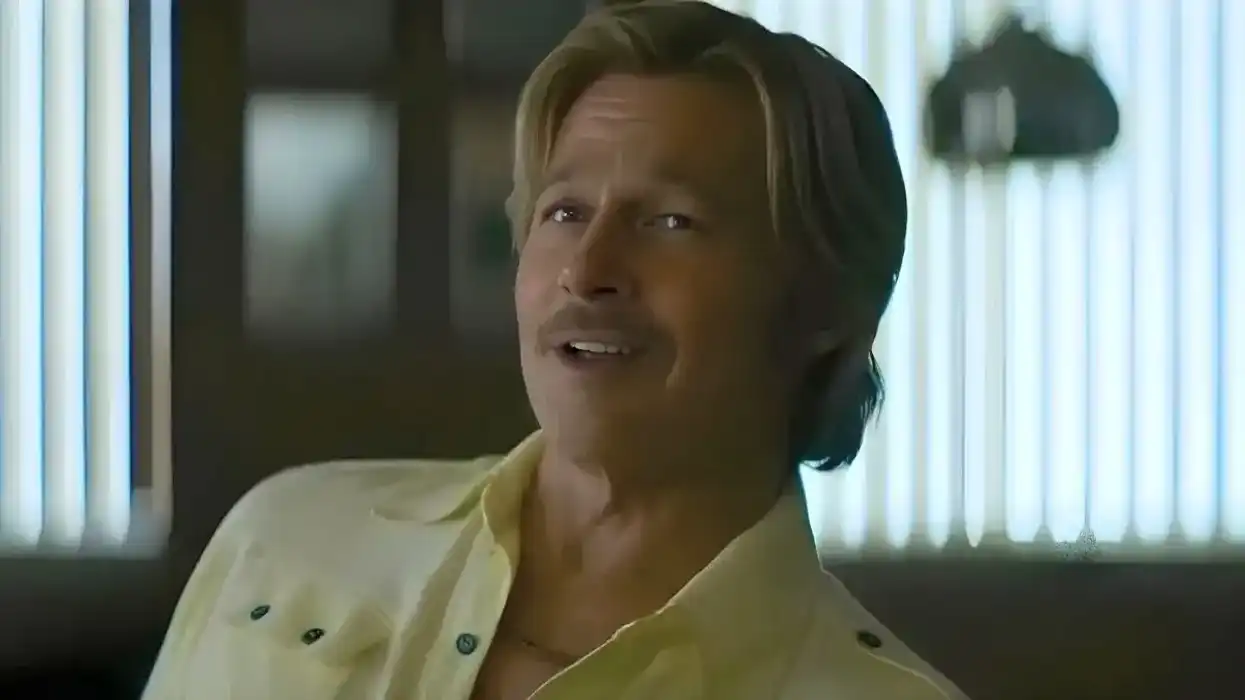
'The Further Mis-Adventures of Cliff Booth'
My most anticipated movie of the year is easily the David Fincher and Quentin Tarantino collaboration, The Further Misadventures of Cliff Booth. It's a pseudo-sequel to Once Upon a Time... in Hollywood, and it brings back Brad Pitt's stuntman character for a mystery in 70s Los Angeles that's sure to be one of the most talked-about movies in a while.
Everything from Netflix paying $20 million for the script, to the limited IMAX release, to Tarantino letting someone else touch his work has been a fascinating study in auteurism.
Let's dive in.
How Fincher and Tarantino Collaborated
When Tarantino gave Fincher the script for Cliff Booth, it was a 230-page behemoth that took Pitt's character and gave him a Los Angeles experience all his own.
So, how did two of the greatest filmmakers of all time work together to get that massive story to the big screen? They told Empire:
Fincher: The first draft I read was 230 pages. It was essentially two movies. And somewhere in there was the Venn diagram of what Brad wanted to do, what I want to do, what Quentin wanted to do. Not “want to do”, but the areas we would focus on. I liked the idea that it’s a story around a bonfire. It wasn’t about the plot as much as it was about how the participants collided with one another in the back alleys of Hollywood in 1977. Just the 60 pages we cut informed a lot about that time.
Tarantino: I take these giant novels I write and I adapt them into a movie every single solitary day of the shoot. And now David and I had to do that [beforehand].
For Tarantino, script length is part of his process. He said in that Empire article that he often treats his massive screenplays like novels that he adapts live on set every day.
But Tarantino wasn't going to be the guy directing this movie; Fincher was, so how do you translate that style to someone else?
They explained,
Fincher: All movies are a sifting process, but when there are ten pages dedicated to explaining what radio of that period sounded like as you were punching your ACDelco in-dash [radio]…
Tarantino: (laughing) The production manager doesn’t need to read that!
Fincher: But it informed a lot about the fringe aspect of these people’s interests. And certainly Cliff is on the margins. There was a choice at the beginning: was it a movie or a series? In the end, it’s a long movie, but it’s the right kind of telling. It’s around two hours and 20 minutes…
Tarantino: That’s a short movie for me!
From "Hangout Movie" to Crime Paperback
While Once Upon a Time in Hollywood was built around a slow-burn "hangout" structure leading up to a famous historical date. You have this inevitable fear, knowing where this will all head, so even the hanging out has this dire ghost haunting it.
Tarantino sees this sequel through a different narrative lens.
"Once Upon A Time In Hollywood was a hangout movie, but you know you're going to Cielo Drive. It has this force, thus I didn't need a lot of plot," Tarantino explained. "This script was very different. To me, it had the flavour of an Elmore Leonard paperback: a crime-story paperback feel."
Fincher echoed that sentiment, emphasizing that the focus remained on character collisions rather than conventional plot mechanics.
"It wasn't about the plot as much as it was about how the participants collided with one another in the back alleys of Hollywood in 1977," Fincher shared.
The Filmmaker's Sifting Process
I am pretty interested in how two auteurs found common ground playing with these big ideas. Even when cutting dozens of pages to keep the narrative tight, Fincher ensured that the foundational character work Tarantino built into the prose survived the trim.
Which is kind of crazy to think about someone with as much voice as Fincher leaning into Tarantino's voice on the page.
"All movies are a sifting process... My process was always, 'How am I going to fit all of this in?' I want the audience to experience what I read in 230 pages, even if we can't do all of that," said Fincher.
Another interesting tidbit is how Fincher compresses things Tarantino wrote to be shorter. Sort of like the idea that he compresses Sorkin as well. Here's them talking about working together and putting the whole idea ot the screen.
Fincher: (laughing) I remember when you were going back to Tel Aviv and said, “Call me when you have it assembled. And, Dave, it’s gonna be four-and-a-half hours, don’t freak out.” So I called and said, “I have an assembly. It’s two hours and 18 minutes.” Quentin was like, “WHAT?! What did you do?” But my process was always, “How am I going to fit all of this in?” I want the audience to experience what I read in 230 pages, even if we can’t do all of that.
Tarantino: But I don’t think there’s a scene that I wrote that’s not in the film.
Fincher: Yeah, it’s compression. I think of myself as an interpreter. The number one person I want to make happy in any cinematic experience is the writer. Then the actors. Then me… and then the studio.
Quentin, the office at Red is filled with posters — did you decorate that?
Tarantino: I did! I turned it into my apartment with all my obsessions. David’s like, “Who the fuck is that?” “Well, that’s George B. Seitz, what do you mean who the fuck is that?”
Fincher: During rehearsals [and pre-production] we did like six/eight weeks of, “Defend your life!”
Tarantino: That was the best part about it, frankly, the most romantic part about it. David was like, “I don’t want you going up to your house in the Hollywood Hills and just sending me shit. I want you to have an office at Red. I want to talk to you for two hours every single fucking solitary day.” And maybe we’d just bullshit, but I saw him every day. That was, to me, as important as making the movie: having the excuse to hang out with David all week long.
Fincher: And there is osmosis happening during that. I’m asking a lot of infantile and irritating questions, but it’s about homing in on exactly what that perspective needs to be. I never want to have contempt for characters. I never want to watch a character in a movie make a mistake that is so fucking obvious and against their own best interest that you wonder... I mean, it can’t just be for the sake of plot. I wanted to tear at the fabric.
As it turns out, Tarantino was ultimately thrilled with the result. He had said previously that Fincher was the only person he'd trust with his work, and I am really frothing at the mouth to see how this mashup turned out.
We haven't had anything this interesting in mainstream movies in a while; it's like a masterclass in collaboration, voice, and who brings that to the movie and the screen.
If nothing else, this will make a helluva double feature at The Vista or New Beverly in the coming months.
Are you going to see Cliff Booth in IMAX? Better get your tickets now.