In the world of high-stakes television, the environment is often as much a character as the actors on screen. For The Last Frontier, that environment is the unforgiving, bone-chilling landscape of the Arctic. The setting that demands more than just aesthetic excellence from its creative departments. It demands survival.
At the helm of the hair department is Frederic Belanger, a designer whose work transcends simple styling to become a vital piece of the show’s narrative architecture.
That's why I was so excited to sit down with him and hear him pull back the icy curtain on the logistical "monster" of a multi-unit production.
Let's dive into the interview.
- YouTubewww.youtube.com
No Film School: Working in extreme cold and harsh weather must have presented unique challenges. How did the environment influence your approach to styling hair for the characters?
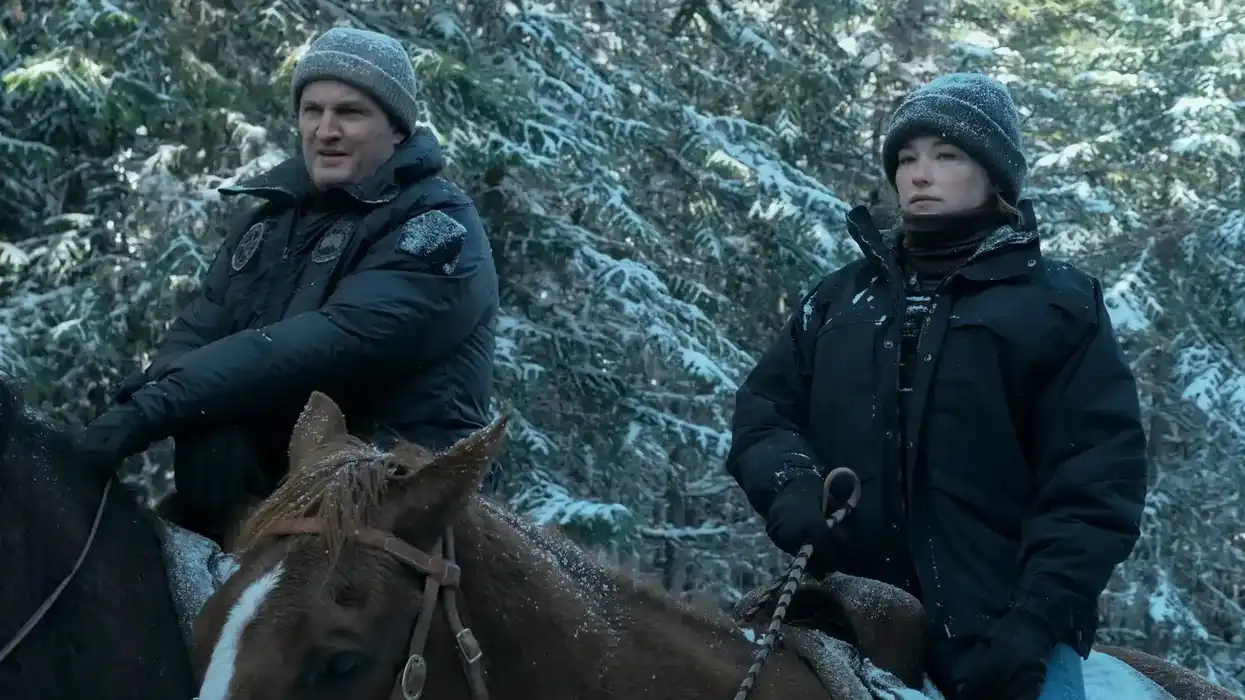
Frederic Belanger: Filming in extreme cold shaped absolutely everything about how we approached the hair work. The environment wasn’t just a challenge; it actually became one of our main sources of inspiration. Every morning, we’d see crew members with frozen beards, eyelashes, and hair formed from the mix of breath condensation and the icy air. My team and I were constantly taking photos of these moments. They became our reference points for creating frozen looks that didn’t feel stylized, but genuinely real.
That authenticity was essential, especially in The Last Frontier’s universe, where the world is harsh, raw, and unforgiving. And because some days were warmer and wouldn’t naturally give us the same frozen textures, it was even more important that the hair work supported the narrative of extreme cold. Everything had to feel consistent on camera.
We also needed to think about transitions. How does hair behave when someone walks from the brutal cold into a heated space? What does defrosting actually look like? For those moments, we introduced a bit of dampness, more texture, and a slight collapse at the roots. Same thing for hair that’s been under a winter hat for hours; it needed to look flat, lived-in, and affected by the elements. These are subtle details, but they’re what allow the viewer to fully believe the physical reality the characters are moving through.
 'The Last Frontier'Credit: Apple TV+
NFS: Haley Bennett’s character, Sidney, goes through an emotional and physical arc. Were there specific hair changes you built in to track her transformation?
FB: Working on Sidney Scofield was a truly special experience, especially because I had the chance to collaborate with the legendary Garren in New York, who’s a close friend of Haley Bennett. Designing a look alongside someone of his calibre is something I genuinely value. As a Head of Department and Hair Designer, I really believe in collaboration, and working with someone who helped shape some of Hollywood’s most iconic hair moments was an incredible opportunity.
From day one, Sidney’s hair was built as a storytelling device. When we first meet her, she’s composed, controlled, very buttoned up, to the point where you almost wonder what she might be hiding behind that polished exterior. That’s why her look is so sleek and straight. It communicates the discipline she wants people to see, the emotional distance she keeps from the world, and the armour she relies on. She lands in Fairbanks to fix an impossible situation, and her hair reinforces that sharp, impenetrable façade.
As the season unfolds and that composure starts to crack, her hair follows. We gradually shifted into Haley’s natural texture, enhancing it with R+Co’s rose water spray and a touch of R+Co Optical Illusion oil to soften the shape and introduce vulnerability, almost like the armour loosening one layer at a time.
Then the stakes rise to pure survival. Showering isn’t an option anymore, and the façade disappears completely. For that stage of the arc, I worked a blend of R+Co Bleu heavy paste and oil into the roots to create that believable mix of sweat, grit, and exhaustion. Haley committed to that transformation fully. She wasn’t afraid of looking distressed, dirty, bloody, or undone, which gave us the freedom to push the realism exactly where it needed to go.
We also had the flashbacks, which required a completely different look and presented their own challenges. Haley’s hair was in a blunt long bob at the time, so to achieve the length and movement we needed, we built the flashback hairstyles using a half wig. Getting that blend right took almost a month of testing and refining. Realism is incredibly important to me. I never want the audience pulled out of a moment because a wig looks “wiggy.” The final result was seamless, and it allowed the flashbacks to feel grounded, specific, and emotionally distinct. Changing a character’s hair for different timelines is a powerful storytelling tool, and in this case, it really helped support the clarity and depth of Sidney’s arc.
 Frédéric Bélanger.Credit: Impact24
NFS: Were there particular characters whose hair arcs required special planning or research to support their emotional journeys or the show’s realism?
FB: Havlock, alongside Sidney Scofield, was definitely one of the characters who required the most careful planning. Dominic Cooper plays both Levi Hartman and Havlock, and designing his hair meant supporting two identities that slowly collide as the story unfolds. We needed a look that carried this ambiguity: is he the villain we think he is, or is he actually the one who’s going to save everyone? In the present timeline, his hair needed strength, broken structure, and a certain severity, almost intimidating, to support the darker version of himself the audience first meets. But underneath it all, he’s a brilliant and surprisingly gentle mathematician with CIA training, and we wanted small hints of that softness to slip through without giving anything away.
Several other characters demanded the same level of intention. For Sidney Scofield, Sarah Remnick, Luke, and Kira, the evolution was both emotional and environmental. Their hair had to mirror their internal state while also responding to the brutal physical reality they were in. Luke and Kira, especially, spend so much time in the Arctic cold that their hair needed to reflect exposure, exhaustion, and the weight of the elements. And with Kira’s severe hypothermia and distress, the textures and collapse of the hair had to be incredibly precise to keep the performance anchored in realism.
For the inmates, we built an entire hair roadmap that tracked the number of days they’d been on the run, how extreme cold would alter their texture, and how sweat would freeze or melt depending on the scene. The colder and more desperate the circumstances, the more brittle, broken, or frost-affected the hair needed to be.
The hair was never just aesthetic; it was part of the story’s architecture, and an essential tool for helping the audience feel the world from the inside out.
NFS: How did you use Rusty Schwimmer’s hair to hint at her character’s routines, personality, or the way she navigates life in such a harsh, isolated setting?
FB: Kitty Van Horn, played by the incredible Rusty Schwimmer, was honestly one of my favorite looks to design in the entire show. Very early in prep, Jon Bokenkamp and I landed on a reference that immediately clicked for both of us: a blend of Mama Fratelli from The Goonies and Mrs. Lift from Throw Mama from the Train. That became the foundation of Kitty’s entire visual language. We started with this signature, almost comically deep parting on her left side, just like Mama Fratelli, and built everything outward from there. We intentionally greased the scalp to bring in the harshness of prison life, but also to hint at a personality that is both unhinged and surprisingly calculated.
 'The Last Frontier'Credit: Apple TV+
Kitty is someone who has married multiple men and killed them for their money. She’s absolutely unhinged, yet sharp enough to get away with it. And she still wants to be charming, in her own unsettling way. I wanted her hair to live right on that fine line. It had to feel slightly off, a bit exaggerated, almost theatrical, but always grounded in her reality.
For the color, Rusty was incredibly generous and allowed us to stain her natural hair with a temporary dye that would mimic a cheap, over-processed color job she probably did in a rush before going to prison. Something she thought would make her look “good,” but that has since grown out, faded, and settled into this uneven wash of smoky tones. Once the color was right, we finished the look with good old Brylcreem to create that greasy, heavy texture that completes her silhouette.
Watching Rusty transform into Kitty Van Horn each morning was genuinely one of the great pleasures of this job. The moment that deep parting was drawn in, you could literally see her slip into the character. As a hair artist in film, those moments are everything. You feel the shift happening in front of you, and you know that the hair is helping the actor step fully into the world they’re about to inhabit.
NFS: For the inmates at the center of the story, how did you design hair to communicate backstory, like time in prison, personal habits, or status within the group?
FB: It is such an interesting question because when you look at the inmates, you meet them at the absolute worst moment of their lives. They are in transport, about to crash, then surviving the crash, shaking from the cold, covered in sweat, frost, and dirt. So before even touching the hair, we had to sit with Jon Bokenkamp and the other creative departments and really define who these men and women were. What crime did they commit? What did their lives look like before prison? Were they dealing with mental health issues? Was it lifelong chaos, or someone who made one catastrophic mistake? What does their personal hygiene look like? Answering these questions was essential because the hair could not be generic. It needed to speak and reflect their personal story.
Clifton Collins Jr. is a great example. He plays Ike, a former military man who believes the army is spying on him. He is paranoid, rebellious, and unpredictable. At first, I wanted to give him a rough, punk-inspired mohawk to reflect that rebellion against every system that ever controlled him. This man is unhinged. Production did not accept that idea, and we still laugh about it. So we shifted the approach and leaned heavily into the lack of hygiene, the breakdown of routine, the neglect. Makeup department head and designer Colleen Quinton and her team were incredible partners in building the layers of backstory for every inmate, adding grime, sweat, and grit that helped bring their histories to life.
Johnny Knoxville, who plays Conviction, was another character who needed a very specific hair and makeup backstory. A lot of work from the makeup department went into his tattoos and how they would read on camera, and the grown-out buzzcut grounded him as a strong, bold, dangerous man. Someone is impulsive enough to kill on the false interpretation of a look. His hair needed to reflect that volatility.
For the ensemble, every inmate had a logic behind their look. Their hair had to show where they came from, what they had endured, and how long they had been out there fighting for their lives. It was never just hair. It was part of the world-building that helped anchor the audience in the brutality and humanity of their journey.
NFS: For other hair designers and filmmakers, what practical lessons or problem-solving strategies from this production would you pass on?
FB: For me, the biggest lesson on this production was that everything starts with collaboration, openness, and a genuine willingness to find solutions. The Last Frontier was a monster of a show. At times, we had three units shooting simultaneously, with principal cast spread across at least two of them. We had to double, triple, and even quadruple wigs and invent replicas of cast members almost on the spot. None of that is possible without a team that communicates constantly and trusts one another completely.
Continuity was one of our biggest challenges. We had to build an extremely precise system for sharing information across multiple units, making sure every department had the same references in real time. That level of coordination becomes a discipline, and it is essential when the story depends so heavily on environmental realism.
But above all, I believe that teamwork and a good heart sit at the center of everything. I pour myself into every project, but it takes a group of dedicated artists to bring something like this to life. I could never do it alone. We all need to stay willing to question ourselves, rethink our approach, and keep improving so that the whole team becomes stronger. When I approach a challenge with calm and an open mind, I can usually see the solution clearly. And that attitude, combined with active communication, is what holds a team together under pressure.
This show was a huge learning experience for me. We developed new technical skills, built systematic workflows, and strengthened our human-centered abilities. I think that combination is the real secret to succeeding in this industry, especially when you are managing big teams on demanding, high-budget projects. I love the rough terrains. That’s where you grow the most.