It is easy to identify when a film or a story is deeply rooted in real-life experiences. Get Out, directed by Jordan Peele, is one such narrative. I had been following Peele’s work since his Key and Peele days, but with Get Out, he’s set the bar for the genre so much higher. On one hand, Get Out is hands down one of the most gripping psychological thrillers the world has seen in the past decade, and on the other, it is one of the most fearless explorations of white people’s oppression over people of color.
The narrative is linear and fast-paced, which makes pit stops for unnerving events that are bound to make you extremely uncomfortable and outrightly scared. Peele has gone all out with visual motifs, turning every frame into a picture with a thousand words, spotlighting centuries of oppression (that exists even today) through a single narrative in commendable detail and historical accuracy.
One such nightmarish visual motif is the “sunken place” where Chris finds himself during the hypnosis therapy performed on him by his white girlfriend’s mother, claiming to help him quit smoking.
In this article, we’re examining the sunken place and its inspiration.
Story And Themes
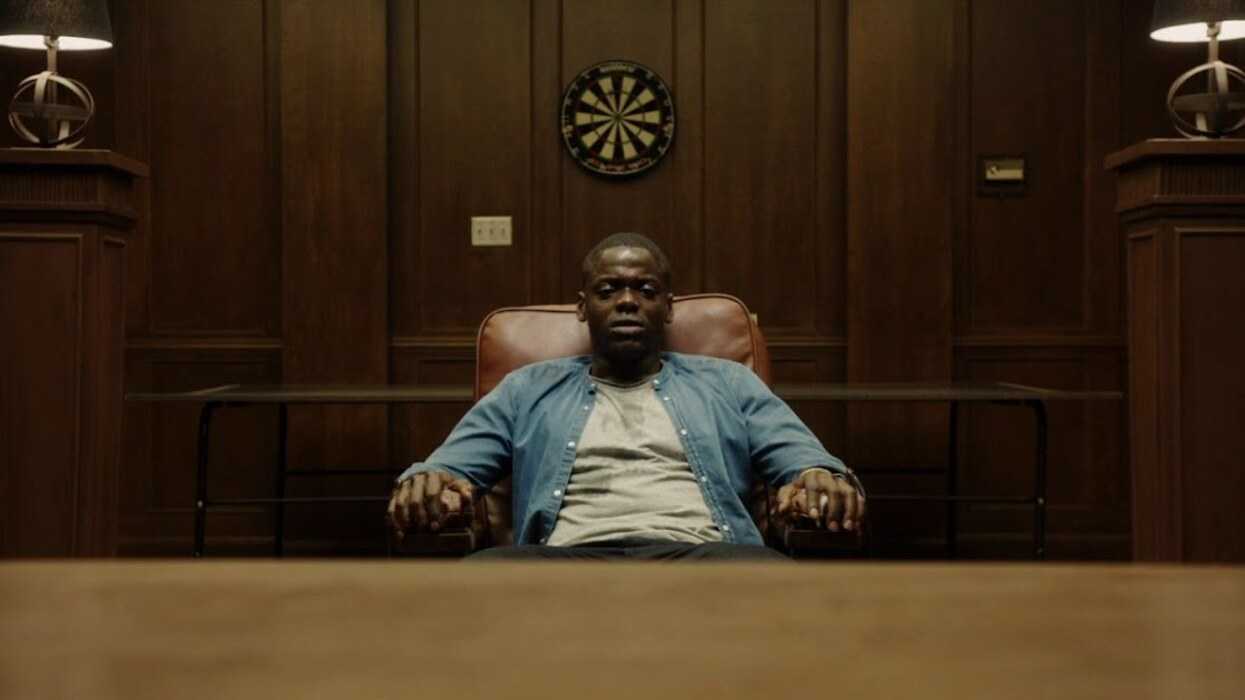
For those who might have missed this Oscar-winning movie (Best Original Screenplay in 2018), Peele’s Get Out follows Chris, a young African-American man, Chris Washington (Daniel Kaluuya), who goes to spend the weekend at his white girlfriend’s parents’ house, after they invite him under the pretext of an official introductory meetup. As soon as he is there, he realizes that maybe it was not wise to ignore his gut feeling that had begged him to cancel the trip.
Get Out is an in-depth exploration of racism, presented as a spine-chilling psychological horror-thriller.
Decoding The Sunken Place As A Metaphor
Peele refers to The Sunken Place as Get Out’s central metaphor— “The Sunken Place means we’re marginalized. No matter how hard we scream, the system silences us.”
Think of it as a cultural epidemic of black people being locked in dark places, where we don't have to acknowledge or think about them. The Sunken Place is a direct reference to such voids that black men were thrown in, a systematic attempt to nullify their existence.
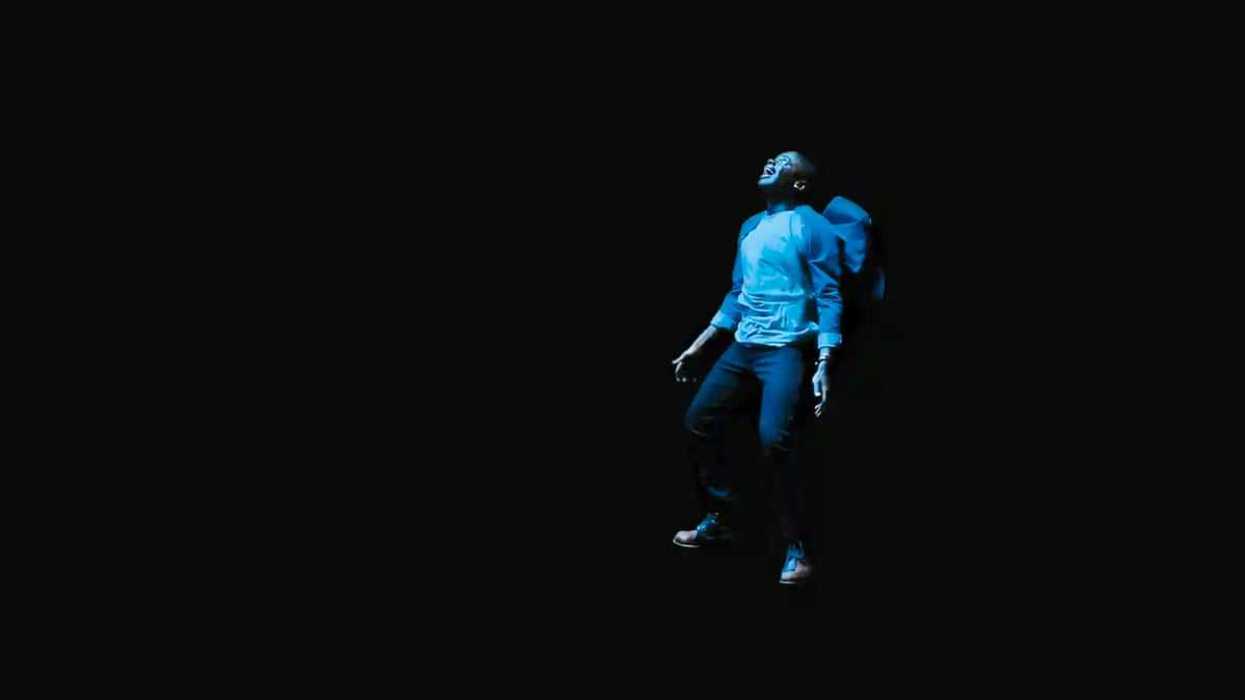 Get Out (2017)Source: Universal Pictures
At a UCLA address, Peele said, “The Sunken Place is something that exists not just for black people, but for women, for our Latino brothers and sisters, for any marginalized group that gets told not to say what they’re experiencing. It’s the system. It’s all these cogs in the wheel that sort of keep us where we are … The Sunken Place is the silencing. It’s the taking away of our expression, of our art. It’s the very fact that this movie has never been made before.”
In the narrative, The Sunken Place is a mental abyss of doom that Chris finds himself in under the influence of his girlfriend’s mother’s hypnosis. Think of it as a fugue state—you are aware of your surroundings (real or hallucination), yet you cannot do anything to come out of it. Your body doesn’t seem to be under your control, and you experience an endless fall that feels like slow death. It’s like you are trapped between dream and reality, making it almost impossible to distinguish between reality and hallucination, further preventing you from breaking out of the fugue state.
The Sunken Place stands for systematic oppression that uses adverse ways to command ultimate surrender, beginning with rendering your senses useless. Narratively, Chris is hypnotised by Mrs. Missy Armitage (Catherine Keener) with the sound of a spoon stirring tea as he stares at the swinging of a pendulum-like spoon. Such a simple method of hypnosis symbolises how racism is easy to practice and get away with. I also like to believe that Mrs. Armitage being able to take over Chris’ consciousness so easily mirrors the psychological weakness of the marginalized versus the powerful.
While Chris struggles inside the psychological abyss for some time, he finally makes his way out by putting cotton into his ears to block Missy's hypnotic commands: a simple act of defense by Chris that inverts the painful historical association of cotton with Black oppression by turning cotton into a tool of resistance.
Inspiration Behind The Sunken Place And Its Filming Technique
Peele has revealed in different interviews that his primary visual inspiration for The Sunken Place is sleep paralysis. In fact, if you look closely, it mimics all symptoms of sleep paralysis. Peele didn’t rely on CGI or practical effects to create The Sunken Place. Instead, he brings his abyss of doom to life using slow motion and the dry-for-wet technique in combination with stunts (Daniel Kaluuya being suspended on rigs and rippled by wind machines) to create a sense of endless floating and drowning.
Considering that Get Out is Peele’s directorial debut, we have high hopes for him (and higher expectations!). This is a rebel that deserves celebration! Let us know your favorite moments from this cinematic gem.