We’ve all seen movies that have been plagued by production problems. We’ve all also seen movies that bombed at the box office and lost the studio a good chunk of money. But no perfect storm of both of these issues exists that had quite the impact that Heaven’s Gate had. Let’s take a look at how the film completely upended United Artists and almost shut them down for good.
Background on the Film
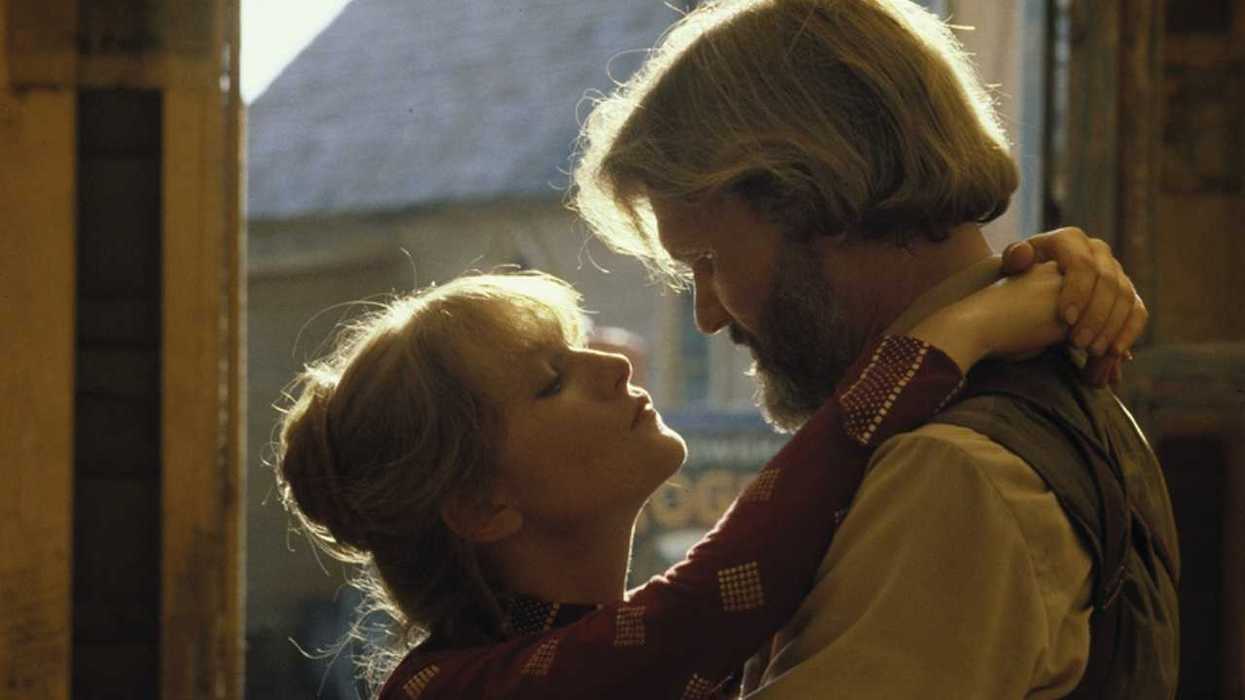
Heaven’s Gate, upon its release, ran approximately three and three-quarters hours, although the initial cut shown to studio executives was said to be over five and a half hours long. The film follows Kris Kristofferson as Jim Averill, a man who passes through a mountain town that is currently going through the most eventful season of its entire existence. As acting sheriff of the Wyoming region, he deals with conflicts between immigrants and cattle farmers, as well as a love triangle he finds himself in with local woman Ella Watson (Isabelle Huppert).
The film was directed by Michael Cimino, who was coming off the success of his Best Picture-winning epic, The Deer Hunter, starring Robert DeNiro, Christopher Walken, John Cazale, and Meryl Streep. All signs pointed to this being another category sweep at the 1981 ceremony. Unfortunately for everyone involved, it was anything but.
Production Catastrophes
'Heaven's Gate'
Credit: United Artists
Already in pre-production, Michael Cimino had to do a lot of convincing to even allow the project to get off the ground. Big stars of the time were denying the project, which spooked the studio into shelving it until Cimino came back with Kris Kristofferson, Isabelle Huppert, and Christopher Walken attached. He was finally granted a nearly $12 million initial budget, as well as carte blanche, which would ultimately be the film’s downfall.
Legend has it that within five days of shooting, the project was already somehow six days behind. Michael Cimino was a perfectionist to his own detriment, and by the end of production he had used 1.3 million feet of film, which equated to nearly $200,000 a day in salaried work. His nickname on set quickly evolved into “The Ayatollah”, as he would sometimes shoot 50 takes for a single shot, resulting in locations being delayed for so long that crew members flown out to the next location were sometimes stranded for up to three weeks at a time.
The film completed principal photography in May of 1980, going from the initially reported $11.6 million budget, all the way up to nearly $32 million. Rumors spread that Cimino even had the locks changed on the studio’s editing room during post-production as a way to keep studio heads from sneaking in and viewing the film before he was ready to show it.
Cimino was almost fired upon screening the initial five-and-a-half-hour cut of the film to studio heads, but assured them he could cut it down further, and by the end of the fall of 1980, the 219-minute cut was complete and set for a premiere date of November 19th.
Premiere and Aftermath
The film’s premiere and initial week opening in November of 1980 were so disastrous financially and critically that the studio quickly pulled it from theaters and made Cimino recut the runtime again. A director’s cut was released the following year with over an hour less footage, and even then it tanked. Against its final purported budget of $44 million, the film grossed a measly $3.5 million domestically, making it one of the biggest box office bombs of all time.
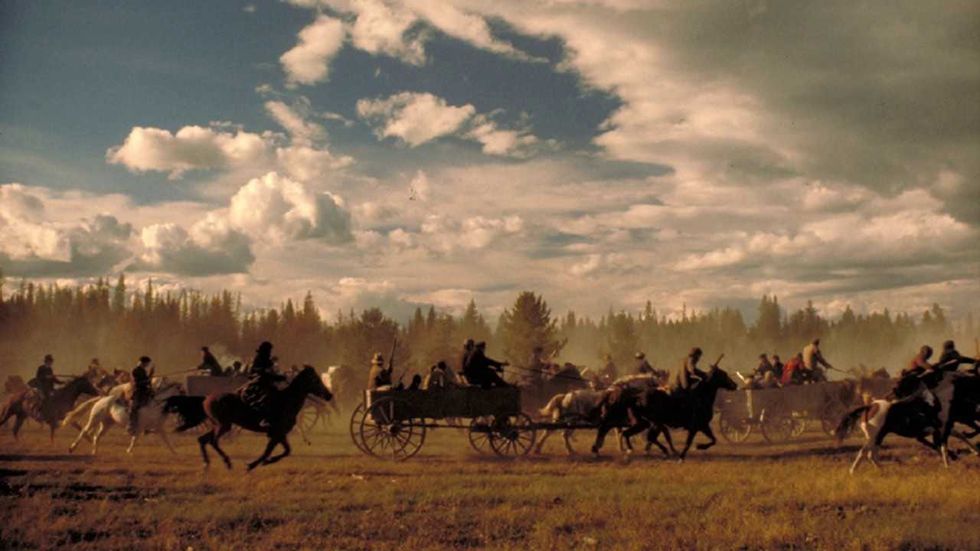
The film was also picketed against in its opening release for allegations of animal cruelty on set, which included the murder and goring of real cattle so that fake blood wouldn’t have to be used in key sequences in the film. The American Humane Association maintained that four horses were killed during a battle scene, with one even being blown up by dynamite.
United Artists’ corporate parent, Transamerica Corporation, was so freaked out by the catastrophic failure that it abandoned film production altogether, and sold United Artists in 1981 to Kirk Kerkorian, the owner of MGM, which ended United Artists’ tenure as an independent film studio. The film today serves as a bookend to the 1970s era of carte blanche filmmaker-driven studio moviemaking, and its consequences reverberate today more than ever.
The film has undergone slight critical re-evaluation in recent years. As recently as 1999, Time Magazine claimed the film on its list of the worst ideas of the 20th Century. In 2012, the film did a fall festival re-release run in Venice and New York City, where many re-evaluated it as a nearly lost masterpiece. As of today, the film holds a 57% critic score on Rotten Tomatoes and a 57/100 average critic score on Metacritic.