Fall From Grace: 3 Most Brutal Hero Downfalls in Movie History
Our favorite mighty heroes lost everything.
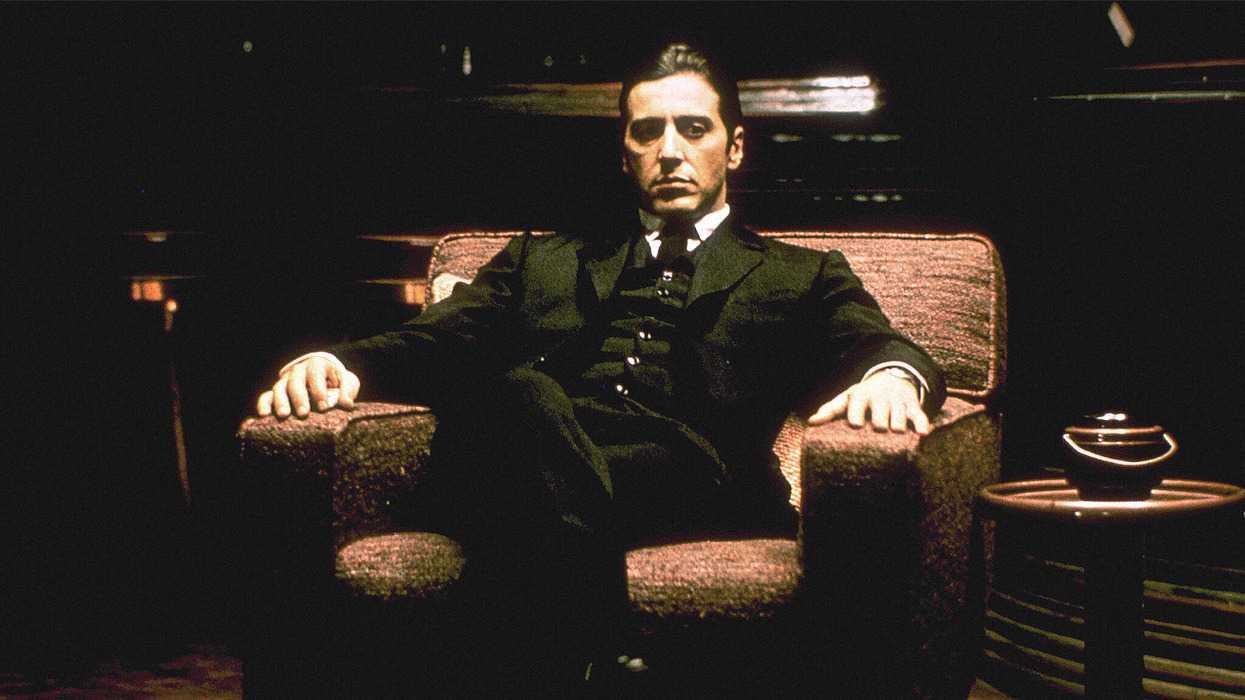
Godfather Part II (1974)
We watched them rise. We were enamored by their ruthless magnetism, their untouchability, and the pride they carried. They commanded our respect. And then, all of a sudden, they fell from dizzying heights.
These cinematic heroes planted the seeds of their own annihilation. They grew too powerful for their own good. Their judgment got clouded, and their egos put everything else in the back seat.
Regardless of all this, we do love them, don’t we? Their fearless ambitions, relentless quests to achieve what their hearts desire, and their unstoppable hunger for power make them compulsively watchable.
Let’s dive deeper into this subject and then take a look at some of the finest examples of heroes who fell from grace.
What is the “Fall From Grace” Trope?
In simple terms, this occurs when a protagonist works their way to the top, growing so powerful that they could even be considered untouchable. Then, slowly, ambition begins to go unchecked. Greed, obsession, paranoia take over.
They’ve got it all, but they want more. Much more. Soon, the decisions become riskier. The price for every mistake grows bigger. But the hero keeps on going. Who is going to stop them? By now, they are at a place where other people’s opinions are insignificant to them.
Their downfall doesn't need to be triggered by a villain. More often than not, the fall from grace trope is seen in characters who “dig their own graves.” The fall can be gradual or sudden, but it always feels like it has been coming.
The hero eventually destroys themselves and often their relationships with those around them.
Unlike a simple tragedy in storytelling, a fall from grace often carries a moral warning. It spells out the price of unrelenting ambition and the problems that come with forgetting one's limits.
The Three Stages of a Tragic Hero
As we’ve discussed earlier, the fall from grace has a feeling of “it has been coming” coupled with its unraveling. It’s not a sudden, tragic event. For example, if your hero was growing steadfastly and suddenly ends up in a car crash and dies, that wouldn’t be a fall from grace; it would simply be a tragic moment.
A fall from grace typically follows a certain pattern. I’ve tried to map it out for you.
Stage 1 - The Good Days
Not necessarily at the start of the film, but somewhere before the middle, the good days embody the heroes' summit; a time when everything pays off. Enemies are at a distance; every action the hero performs works out convincingly. Dangers are limited.
In short, the field is clear, and it feels like nothing could stop the hero from climbing even higher. Except, of course, they are already at the summit; they just don’t know it.
Stage 2 - The Turning Point
This is the point at which the hero is offered an opportunity to make a decision that can drastically affect their future, one way or another. As you’d expect, they choose the path of greed or ambition that helps them gain something but potentially lose a lot more.
A line (or a few) is crossed. And there’s no turning back. Paranoia and obsession replace clear thinking and common sense. Dangers begin to increase, and the hero feels as though nothing could stop them. At this point, typically, other characters may issue a caution. But the hero will have none of it.
Stage 3 - Into The Abyss
The hero has crossed a point of no return. They are being threatened, possibly from more than one direction. In many ways, the hero has become the villain of their own story. But they refuse to see it this way.
Family and friends suffer as a result of the hero’s ambitions. The hero is at a point where everything they have gained may begin to feel like nothing. The wealth and the empire start to feel like mere ornaments without meaning or connection.
The fall happens. The arc is complete. The cautionary tale is there for all of us to witness.
Classic Films That Mastered The Fall
Let’s take a close look at three classic films that, to this day, are the finest examples of the fall from grace trope.
1. Citizen Kane (1941) - Directed by Orson Welles
In this Orson Welles classic, Charles Foster Kane (Orson Welles), a brash idealist, builds a media empire that makes him one of the richest and most powerful men alive.
Charles’s ambitions know no limits. He wishes to be loved on his own terms. Every relationship he gets into or is already a part of is tainted by his attitude. His friends and wives are abandoned. The mansion grows empty, and loneliness follows him like a shadow.
In the end, Charles is left alone, whispering the name of a childhood sled no one else knows about. This ending perfectly sums up Charles’s journey and defines the price of his unsparing ambition. Charles’s fall from grace happens gradually, but expectedly, leaving him broken and alone, unfazed by all the wealth he was so obsessed with.
2. Scarface (1983) - Directed by Brian De Palma
Tony Montana, played exceptionally by Al Pacino, enters Miami with nothing but ambition. Through sheer ferocity and an undying pursuit for greatness, Tony takes control of the city’s cocaine trade.
Tony’s motto, ‘The world is yours,’ is literally visible far up in the sky. His greed for more power and money is only matched by his relentless addiction to drugs. Soon, people around him begin to dislike him. People grow distant. But Tony’s self-obsession and his hunger keep on growing.
Tony’s spiral is quick and unstoppable. Not only does his decision-making falter, but he also loses control of himself. The list of enemies one shouldn’t be enemies of grows quickly.
Tony’s death scene, to this day, is one of the most iconic death scenes of any protagonist. Until his last breath, Tony refuses to consider himself a failure. Even though his survival feels impossible to us, it does not feel so to him, hence becoming an ideal example of the fall from grace.
3. The Godfather Part II (1974) - Directed by Francis Ford Coppola
Michael Corleone (Al Pacino) is a decorated war hero who vows to keep his family legitimate by taking control of a business he was once kept at a distance from. Michael transforms the Corleone family into a stone-cold machine that is even more merciless than the one his father administered.
In my opinion, Michael’s fall from grace actually begins with The Godfather Part I. However, Part II is a film that begins at ‘Stage 1’ we discussed earlier, a point where Michael is already in a position of power.
Over the course of both films, Michael takes unrelenting control of the empire. His decision-making cannot be questioned by anyone, not even his wife. Michael’s ambitions cross every limit one could imagine. His most noticeable act of heroism, which actually is the reason for his fall, is his inability to accept betrayal.
Michael’s blatant disregard for people who backstab him cannot be relieved until he achieves the ultimate revenge - their death. At the end of the film, Michael is alone, sitting on a chair by a frozen lake. Coppola ingeniously ends the film on a reminder of ‘the good days’, vaguely hinting at a time when the family was at peace, long before where Michael is now, having fallen from grace.
Final Thoughts
The fall from grace, in many ways, is the ultimate cinematic character arc. It shows us the highest highs and the lowest lows. When done well, it is a powerful cautionary tale that is just as admirable on screen as it is fierce and troubling.
What are some of your favorite films that used the fall from grace trope? Tell us in the comments!