Thanks to director Sean Baker, I had the opportunity to sit down with Taiwanese filmmaker Shih-Ching Tsou at the Deauville Film Festival for my filmmaker appreciation podcast, Past Present Feature with Marcus Mizelle. The full conversation and other episodes can be found on Spotify, Apple Podcasts, and more.
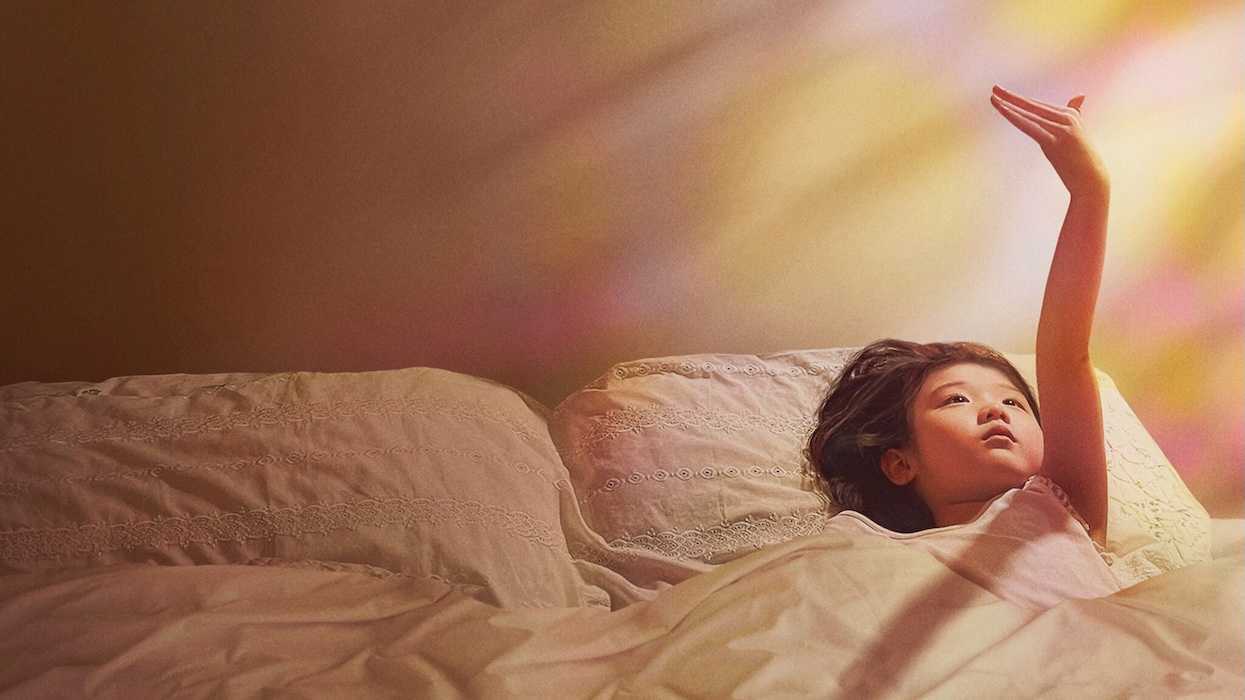
Tsou arrived at Deauville representing Left-Handed Girl, Taiwan’s official 2025 Oscar submission for Best International Feature, and now streaming globally on Netflix. The film marks her solo directorial debut after years collaborating with Sean Baker, the four-time Academy Award winner behind Anora, Tangerine, and
The Florida Project. Tsou and Baker co-directed their first feature, Take Out, a microbudget New York story shot on miniDV that quietly became a calling card for a new style of resourceful, grounded filmmaking.
Fifteen years later, that same spirit of resilience and minimal-footprint creativity defines Left-Handed Girl, a film that was written in 2010 but only began production in 2022. Financing delays stretched the project across more than a decade, but Tsou now views the long wait as essential to the film’s evolution. “Everything has its timing,” she told me. “Every film has its own fate. You cannot force it.”
The final film lives inside that belief. It is intimate, handmade, and emotionally direct, shot entirely on an iPhone 13 with Beastgrip accessories and shaped by a small crew navigating the realities of shooting in Taipei’s crowded, unpredictable night markets. What Tsou captured with those minimal tools is a reminder that mobile filmmaking is not simply convenient or novel. In the right hands, it is a creative advantage.
This article focuses on exactly that: the practical mobile workflow behind Left Handed Girl. The choices, the gear, the limitations, the discoveries. And the philosophy that allowed Tsou to make a feature on a phone without ever feeling like she was compromising.
Below is how she did it.
Story First: The Foundation of a Minimal Toolkit
Early in our conversation, before gear or workflow came up, Tsou grounded everything in one principle.
“You need a good story,” she said. “If you don’t have a good story, no matter how expensive your camera is, it doesn’t really work.”
Resilience and story were the twin forces that carried Left-Handed Girl through twelve years of development. The script reflects Tsou’s personal experience growing up in Taipei as a left-handed girl in a culture with strict expectations for women. The emotional core is universal: family, identity, and the inherited rules that shape childhood.
After screenings, Tsou was surprised by how many people approached her with their own left-handed stories. “Germany, Japan, India, Israel. It’s universal across cultures,” she told me. The personal had become global.
This recurring idea runs through Tsou’s work with Baker, too. Tangerine, The Florida Project, and Left-Handed Girl all give voice to communities often ignored. For Tsou, film is a window into lives that rarely get the spotlight. “Film is a lens of the world,” she said. “It gives people who couldn’t speak up for themselves a voice.”
That belief shaped every technical decision, especially the choice to shoot on a phone. The camera had to disappear. The story had to stay front and center.
Why the iPhone 13 Was the Only Viable Camera
Most directors choose a phone for flexibility or cost. Tsou chose it out of necessity.
“I wanted to shoot in the real night market,” she explained. “You cannot bring a big camera. Everybody will stop. You cannot shoot.”
The production experimented with a 20-person crew on day one. It failed instantly. Vendors and crowds recognized the equipment. Foot traffic jammed. Every shot was compromised by attention.
“We could not use any footage we shot,” she said. “So the second day, I told everyone, if you have nothing going on, you have to leave or dress up.” The iPhone became the only camera that allowed true invisibility. And with a minimal rig, it allowed shots that even compact cinema cameras would have made impossible.
Tsou shot the entire film on the iPhone 13 she still carries today. “This phone,” she said, holding it up during the interview.
The rig included:
“It’s very reliable,” she said. “And the anamorphic lens is beautiful.” The setup allowed Tsou and her team to blend into the night market crowds while capturing widescreen visuals that matched the emotional scale of the story. Lighting was almost nonexistent. “Night market by itself is bright,” she told me.
Taipei’s neon, signage, and vendor lights created a naturally saturated palette that allowed the film to embrace realism without excess technical intervention.
 Shih-Ching Tsou with Marcus MizelleCredit: Past Present Feature with Marcus Mizelle
Working with a Minimal Crew
Beyond the camera, Tsou approached production with the same minimal philosophy. The crew was small, mobile, and careful not to draw attention. With fewer bodies blocking pathways, Tsou could move quickly, observe behavior, and find shots in the flow of real life.
This method recalls the Dogme 95 movement, which Tsou deeply admires. When I asked about her most influential Dogme film, she didn’t hesitate. “I really love The Celebration,” she said. What inspired her was the purity of the approach. “You strip down all the technical and focus on the story,” she told me. “You don’t use music to affect the audience’s emotions. You use what exists.” Left-Handed Girl works the same way. The beauty of the phone is not only small size or affordability. It is the freedom to remain honest, to avoid performance-influencing machinery, to let the world breathe inside the frame.
Audio, Atmosphere, and the Sound of Taipei
While the camera setup was simple, the soundscape was complex. Tsou handled much of the music supervision herself, particularly the Taiwanese tracks woven into the film.
“Every store has a different sound,” she said. “I wanted the night market to feel authentic.”
The team layered local music, ambient melodies, and sourced tracks from friends in Taiwan’s music industry. It was small-scale but detailed work, reflective of Tsou’s approach to storytelling: not flashy, but textured and lived-in.
The Long Edit and Working with Sean Baker
After shooting wrapped in 2022, Tsou flew to Los Angeles to begin assembling the film with Sean Baker. Baker edited the first stretch; Tsou and another editor built the rest; then Tsou took over the final cut and music integration herself. Baker’s process astonished her even after working together for years. “He is a master,” she said. “He is really good at pacing. He picks takes I never saw. I watched the footage for two years, and I didn’t even see the take he picked.”
Most strikingly, Baker does not speak Mandarin. Yet he instinctively identified the strongest performances purely from tone, rhythm, and emotional honesty. Tsou spent two years shaping the material. Perfection was impossible; deadlines made completion real. “Nothing will be perfect,” she said. “You work to the last minute, then you hand it in and let go.”
Resilience, Career Longevity, and Stepping Into Visibility
Tsou has spent 25 years behind the scenes in the film industry. With Left-Handed Girl, she suddenly became the face of a national Oscar campaign, promoting the film across festivals while representing Taiwan on a global stage. She admitted that stepping forward was not natural. “Being a woman in Taiwan, you are not allowed to say too much,” she said. “You cannot ask questions. You do what you have to do and stay quiet.”
This film changed that. “I feel like a real artist now,” she told me. “I want people to see Taiwan. I want them to see the night market. I want them to understand this world.”
Her advice to filmmakers reflects the same clarity:
“Go out and talk to people. Make friends. Form a community. Film is teamwork.” Earlier in the conversation, she added:
“Do not chase the trend. Tell the stories you love. If it resonates with you, it will resonate with others.”
What Mobile Filmmakers Can Take From Shih-Ching Tsou
- Minimal gear is not a limitation when the story is strong.
- The iPhone’s small footprint is a creative asset, not a compromise.
- Beastgrip accessories unlock serious cinematic control.
- Lighting can come from the world itself, not a truck.
- Editing requires instinct and endless curiosity.
- Resilience is the invisible craft that keeps films alive across years.
- Filmmaking does not begin with technology. It begins with what you want to say.
Watch and Listen
For the full conversation, including extended stories, production insights, and Tsou’s reflections on her career, listen to:
Past Present Feature with Marcus Mizelle – Episode 63
Shih-Ching Tsou on Left-Handed Girl
A companion Past Present Feature breakdown video showing the full iPhone setup, Beastgrip rig, and workflow overview will follow soon.