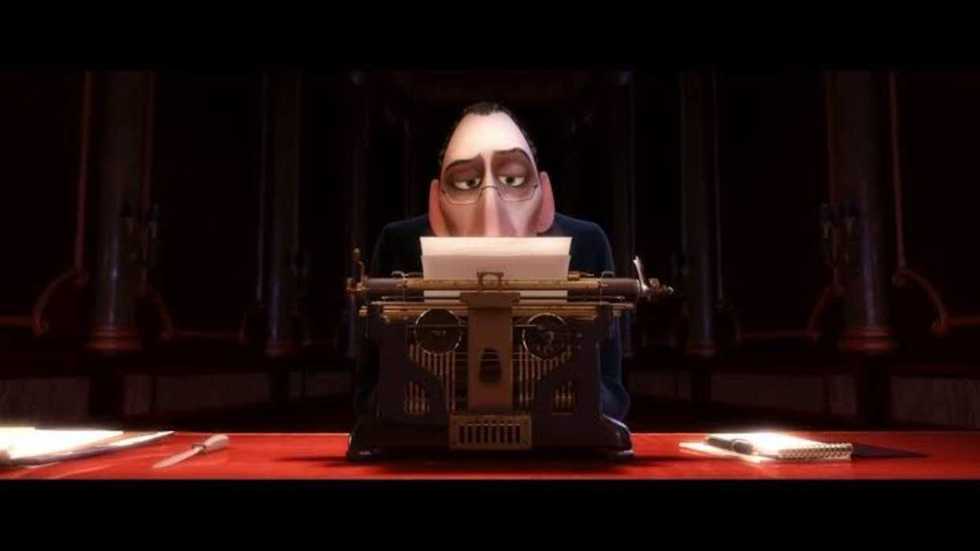
Ratatouille’s Anton Ego functions more so as a secondary villain on the sidelines for the majority of the film. It’s not until close to the third act that his minimal but brooding presence becomes important to the story and thematics of the film. But when it does, it changes everything.
Let’s take a look at the seamless integration of Anton Ego’s character, and what it means for the film.
Why He’s on the Sidelines
The general theme for the antagonists of Ratatouille, whether it’s for Chef Skinner or Anton Ego, is jealousy and greed. Skinner throughout the film is desperate to make sure that Linguini doesn’t succeed in his new role at Gusteau’s restaurant, while also evading the revelation that he’s actually Gusteau’s son, and the sole heir to his fortune.
Ego, on the other hand, is more interested in maintaining his reputation as the harshest, most trusted critic in town. And thanks to Skinner’s greed in the first two acts of the film, he entirely succeeds. No one knows the truth, Ego’s original review still stands, and no one is the wiser about their potential faults.
His Grand Entrance
 ‘Ratatouille’Credit: Walt Disney Studios
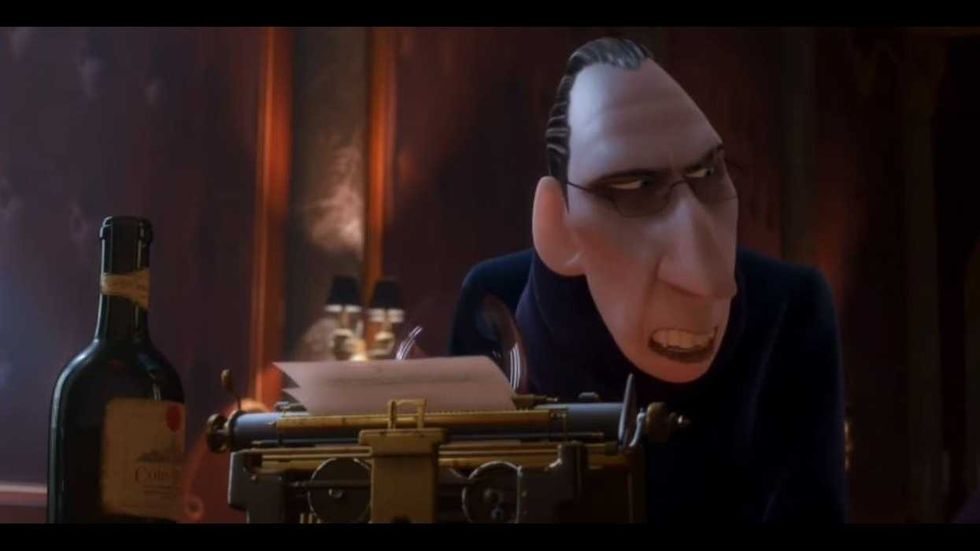
It’s not until Skinner’s deception is brought to light that Ego is forced to defend his reputation. With Remy and Linguini at the helm of the restaurant, business is booming. Much to Ego’s dismay. It’s clear in Ratatouille that when a character’s pride is threatened, no matter how superficially, they will do whatever it takes to make sure that it’s restored. Ego intimidates the staff at Gusteau’s and promises to be back, ready for an impossibly great meal.
The Moment of Revelation
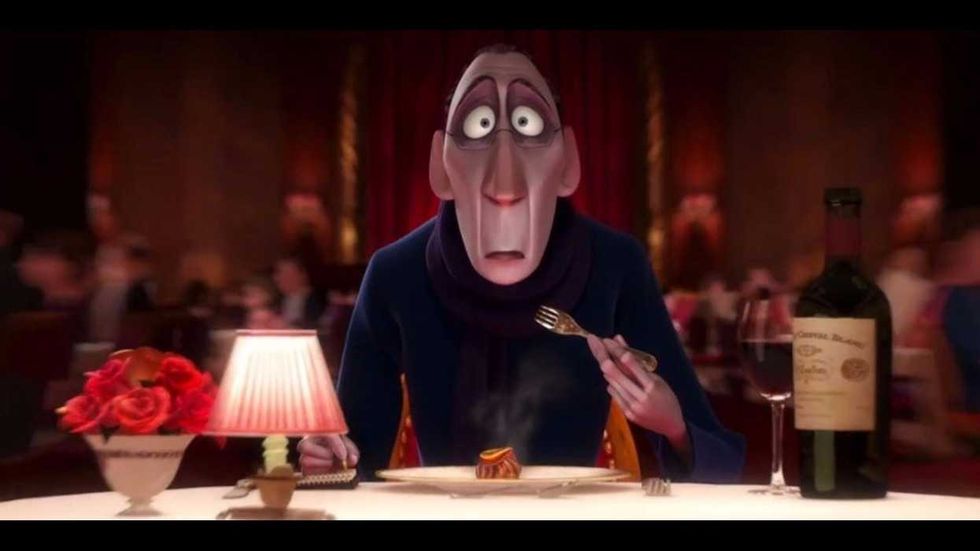
The moment of truth for Ego’s character comes the moment he takes his first bite of the Ratatouille dish that Remy cooks for him. He is immediately transported back to his mother’s home cooking after a bike accident as a child. His face lights up immediately, and his guard is dropped, finishing the meal in just a few large bites.
There isn’t exactly a ton of backstory given to Ego’s character beyond the very brief flashback we see during this scene. Many have speculated over the years that he likely wanted to become a chef himself, and when he failed, his jealousy of those more successful than him drove him to become a snobby, intimidating critic figure. This is certainly not out of the realm of possibility, as this kind of pipeline is one not uncommonly depicted in media and seen in real life. However, the elusiveness to Ego’s backstory allows the more primal motivator of a young boy who misses his mother trapped in an adult body to be far more moving when explored through the unity of good food.
How This Moment Changes Him
 ‘Ratatouille’Credit: Walt Disney Studios
Once the meal is over, and Ego has the chance to thank the chef for the meal, he realizes the significance of Remy being at the helm. He immediately lets his guard back up and leaves the restaurant in what the naked eye would likely perceive to be a grouchy mood. When in reality his entire worldview has just been completely shattered.
His now iconic review monologue reveals the true humility hidden deep inside of his character. He acknowledges his artistically inferior position as a critic in place of someone who offers up their love and work for genuine appreciation, no matter how small. In some ways, I want to give Ego a bit more credit for this point, because when done properly, criticism can do a lot for culture, but for the sake of his arc, it’s important not to interfere too much.
What’s most important about the completion of his arc through this monologue is the dropping of his jealousy and bitterness. To add to the potential theory of him being a failed culinary professional himself, the defining line of his review remains “not everyone can become a great artist. But a great artist can come from anywhere.” It’s at this moment that Ego accepts his place in the world as someone who is willing to champion others in place of himself. Oftentimes at great risk, as seen by his inevitable shunning by the press and public for endorsing a rat as a chef.
Where Does Ego Wind Up?
The film keeps the rest of Ego’s life relatively open for interpretation. He enjoys dining at the new restaurant, and seems to be happy with the more modest, anonymous lifestyle. I know that I choose to believe that through the genuine, great work of a generational talent like Remy, his mindset and outlook on life were permanently altered. Who knows if he remained in the same position forever? Like most ambiguous outlooks, you likely don’t want the entire picture laid out for you. But one thing’s for sure: anyone can cook, and the ways in which that saying can be applied are far broader than any of us realize.