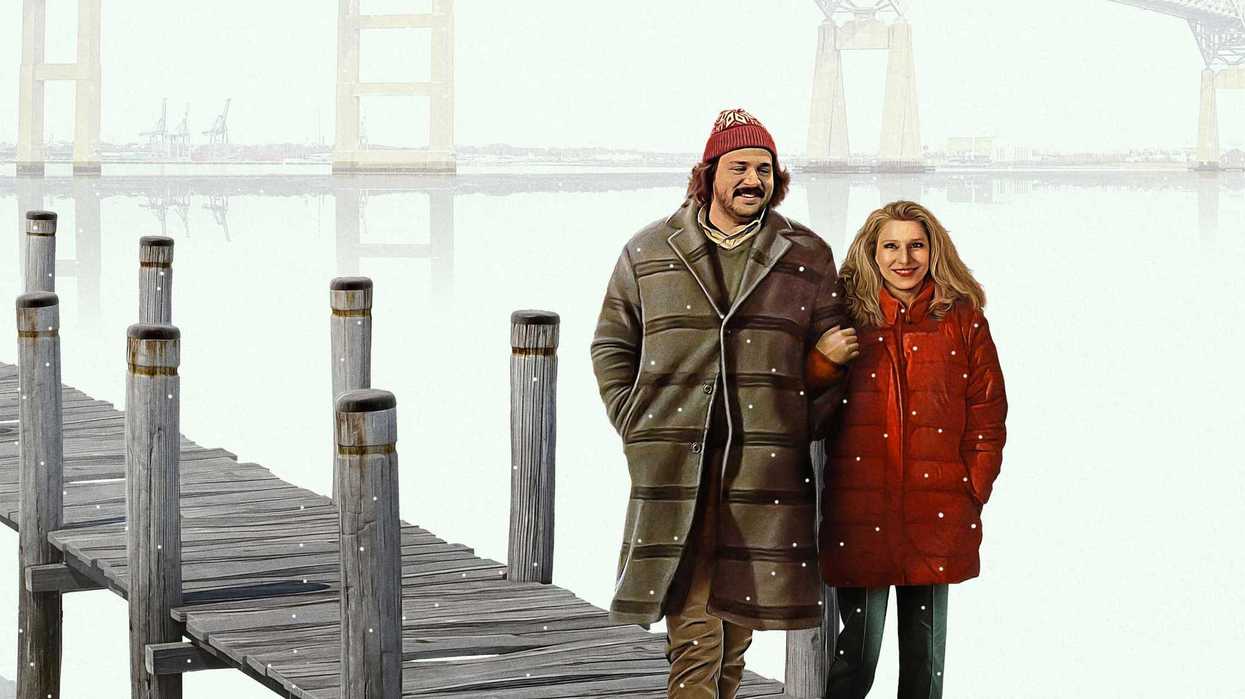
In the world of independent film, the production designer is often a magician tasked with turning a small budget into a lived-in, cinematic reality. For Jack Bell, the latest challenge was The Baltimorons, a feature directed by Jay Duplass that captures the soul, quirks, and underground comedy scene of Baltimore.
They shot this feature in just 16 days across 45 different locations, which is a feat that would make even the most seasoned department head sweat. But Bell leaned into the chaos, and the result is a film that feels authentic and wondrous.
We sat down with Jack to discuss his creative shorthand with Jay Duplass, his transition from set decorator to department head, and why his next "bonkers" project might just take him back into the world of psychological horror.
Let's dive in.
- YouTubewww.youtube.com
No Film School: Hi Jack! Can you describe the key creative considerations that went into your production design on The Baltimorons?
Jack Bell: When production designing The Baltimorons, I had to consider making every set as authentic to Baltimore as possible, whilst also being genuine to Michael Strasser’s personal story as well as the broader goal of accomplishing Jay Duplass’s vision. Fortunately, these creative considerations worked in sync with each other throughout the production. Michael’s story gives audiences a perspective of Baltimore that I feel rarely gets shown in the media, such as shedding light on the city’s underground comedy scene, where his character Cliff performs improv. And as a newcomer to the area, Jay loved all the unique quirks our Charm City had to offer, such as the yearly tradition for Hampden neighborhood locals turning the block of 34th Street into a Christmas wonderland.
NFS: What was the collaboration like between you and director Jay Duplass?
JB: It was amazing. Jay was such a joy to work with throughout every step of the production. He knew exactly what he wanted. But we were also a very guerrilla-style crew, only working with what we had when we had it. Shooting a feature in 16 days with 45 locations seemed like a daunting task, but working with Jay made it a thrilling experience I’ll remember for the rest of my life. What I really appreciated is how much trust and creative independence Jay gave me to put together these sets for Michael and Liz to perform in. This was especially the case for Mel’s Auto-Shop, where we filmed the pop-up improv comedy bar. During the location scout, after we figured out the layout for the audience and the stage, Jay gave me the following note: “I want a giant freaking elf—Christmas thing in that corner.” And so began my journey across the DMV looking for this integral decoration — from Bowie, MD to Arlington, VA to Marriottsville, MD. On the day, I ended up filling the space with a couple of life-sized Santas, a deranged-looking elf, and a life-sized baby Jesus (that sadly did not survive the shoot).
NFS: Did you take inspiration from any iconic Christmas films in designing this latest entry in that lineage?
JB: Absolutely. I couldn’t tell you how many times I felt like Clark Griswold putting up all those Christmas lights, especially ones with the big bulbs. We called them “Charlie Brown lights.” If you break one, you break them all! During my time off set, I would do my shopping for the upcoming shoot days and grab any last-minute props. I was like Arnold Schwarzenegger from Jingle All the Way running around Baltimore looking for that Turbo-Man doll! In one specific case, it was Berger Cookies (a Baltimore mainstay). But I think my biggest inspiration would be my mom, because I channeled a lot of our own Christmas holiday traditions, like how she would decorate our house in Georgetown. I especially had these memories in mind when I was decorating Didi’s apartment, with the warm white Christmas lights and garland that wrapped around the pillars of the fireplace next to the Christmas tree. It made me feel like I was back home again.
NFS: How did serving as department head on The Baltimorons differ from your previous experiences as a set decorator or prop master on various films?
JB: As the Production Designer, I think what really sets The Baltimorons apart from other films I’ve worked on is that even though I was running a one-man show in my department, I always felt fully supported. I remember on my first day, our Associate Producer, Miriam Sokolowski, went through the script with me page by page, line by line, talking through ideas and collaborating. I think we talked for 10 hours that day; it was amazing. I’ve never spoken to anyone for 10 hours straight in my life! She really helped me get familiar with the project despite the tight schedule, and she had my back that whole production, along with our producer, Dave Bonnett Jr, whom we one day dubbed the unofficial Mayor of Baltimore because he held the keys to every location. Pablo Burn and Kiran Rhe (our Production Supervisor and Locations Manager) stepped in to help me put up those “Charlie Brown lights” (although I was praying they didn’t fall). I think because we were such a small crew, hopping from location to location on a tight schedule, we all did our best to look out for each other every day.
NFS: What was the most challenging aspect of designing The Baltimorons?
JB: Initially, I think the most challenging aspect of production designing The Baltimorons was getting out of my own head and enjoying the ride. There comes a lot of responsibility with being a solo department on a feature, and I was constantly thinking of how to be one step ahead each day. But by doing that, I wasn’t living in the moment and appreciating the process of working with such a talented, eclectic crew, some of whom I’ve known for years, and being involved in telling a very unique, personal story that doesn’t come around very often. Once I got over that initial feeling, I cherished every second right up until we wrapped, which was probably one of the most surreal moments of my life. In addition, getting creative with my limited car space for all of my inventory was also a challenge, but that’s a story for another time, haha.
NFS: Are there any other genres in which you would like to work?
JB: I would love to work on more horror movies. I got hooked on horror when I was in high school. The SYFY channel would always air these month-long horror movie marathons around Halloween. They would be heavily censored, but it sewed the seeds that would become my obsession with the genre. It introduced me to movies that changed the way I looked at production design, particularly Paul W.S. Anderson’s Event Horizon, production designed by Joseph Bennet, and David Fincher’s Alien 3, production designed by Norman Reynolds and Michael White. It’s a very exciting time for horror movies, both in the mainstream and the independent film scene.
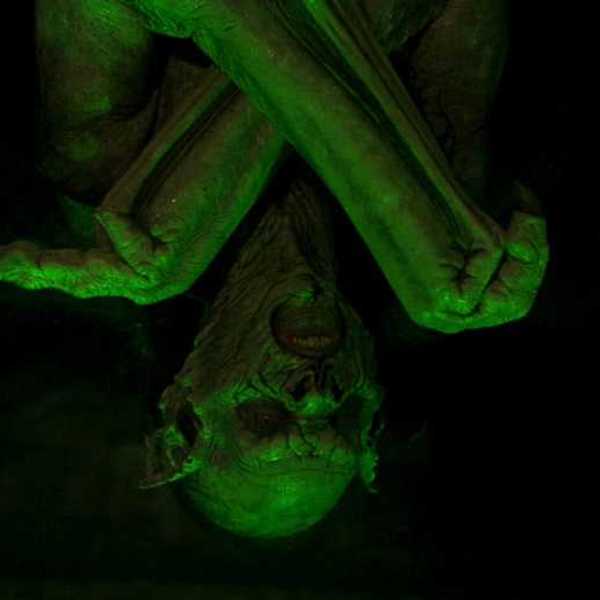
I was blown away by Tamara Deverell’s incredible work on Guillermo del Toro’s Frankenstein, and I had the fortunate privilege of seeing her work on display at Netflix’s Frankenstein exhibit in Los Angeles. The first feature I production designed was an indie psychological horror film called Starstruck! directed by longtime friend and collaborator Kenneth Brossoie. If I had to dip my toes into the horror genre again, it’d be great to collaborate with Jay’s brother, Mark Duplass, on the Creep franchise, or with Stuart Ortiz, known for directing/writing Grave Encounters and Strange Harvest.
 Jack Bell and Jay Duplass on setCredit: Impact 24
NFS: Can you tell us more about your process as a production designer? What are your first steps after reading a script for a film such as The Baltimorons?
JB: During my first read-through of the script, I highlighted all the key props and broke it down by location. On my second read-through, I made notes of anything not explicitly laid out in the script, but might be necessary to make scenes more convincing. For example, when Cliff and Didi arrive at the auto-shop bar, it’s implied that everyone there (background, etc.) has a drink in their hand. That wouldn’t be something written in the script, but it’s necessary for the setting to make sense. That basically ticks all the essential boxes in my process.
Once I have all my bases covered, I can add my own quirky touches in between the lines of the script that could help amplify the scene by giving the director and actors additional props on the set to play around with and provide the Director of Photography an interesting space to shoot. For example, at Mel’s Auto shop, I wanted it to be as DIY as possible. Instead of only using folding chairs for the improv show audience, we pulled car seats straight from wrecked cars in the lot, tires, and used furniture from my basement.
To set Baltimorons apart, I needed to incorporate elements into the set that emphasized that this is Baltimore: Drinks needed to be Natty Bo, Christmas lights and balloons at the wedding party needed to be purple, gold, and black to represent the Ravens, and of course, there has to be Pink Flamingos for Baltimore native John Waters!
NFS: Is there anything else you would like to add about The Baltimorons or any other upcoming projects?
JB: It was a privilege getting to work with Jay Duplass, to witness Michael Strassner’s and Liz Larsen’s dynamic chemistry captivate audiences, and to be a part of a movie set in a city that has been so good to me throughout my career. I don’t know where I would be without Baltimore, so I say this: THANK YOU, BALTIMORE!
My next feature is another independent film shot in Baltimore. Badhead was directed by Jimmy Joe Roche, produced by Matthew Porterfield, shot by Tyler Davis, and scored by Dan Deacon. It’s currently in post-production, and it will showcase my most bonkers work yet!