Should ‘Killers of the Flower Moon’ Have Been a TV Series? Jodie Foster Thinks So
The legendary actress and director argues that the "real narrative" has moved to streaming, and even Marty's epic could have used more time.
Jodie Foster has spent her entire life in and around Hollywood. She acts, directs, produces, and is just a wealth of information about the business.
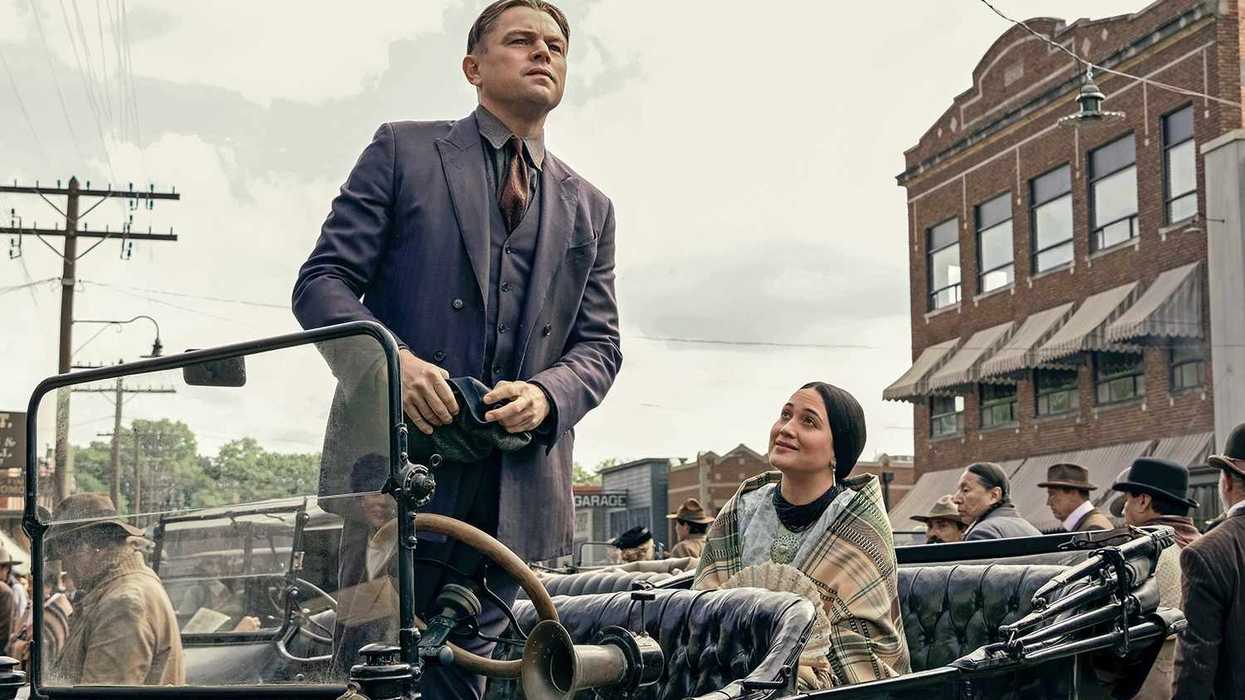
While accepting a tribute award at the Marrakech Film Festival this week, Jodie Foster offered a candid critique of Martin Scorsese’s 2023 epic Killers of the Flower Moon. Her take? The 206-minute runtime wasn't actually long enough.
According to a report from Deadline, Foster suggested the story would have been better served as an eight-hour limited series on streaming rather than a theatrical feature.
Let's dive in.
- YouTubewww.youtube.com
Foster's Argument
Jodie Foster has been in some landmark movies and TV shows (like True Detective). And she's successfully transitioned between directing features and helming episodes for high-end TV (like Black Mirror and Tales from the Loop).
Her argument over Killers of the Flower Moon is that the traditional feature format forced Scorsese to compress a sprawling history into a box that didn't quite fit.
“Streaming is able to do things that we’re not able to do in traditional mainstream movies anymore. Real narrative now in the United States is on streaming. Big franchise superhero movies are what you see in the movie theaters, but the real, real narrative is on streaming,” she said.
“Then there’s streaming. You’re able to tell eight-hour stories, or five-season stories, where you can explore every angle in a way that you could never in a feature. I love the freedom of that.”
“Everybody was sort of excited that the native story was going to be told, and what they found was like, ‘Wow, all the native women are dead’,” she said.
“They said, ‘Well, it’s a feature, we didn’t have time’, but there was time. There was an eight-hour limited series that was not made, that could have been made, where, if you really needed to explore all the male toxic masculinity, you could have done that, but you could have had episode two actually centered on the native story,” she noted.
Theaters vs. Streaming
I love movies so much. They're here to tell us a concise story and to make us feel a bunch of emotions in one sitting.
But if movies have a limitation, it's the size of the stories they can tell, and the amount of details they can add.
That does not make TV better than film; it just makes it different because you have more time to dig deeper or to go slower.
For me, Foster's comments are basically "I would have done it different." And while I like some of the ideas she put forward, I also really liked the Scorsese movie and the story it told.
Sure, it was long, but it felt like an epic movie that wrapped you up in a world and then distilled its understanding down for the audience.
We have the whole movie to critique, so it's hard to think about what a TV version would do. Is there enough story for the TV version? Or would these isolated episodes Foster mentioned feel more like filler?
I have found that a huge issue facing Hollywood now is that we stretch stories way too far. These limited series often feel like they are not paced well and could be boiled down into movies.
So it all comes down to personal taste and how you choose to make and market your ideas.
But that does not mean the market is going to change and demand TV shows over specs any time soon.
What This Means for Filmmakers
For those of us not named Scorsese or Foster, this raises a critical question about development. When you are outlining your next script, how do you decide the medium?
We often hold up the "theatrical release" as the gold standard of success. But Foster’s critique suggests that for certain stories—especially historical epics or ensemble dramas—clinging to the cinematic format might actually hurt the storytelling.
But let's be honest, it's hard enough to get any first-timers to find money for a movie budget; finding it in TV is near impossible. Most channels are not going to give you eight hours and a bunch of money.
If you have a big idea, it also doesn't make sense to cut it down.
So, what can filmmakers do to see if they're pitching the right thing?
- Assess Your Scope: Does your story have a singular through-line (Feature) or multiple, equally weighted perspectives (Series)?
- The "Episode 2" Test: Could you write a full hour of your story focused entirely on a secondary character without losing the audience? If yes, you might be writing a series.
- Don't Fear the Stream: If Jodie Foster is calling streaming the home of "real narrative," maybe we should stop viewing it as a stepping stone and start viewing it as the destination for complex character work.
Summing It All Up
Right now, breaking into Hollywood works easier with a spec script than a spec TV show. TV is expensive, and there are many limited avenues to tell a story.
But as the line between cinema and TV blurs thanks to streaming, it’s worth asking if your idea is really a movie, or if it has legs to build into something bigger?
What do you think? Was Killers of the Flower Moon too short and should have been a TV show?
Let us know in the comments.
- Go Behind the Scenes of the Filming of 'Killers of the Flower Moon' ›
- Why Did Leonardo DiCaprio Want 'Killers of the Flower Moon' Rewritten? ›
- What Did Steven Spielberg Have to Say About 'Killers of the Flower Moon'? ›
- The 'Killers of the Flower Moon' Ending Explained ›
- Exploring the Cameras and Lenses Used on Scorsese’s ‘Killers of the Flower Moon’ ›