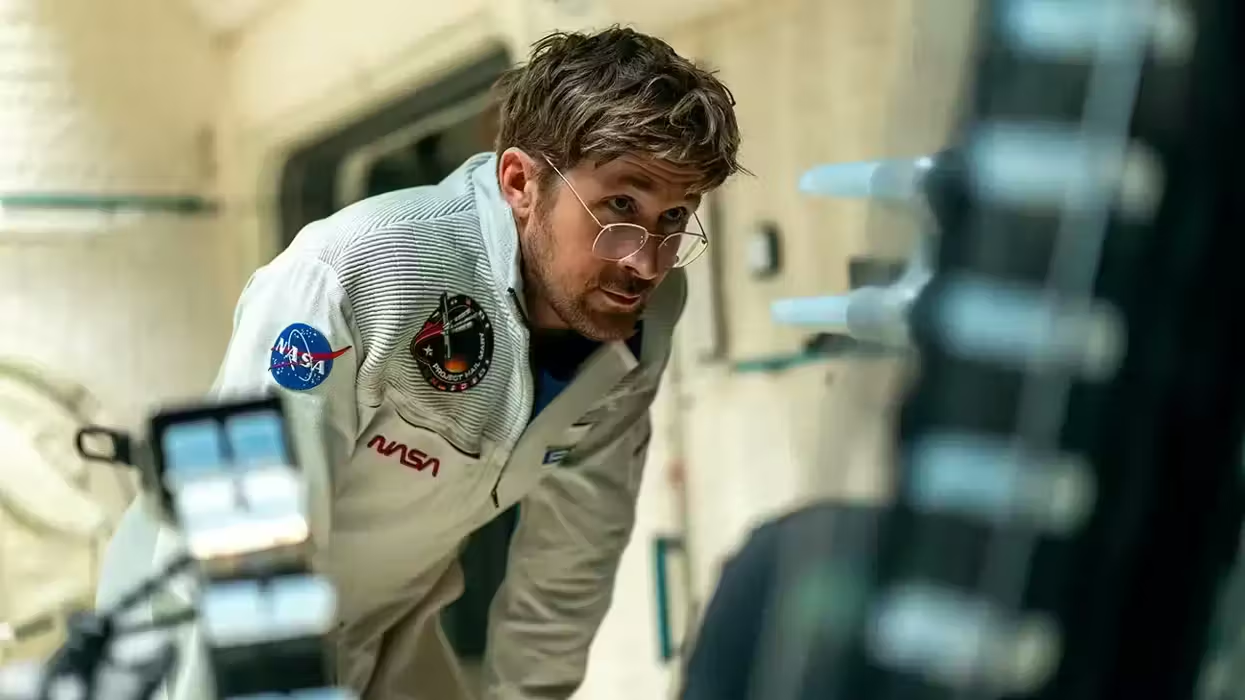
Project Hail Mary is a technical marvel and easily one of the year's best films, if you ask me, a film lover who saw it three or four times in theaters. So, of course, when the opportunity arose to speak with the film's editor, Joel Negron, ACE, we jumped at it.
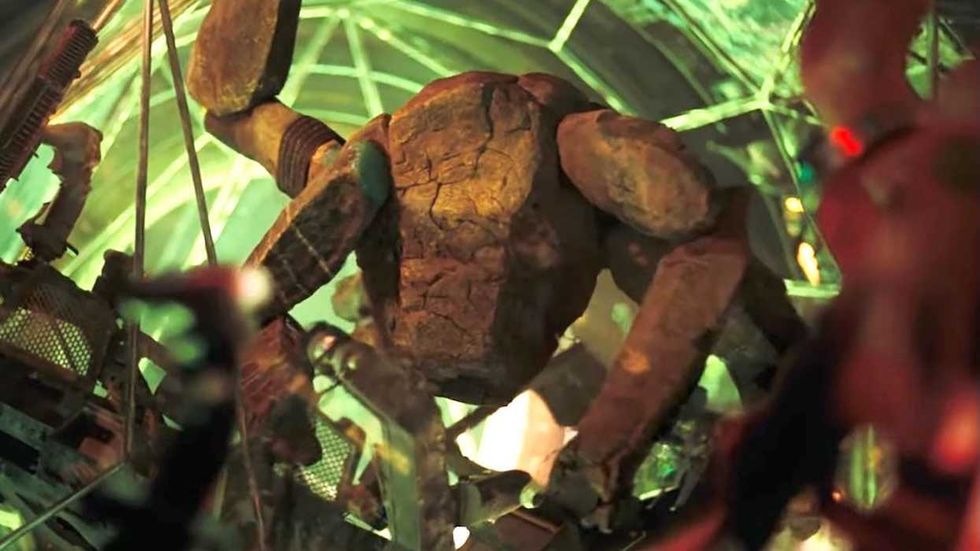
The film follows a doomed Earth and a dying sun. Scientist and teacher Ryland Grace is recruited to help find a scientific solution, but finds himself on a deep-space mission instead, where he meets the Eridian alien, Rocky. Together, they work to save their worlds.
Negron has cut for directors Phil Lord and Chris Miller since 21 Jump Street and has also cut Thor: Ragnarok, Jungle Cruise, and Cocaine Bear. Project Hail Mary is adapted from Andy Weir's book, opened in March 2026, and is heading into awards season now. Negron said he's been pleased that the film has resonated so strongly with audiences.
"Some of the movies I've worked on, people still talk about, but that's something that's really unique with this one," Negron told us.
We talked about how he cut scenes before they were finished, how emotion decided where flashbacks went, and what he wishes he'd done earlier in his career.
- YouTube www.youtube.com
Organize First, Then Hunt for Emotion
The movie runs on puppetry and improv, so the footage changes from take to take. We asked about the challenges of working with footage like this.
Negron split his answer in two. The technical challenge is organization. With that much footage, he has to be able to find anything once the assembly is done and he's in the room with the directors. He uses a stringout, or a timeline where all usable raw clips are laid end-to-end in sequential order.
The creative challenge started before he cut anything. He read the book and the script and decided the audience had to care about Rocky.
"I just searched for all the emotional bits I can, and I kept it on an emotional level whenever I needed to. And emotion, I'm also talking about comedy too. Comedy is emotion. So I look for the funny bits, both not only for the alien character Rocky, but also for Ryan [Gosling]. I was constantly scouring for funny bits of him, or bits of him that convey emotion, or bits of him where we really believe he's talking to an alien. That was a lot. I was doing that practically every day."
Searching that closely meant he couldn't wait for the shoot to wrap.
Cut the Scene Before It's Finished
Negron was in Shepperton Studios and on set with Lord and Miller as the film was being shot.
We asked what being on set added to his process, and what the risks were of being so close to the directors. He started with a joke about the risk—which was just getting in the way, or having his phone ring mid-take.
Then he explained why he was there at all. He started cutting during production and showed Lord and Miller scenes they'd shot a couple of days earlier.
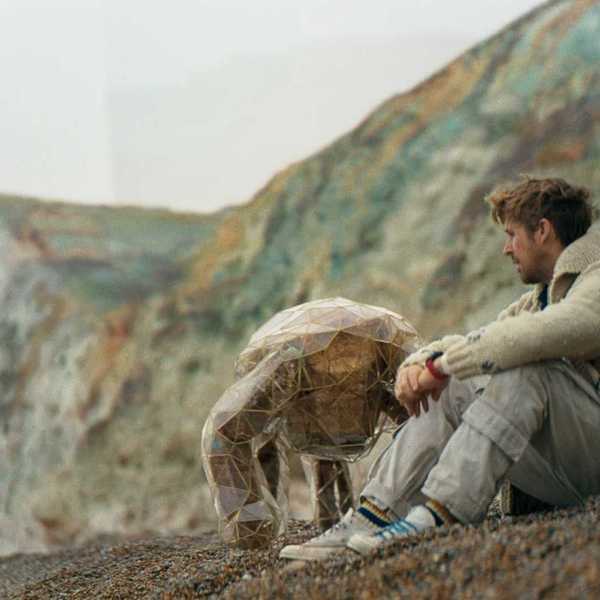
That mattered because of how the Rocky scenes were shot. Gosling's side came first, with a few over-the-shoulders on Rocky with James Ortiz voicing him. A few days later, they came back for Rocky's side, when the puppeteers did more of the work. The puppeteers were on set for Gosling's side too, just less involved. That practical approach is part of how the film skipped green screen.
Negron said:
“So I would cut the scene together after they shot Ryan’s side with storyboards or with, we call it pre-visualization, with just rudimentary cartoons. And then I would go to the set and show Chris and Phil, ‘Oh, this is the scene, but these are the pieces that we need for Rocky.’ And then we would discuss that and then we would discuss it with the cinematographer, with Greig Fraser, and then they would go back and shoot those scenes of Rocky. So in those cases, I had to be there and I had to keep showing them scenes so that they knew where they were at and what they needed to get and what are the pieces that are going to make the sequences work.”
Once the footage was in, the puzzle got bigger.
 'Project Hail Mary' Credit: Amazon MGM Studios
Move Scenes to Earn the Big Moment
The movie is massive. Negron told Art of the Cut that his editor's cut ran about six hours and the version screened for test audiences ran almost four hours.
As he moved between the flashbacks and present day and whittled the cut down, which move changed the film most? He said every move changed everything.
Stay on Earth or in space too long, and the audience feels it, and cutting to a flashback at the wrong moment throws everything off. The team worked through it by trial and error, screening for themselves, test audiences, and friends and family. His test for every placement was emotional.
“And it all kind of goes back to what I mentioned earlier is just how do you feel emotionally during parts of the movie? Emotionally, am I feeling like I’ve told enough of the story so that the audiences can be sad when Rocky is giving Grace the fuel? Is there enough background there? So if there’s something that was later than that, I would move it earlier just so that I get the emotion out of the Rocky giving Grace fuel scene.
So that’s pretty much what we did most of the time is there was a balance of what you needed. How much flashback do you need so that when you’re back in space, you feel the story? How much of astronaut training do I need for Grace to be able to get out in a space suit and do a spacewalk? So it was just a balance, and a lot of trial-and-error and a lot of searching for the right pieces.”
What He Learned
When we asked what challenge he'd carry into his next project, Negron brought up the formats. The film uses two aspect ratios. The spaceship scenes fill the tall IMAX frame, while Grace's memories of Earth play in a wider, letterboxed frame. On top of that, the film had to work across every release version, from IMAX to standard theaters.
So Negron often had to picture the final framing of a shot, adjust it, and make sure that cutting from the smaller frame to the bigger one didn't jar the audience.
The team also smoothed those jumps in post. Per the ASC, Fraser rephotographed the Earth flashbacks onto film with a deliberately mistimed shutter, using the streaks it created to move between the IMAX spaceship and the wider memories of home.
Learn more about the aspect ratios the film used.
 'Project Hail Mary' Credit: Amazon MGM Studios
Edit Everything, Then Tell People
When asked what an up-and-coming editor should start doing before they get deep into a career, Negron answered by describing how much easier it is to start now.
When he began, features were shot on film, which was expensive and hard to access. Videotape came next, and you still needed equipment.
“Now anybody can edit on a computer or laptop, even on your iPhone. So the advice I would give, because the thing that makes you a good editor is to be able to edit as much as you can, whatever you can whenever you can, make music videos of your friends or do little stories, shoot it on your iPhone and edit it together. Anybody that’s up and coming and wants to be an editor, they should first and foremost learn the mechanics of editing and the language of editing, and you can’t do that unless you’re actually doing the editing.”
His second step was to pick one piece of software and learn it, using a free download or trial and the many places to study it. His third step was to meet assistant editors and editors and tell them what you want, which he said he failed to do.
"I was too shy to tell people, 'Hey, I want to be an editor.' And I don't know why. When you're 20-something, you're shy like that," he said. "But tell people that you want to be an assistant editor, you want to be an editor, you want to get into editing. Tell as many people that are in the movie business or in the same type of business, [the] entertainment industry, just let them know what you want to do, and don't be shy, and meet as many people as you can, however you can."