5 Times the Joker Outshone Batman in Nolan’s Masterpiece
These 5 scenes prove why Ledger’s psychotic Joker remains the gold standard of cinematic power, surpassing even the vigilante superhero.
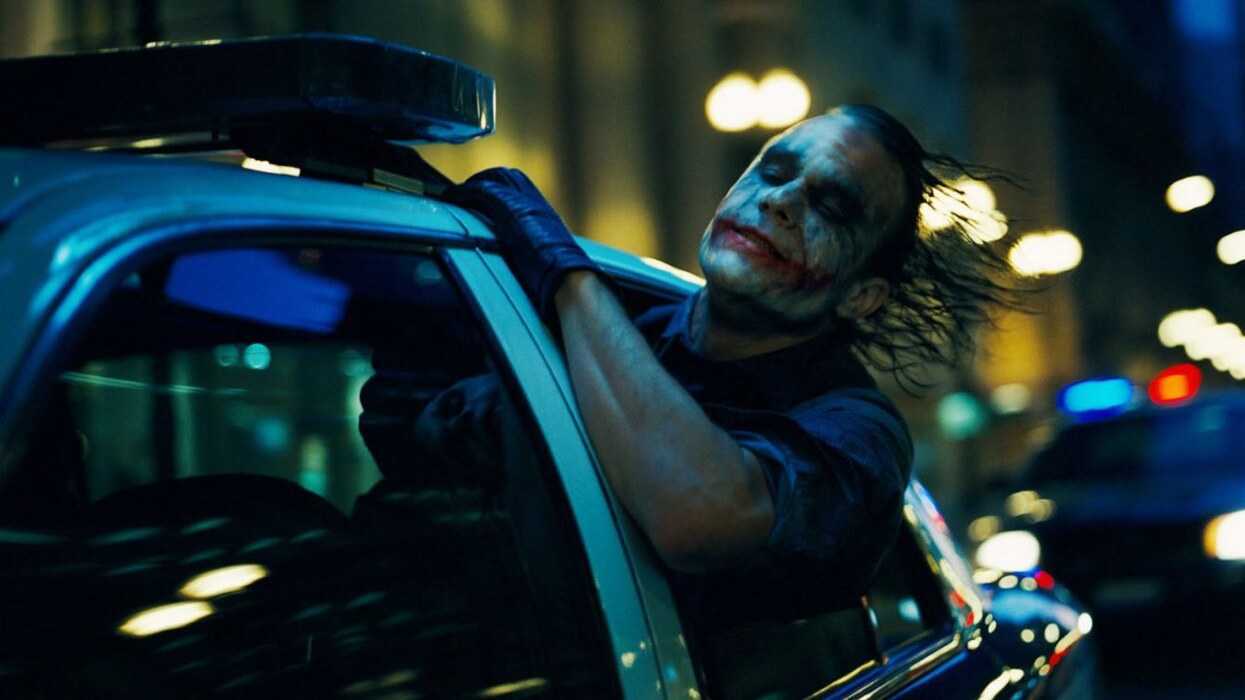
The Dark Knight (2008)
In the grand theater of drama, the eternal fight between good and evil, we naturally expect the knight in shining armor (or cape) to come out on top. Mostly, he does. But sometimes the force of nature is such that it upends this whole narrative forecast.
This antithesis couldn’t be truer and more pronounced than in Christopher Nolan's magnum opus, The Dark Knight (2008). The film gave us the steely, valiant, yet humble protector that we expect to see in the Batman movies. Christian Bale’s performance was a cherry on top; a hero, burdened by his own past, trying to save the city’s soul.
But then came Heath Ledger’s Joker.
This Joker was a paradigm shift from what we knew of him. He was no more just the snarky villain; he was an out-and-out agent of chaos. He had a profound philosophical edge. He didn’t care about money, not even power. All he wanted to do was prove a point; a very grim, pessimistic point that reflected his warped view of the world. And, while it seemed like Batman was playing catch-up, Ledger elevated his portrayal of the Joker from a mere performance to a full-blown psychological study in madness.
Here, we find out about those five scenes where this Clown Prince of Crime challenged the Dark Knight, perhaps just so that he could own the screen.
5 Times Joker Outshone Batman
1. The Mob Meeting: A Better Class of Criminal
This is the scene that introduces us to the city’s mainstream criminals, and then they are put against the Joker. The Joker then displays how his comparative value (or threat) is unimaginably higher. Technically, this scene appears long before Batman and the Joker share the screen, but because of the sheer madness and intensity, it deserves the spot.
The scene shows how to establish a character; rather, a character’s power. The Joker walks into the room full of Gotham’s feared criminals. By the time he leaves, they are reduced to looking like marginal crooks. All it takes for the Joker to leave this impression is his spunk and psychological warfare. It also becomes apparent that, more than a criminal, he is a radical, newfangled idea that instantly renders these hardened criminals obsolete.
2. The Penthouse Party: “Why So Serious?”
The Joker and his men crash the fundraiser for Harvey Dent (Aaron Eckhart) at Bruce Wayne's plush penthouse. The very second he looks around the room, it shows in his attitude how inferior he thinks these “who’s who” are.
While searching for Harvey Dent, he comes across Rachel Dawes (Maggie Gyllenhaal). He mocks her, asking, “Why so serious?” and in an intimately chilling moment, narrates one of his several fabricated stories about how he got his facial scars. Later, Batman arrives, but not before he has achieved his goal: spreading fear.
Batman throws the Joker off the building, securing himself the physical victory. The psychological win, though, belongs entirely to the Joker. Batman is extremely resourceful, but the Joker has devilish cleverness and adaptability. Ledger’s physicality makes a tremendous impact here. Through quirks, such as lizard-like lip-licking and nonchalantly waving his knife, he looks like the master of ceremonies. Batman’s arrival and subsequent actions, in comparison, look reactive.
3. The Interrogation: “You Complete Me”
This is the scene where the Joker spells out who he is and what he wants to achieve. He is finally captured and detained at the GCPD. After Commissioner Gordon’s good-cop act, Batman strives to intimidate him with physical force to divulge Harvey Dent and Rachel Dawes’ locations. However, with the Joker’s incessant giggling and goading, like a child being tickled, you are driven to pity Batman’s helplessness. This physical confrontation is what the Joker wants Batman to get into.
Here, the Joker outshines Batman because you can see him easily getting under Batman’s skin. And that’s the superhero we are talking about. In one moment, he equates Batman with himself, calling both freaks; in the other moment, he says Batman’s existence is what gives him his purpose. “You complete me,” he says. The scary thing here is that he seems to understand Batman better than Batman understands himself.
4. The Street Confrontation: Hit me!”
The Joker has often implied, sometimes straight-out said it, that it’s the rules, the moral code, that bind Batman’s hands, and that’s what prevents him from winning. Whereas the Joker has no such predispositions. What’s more, he has immense faith in Batman’s lawfulness. When Batman darts towards the Joker in his Batpod, aiming to kill him, the Joker stands resolute, prodding Batman to hit him. Batman wants to kill him, but he himself doesn’t know if he will. The Joker does. He knows Batman won’t break his own rule: never kill anyone. And that’s why he is not afraid to stand calmly in the middle of the road, in Batman’s way. He is no threat to him at all.
This killer confidence, this killer insightfulness, and his propensity to use his opponent’s goodness against him make the Joker extremely lethal. By forcing Batman to choose between killing him and failing, he creates a no-win situation for him.
5. The Two Ferries: A Social Experiment
In the climactic showdown of principles, the Joker puts his philosophy, “civilization is a sham,” to the test. He rigs two evacuation ferries with explosives. One ferry is full of civilians; the other, with prisoners. Each boat has the detonator for the other. The passengers on both ferries have until midnight to press the detonator. When they do, the Joker’s point will be proven.
People on both ferries ultimately prove him wrong. While his social experiment fails, the Joker still wins the situation against Batman. Batman proves to be incorruptible, but the Joker has managed to corrupt “Gotham’s White Knight,” Harvey Dent, and has set him to exact revenge on Commissioner Gordon and his family. Now, it’s up to Batman to race against time before Dent does something bad. You see, the Joker, almost effortlessly, manages time and again to engage Batman in such life-or-death tasks. It’s like playing catch with a puppy.
Conclusion
Christian Bale’s Batman is inarguably the steadfast anchor for the Batman trilogy, but The Dark Knight belongs 100% to Heath Ledger’s Joker. He rises above Batman, strictly from the narrative point of view, in almost every sense. And it’s not because he is physically overpowering, but because he is, in his twisted, unhinged way, more agile in the mind. He is David to Batman’s Goliath. It’s the Joker who devises the games, it’s the Joker who sets the rules, and it’s the Joker who breaks them. All Batman can do is get up to speed.
- Building Gotham: Inside the Production Design of the 'Dark Knight ... ›
- 5 Tips on How Christopher Nolan Wrote the Joker and 'The Dark ... ›
- The Artist Behind the Celebrity: 5 Surprising Facts From 'I Am Heath ... ›
- The Unexpected Story Behind Joker's Lip-Licking in 'The Dark ... ›
- What One Key Scene Tells Us About Heath Ledger's Joker | No Film ... ›
- The Most Heartbreaking Line from ‘Brokeback Mountain’ ›
- The Joker Line That Changed Movie Villains Forever ›