Harvey Dent’s Warning in ‘The Dark Knight’: The Birth of the Villainous Hero
How Harvey Dent’s “You either die a hero…” quote became a timeless reflection of morality, legacy, and the fragility of heroism.
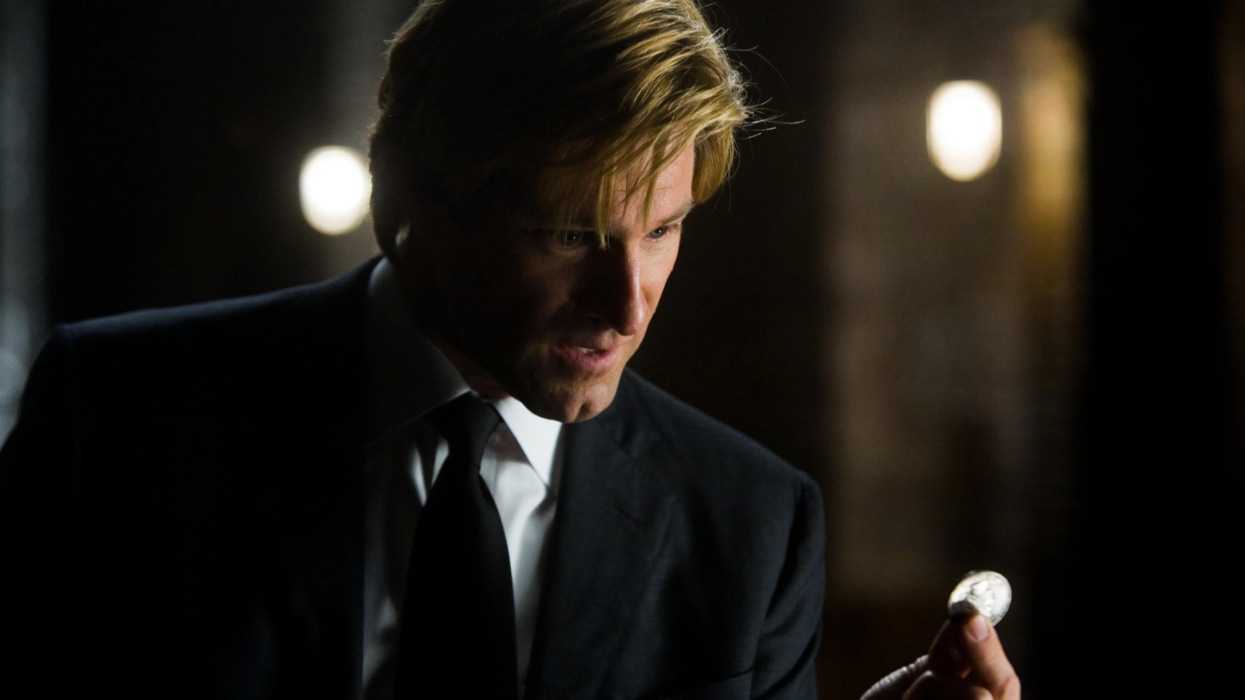
The Dark Knight (2008)
Some movie lines convey a philosophy, the film’s theme, or certain character traits. And then there are some lines that do everything. We got one such line from Christopher Nolan’s The Dark Knight (2008). It comes neither from our brooding superhero nor the maniacal supervillain. It comes from Gotham City’s “Golden Boy.”
At a fundraiser at Bruce Wayne’s penthouse, Harvey Dent says, “You either die a hero or live long enough to see yourself become the villain.”
The line highlights the fragile and transient nature of heroism. By doing so, it also foreshadows the film’s plot, as well as encapsulates Harvey Dent’s entire character arc.
Let’s explore how this line implies that legacy is like a coin toss and that goodness comes with an expiration date.
The Line’s Origin
It would help to know the context. That way, we can find out where the line gets its emotional weight.
Julius Caesar
In the movie, District Attorney Harvey Dent (Aaron Eckhart) can be understood as Batman or Bruce Wayne’s (Christian Bale) symbolic alter ego—they both fight crime, but while Batman works in the shadows, Dent works in legitimate ways. Needless to say, they support each other.
At a fundraiser, which Wayne has arranged to support Dent’s endeavors, a guest comments that a democracy needs legitimate protectors like Dent himself instead of a single, masked vigilante who thinks he is above the law. Dent disagrees and gives an example of the Romans, saying that when enemies were at the gates, they would suspend democracy and appoint one man to protect their cities. Rachel Dawes (Maggie Gyllenhaal) raises a fair objection: the last man they appointed was Julius Caesar, and he never gave up the power.
Here we have one of history’s most famous examples: Julius Caesar, someone who started as a brave soldier, was famously intelligent, and was a strategic ruler. But, after appointing himself dictator for life, his other side came to light: he was arrogant, a tyrant, and vain.
Harvey Dent accepts the acuity of this argument and says the line in the context.
The Speaker: Gotham’s White Knight
Dent is idealistic, charismatic, and beloved by the citizens. At this point, Dent has positioned himself as Gotham’s incorruptible DA who will stop at nothing to bring down the crime syndicates. In the fundraiser scene, their objective of discussion is Batman, not Dent himself, so the line comes off as confident rhetoric rather than a statement of self-awareness.
Foreshadowing Wrapped in Philosophy
When Dent says this line, he is unintentionally drawing the trajectory of his own character arc. At this moment, his glory is on the rise, but he fails to see his looming downfall.
It is very crucial to note that when Dent’s downfall occurs, it’s because of his inability to endure disillusionment. There is no role of his malicious intent.
Why the Line Resonates
The line still sticks, and not only because it’s from an iconic movie, but because it is too closely applicable to real life. When Jonathan Nolan, Christopher Nolan’s brother and frequent collaborator, wrote it, its thematic potential was immediately apparent. It felt so powerful that Chris Nolan reportedly was angry (at himself) for not writing it himself. Brothers!
Fragility of Heroism
The quote is the crux of Dent’s “fall from grace” story. In real life, we often come across such stories: celebrity scandals, corruption by politicians, and unethical acts of public figures. Revolutionary leaders turning into the despots they once deposed is not as uncommon as one might think. Keeping in line with the real-life trends, his line shows us the predictability—and almost definitiveness—of this unfortunate cycle.
Heroes, Villains, and the Blurry Middle
The movie’s theme and the main plot clicked with the modern audience, who desire to see more nuanced, more layered characters. In contemporary storytelling, taking inspiration from Dent’s caution, modern storytelling often presents morally grey characters. More often, we meet characters like Walter White and Tony Stark. These antiheroes challenge the black-and-whiteness of the one-dimensional approach of good and evil. This nuanced approach of antiheroes encourages us to consider how long we can or should support the protagonist (or a hero) who “lives long enough” to lose their morals.
Conclusion
Harvey Dent’s words are a philosophical compass. They show that the line that separates right from wrong is very thin and the legacies that depend on that line are incredibly delicate. Christopher Nolan brilliantly highlights this philosophy in The Dark Knight, giving us the protector (Batman), who becomes a pariah, and the hero (Dent), who becomes the villain.
At the center of the line’s enduring legacy is the conflict between idealism and human nature. Sometimes heroes fall, not always because they become corrupt, but because the world doesn’t let them remain pure.
In other words, life’s ultimate challenge is not to die a hero but to learn to live without turning into a villain.
- The Dark Knight's Hidden Hero: Why Two-Face Owns This Story ... ›
- Christopher Nolan's 20 Tips for Writing Screenplays | No Film School ›
- Directing Lessons From Christopher Nolan Movies You Need to ... ›
- What Can We Learn from a Christopher Nolan Fanboy? | No Film ... ›
- Why is Christopher Nolan so Obsessed with Time? | No Film School ›
- Joker’s Iconic Bathroom Dance Wasn’t in the Script ›
- 5 Times the Joker Outshone Batman in Nolan’s Masterpiece ›
- How 'The People's Joker' Got Away With A Heartfelt Batman Parody ... ›
- How Cinematography Blurs the Lines Between Power & Morality in ... ›
- The 'Dark Knight' Quote That Plagues Nolan—and the Secret Writing ... ›
- The Unexpected Story Behind Joker's Lip-Licking in 'The Dark Knight' | ›
- 5 Tips on How Christopher Nolan Wrote the Joker and 'The Dark ... ›
- Building Gotham: Inside the Production Design of the 'Dark Knight ... ›
- How Did 'Heat' Inspire Nolan to Make Gotham a Character in 'The ... ›