We’ve learned from movies such as Chris Columbus' Home Alone or Jim Henson’s Labyrinth that wishes are not to be taken for granted. But beyond that, these stories also measure the scope of accountability in survival.
Sarah's journey, which may be presented as a child’s fantasy adventure, is, in reality, a fairytale for grown-ups. Her quest to save her infant brother from the clutches of the evil Goblin King Jareth is more about a life lesson she learns.
But what I like the most about this film is that this entire sentiment gets encapsulated in a simple song—more specifically, the line, “It’s only forever, not long at all.”
In this article, we’re examining the chorus line of the song “Underground” by David Bowie, and how it upholds the spirit of Labyrinth in less than 10 words.
The Story
Sarah loves fantasy stories, and her favorite book is The Labyrinth. Her father has remarried, and recently she has been feeling lonelier than usual—one of the reasons she has sought escape in her books.
The story opens on an evening. After arguing with her stepmother, Sarah is left alone with her infant brother, entrusted with babysitting him while her parents are out.
Before long, her brother totally gets on her nerves. Sarah is also upset that her stepmother gave away her favorite teddy bear, Lancelot, to her stepbrother.
Frustrated, she cries out, wishing that someone would take her away from this awful place. When she absolutely can’t get her brother to stop wailing, she wishes that the goblins would take him away. But little does she know that both of her wishes will come true.
Shortly after she makes those wishes, they come true. The Goblin King tells her that they’d be stuck in the labyrinth, and her brother will be turned into a goblin if she fails to reach the center of the maze within the specified time. Sarah only has 13 hours to save her baby brother.
Sarah’s entire journey through the labyrinth is one of self-discovery, redemption, and growth, as she resists temptation and does the right thing.
To Give You a Little Context
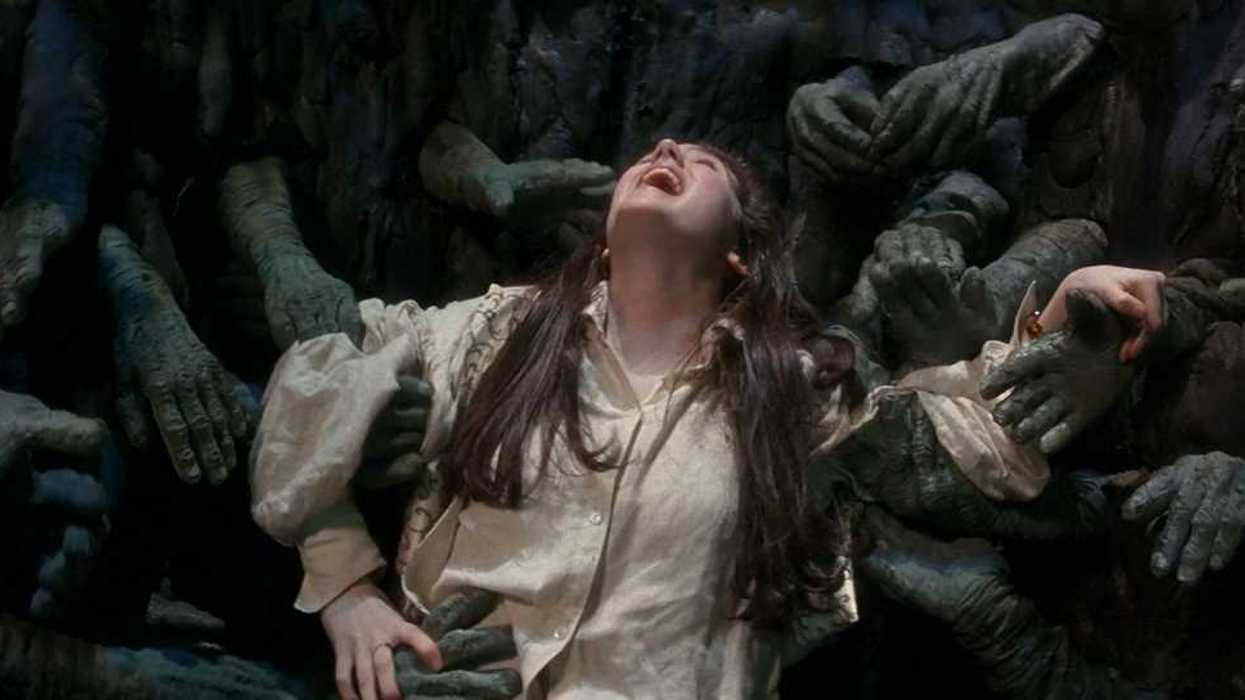
 'Labyrinth'Source: TriStar Pictures
Sarah’s time in the labyrinth symbolizes her psychological transformation as she comes to understand what growing up means.
Being a teenager is a tricky phase in everyone’s life. It’s the time when we tend to lose focus, make poor decisions, and hurt those close to us. Sarah’s resentment toward her infant brother and her current life stems from misplaced emotions. Sarah seeks an escape from her situation (which is portrayed as a labyrinth) in the story.
Jareth is a multivalent symbol in the narrative that operates on psychological, sexual, patriarchal, and developmental levels on Sarah. He and his labyrinth are nothing but a projection of her own fantasies, which she must shun to grow and embrace her responsibilities.
Analyzing the Song and the Line
On the surface, the song seems to be a romantic promise, but when you analyze it in Sarah’s context, you realize that Jareth is offering eternal stagnation to her in the name of peace.
As I mentioned earlier, Jareth’s labyrinth is more like a game where Sarah must beat the puzzles to get to the top. For instance, “the Bog” represents the irreversibility of certain choices, “the Junkyard” represents the trap of nostalgia and attachment to the past, and “the Escher stairs” represent the willingness to accept perspectives without worrying about the right direction.
The labyrinth isn’t a nightmare for Sarah; instead, it’s a tempting dreamscape where everything feels safe and comforting, in its own way. However, that’s the trap.
In the song, Jareth assures Sarah that walking away from her responsibilities leads to an easy life, and in the underground, i.e., in the labyrinth, no one is going to blame her for walking away. To a child approaching adulthood, instilling a belief like this can rot their personality to the core.
But the line, “It's only forever, not long at all,” is alarming the moment we realize its true implication.
Jareth’s words reveal a horrifying paradox. Forever stands for infinite, but Jareth still refers to it as “not long at all.” It’s easy to miss what he really means to say—that the appeal of escapism when faced with responsibilities is not only natural, but also equally dangerous in the long run.
Labyrinth is incredibly layered and features endless subtext; however, this one is my favorite. Which is yours? Let us know in the comments!