Actor-Turned-Director Lee Kirk on Directing Actors and the Making of 'Nimrods'
“I listen to these tapes and everything changed for me then.”
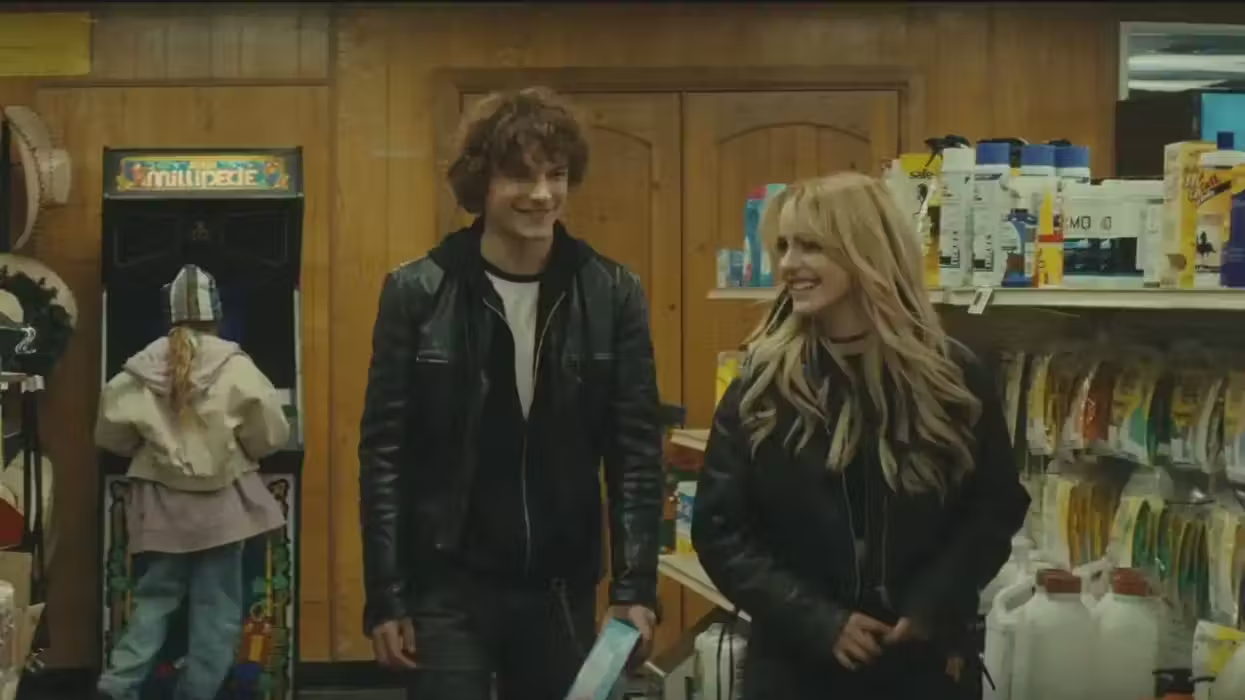
'Nimrods'
In this episode of the No Film School Podcast, writer-director Lee Kirk joins GG Hawkins to break down the making of Nimrods, his Green Day-inspired coming-of-age road movie.
Kirk traces his path from studying acting at DePaul University to learning screenwriting and eventually directing, and explains how his acting background continues to shape the way he works with performers.
He also discusses developing Nimrods with Billie Joe Armstrong, weaving real stories from Green Day into the screenplay, casting and rehearsing a young ensemble, building a collaborative crew, creating a timeless visual texture, embracing improvisation, and shooting a live Green Day concert with thousands of actual fans.
In this episode, we discuss:
- How Kirk’s acting training at DePaul University led him toward screenwriting and directing
- Learning story structure through John Truby’s 22-step approach and The Anatomy of Story
- How Chris Messina encouraged Kirk to direct his first feature, The Giant Mechanical Man
- Why an acting background can help directors understand how to communicate with performers
- How Billie Joe Armstrong approached Kirk with the initial premise for Nimrods
- Reverse engineering a feature screenplay from a predetermined Green Day concert ending
- Using real stories from Billie Joe Armstrong, Mike Dirnt, and Tré Cool as inspiration for the screenplay
- Drawing from movies like The Goonies, Vacation, Footloose, and Risky Business to establish the film’s tone
- Making a contemporary movie feel nostalgic through vinyl, cassettes, camcorders, old cars, and other analog textures
- What Kirk looks for when hiring department heads and why collaborative problem-solving matters
- Turning an Oklahoma City junkyard into a convincing punk venue
- Casting Mason Thames, Mckenna Grace, and the rest of the young ensemble
- Using actors’ existing talents to add specificity and production value to a movie
- Conducting chemistry reads over Zoom when the budget made in-person auditions impractical
- Why rehearsal is less about locking down performances and more about making actors comfortable enough to play on set
- Helping actors get out of their heads by giving them time, space, and permission to experiment
- Using long pauses as a directing tool to help actors access emotion
- Why Kirk deliberately maintains a calm demeanor on set, even when production is stressful
- Finding unexpected moments through ad-libs and improvisation, including a spontaneous Fred Armisen scene
- Shooting 28 days in Oklahoma City before moving to Los Angeles for four additional days
- Capturing the Green Day concert with four cameras and roughly 2,000 real Green Day fans
- Why Kirk specifically budgeted for large numbers of extras after lessons learned on previous productions
- Kirk’s advice for emerging filmmakers on studying story structure, watching films analytically, writing frequently, and taking advantage of accessible filmmaking tools
Guest:
Subscribe to the No Film School Podcast on:
Get your question answered on the podcast by emailing podcast@nofilmschool.com
Listen to more episodes of the No Film School podcast right here: