What Happens When You Learn Everyone in Your Film is a Liar?
How a documentarian channels ethics in their work.
'You Can See Everything'
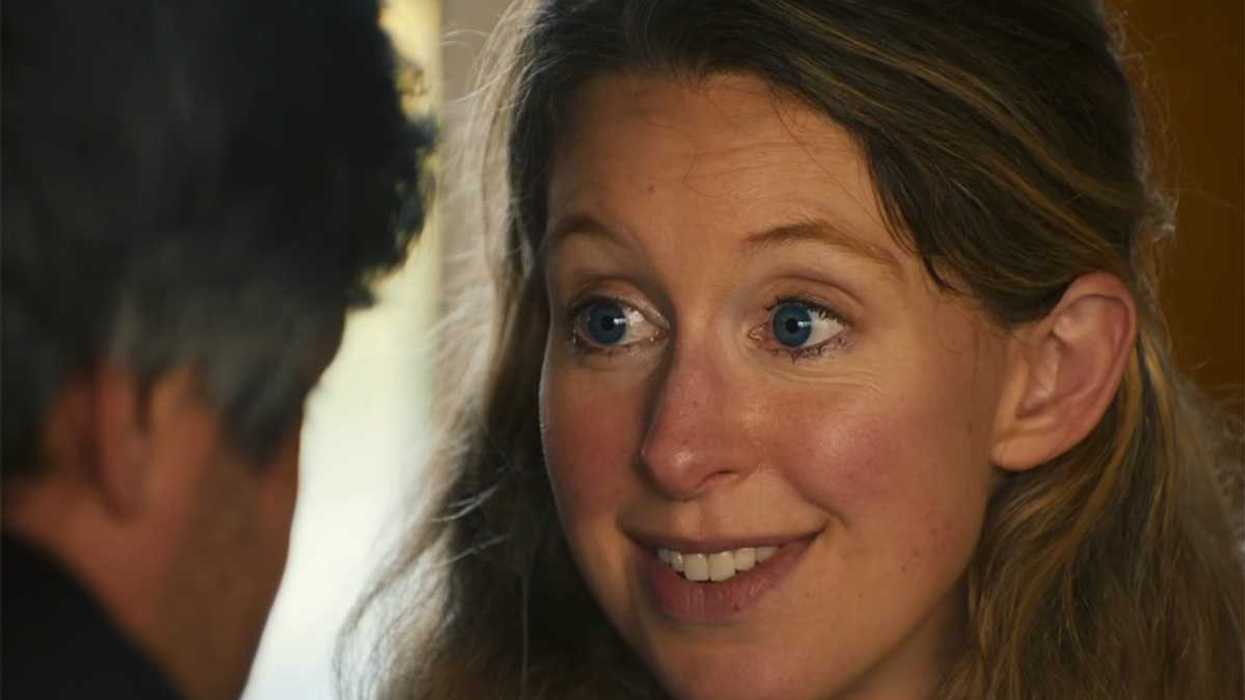
Nathan Fielder’s new documentary, You Can See Everything, has exploded box office revenues by giving audiences a ringside seat to the cat-and-mouse game he plays with his central interviewee, Elizabeth Holmes, a convicted Theranos fraudster.
But as documentary filmmakers, we should not take Fielder’s fine film at face value. He’s not the only documentarian confronting a main character who has trouble with the truth. No, Fielder is challenging all of us documentarians to answer a much more profound question: What happens when you realize that the subject of your film is lying? In fact, it is a problem for every single one of us.
Truth and Lies
In the case of You Can See Everything, this issue is set out in stark relief. Holmes’s trial, numerous podcasts, and the made-for-streaming docudrama The Dropout all have made her story known to many. All these explorations, as well as Fielder’s new one, pose the same question: Is Holmes a master of lies or self-delusion? We’re never quite sure.
Holmes is an easy target for this inquiry because she is so smart and so wily that it took years for authorities to uncover her duplicity. Normally, a subject’s internal mystery isn’t quite so well defined or hard to track. Most of our documentary subjects are much less sophisticated, much more likable, and far less canny. But they, too, are liars. Maybe not intentionally so, but they are liars (as a courtesy we can call them “non-truth-tellers”) all the same.
The problem is that we, as filmmakers, find it easier to swallow the lore of earnest do-gooders than that of a con artist who fleeced billions from investors. Indeed, many of us don’t just become sympathetic to our characters; we get swept up into their world and ultimately become their allies and their advocates. It has almost become an occupational hazard.
The Problem With Empathy
In my nearly 40 years of making and teaching about documentary films, I have witnessed an evolution in my colleagues’ approach to their craft. We have moved from an “observational” approach to our film subjects to a more contemporary posture of unquestioningly championing their behavior and motives. Indeed, many of us have adopted empathy instead of skepticism, engaging in advocacy instead of maintaining a journalist’s cool reserve.
That said, it’s not surprising how closely aligned documentarians have become to their subjects. We, too, “live” with them—not in the literal sense that Fielder does it with Holmes, but in the sense of the longitudinal path of many of our films; it can literally take years to complete principal photography before a true story arc emerges. During that time—replete with all those moments of familiarity and coordination of basic human activities—it is easy to become enmeshed in someone else’s life narrative. Many filmmakers have even gone to the next step, making the film’s subject a kind of “partner” in the filmmaking process.
In the post-You Can See Everything world, we need to acknowledge that these are ever-more awkward circumstances for us to be in. Fielder has laid bare an issue that is now impossible for us to ignore: What happens when, like most people, our subjects reshape their past to make themselves out to be the hero or the victim? What happens when they simply repeat these selective memories without an ounce of self-questioning? What happens when, with age and retelling, narratives shift and we, as documentarians, become accomplices in our subjects’ mythmaking? In the most extreme cases, when the subject is a “partner” in the filmmaking process, what happens when the resulting work becomes more a one-sided promotional piece than an objective exploration?
Mind you, these acts of self-justifying storytelling don’t necessarily have to be conscious or intentional. Reinvention of the past and reinterpretation of the present happen all the time in our minds. Indeed, this reshaping is the simple result of our being human.
Nothing But Lies
Yes, sometimes such re-imagination is (like Holmes) an intentional act. Any interviewee’s best exercise of their agency—especially once an appearance release is signed—is to allow the filmmaker to witness their world when their narrative is calcified, whether it is objectively true or not. Granted, that’s a hard act to sustain, but there are actors in life everywhere. In the case of Fielder, Holmes eliminated any barrier by giving him 24/7 unfettered access. But most film subjects don’t do that. So, our film subjects pick and choose (again, frequently without intention or malice) what to reveal to the audience and what to keep close to the chest.
The fact is that, either consciously or unconsciously, people lie all the time. If we, as documentarians, don’t believe that, then we have failed to understand the most fundamental fact of human nature—that each one of us needs to justify and make sense of our existence on this planet.
Because I am both an historian and a documentarian, this central fact emerged very early in my career, leaving me with a sense of caution ever since. While I was in graduate school, I did an oral history of one of the first public-private corporations. Its founding moment came at one very specific meeting between government and corporate representatives. Nearly everyone I interviewed from those early days remembered quite clearly their attendance at that seminal moment of birth for the company. They remembered where they sat at the table, what they said, and how they reacted to the outcome of the meeting—which was the founding of this unique partnership. Problem was, except in one case, none of their recollections were true.
I had a copy of the meeting agenda, a list of attendees, and the meeting minutes, which provided a verbatim record of what was said. Not one of my interviewees was in any way involved or witness to the proceedings. Even so, each of them described being present at this pivotal moment in history and having actively participated in the discussion, recalling with pride of authorship how they felt when the press announcement was made. They weren’t “lying” per se. They were simply placing, like many of the “recollections” of our youth, themselves at the center of a narrative that they had heard about so many times that they had adopted it as their own.
Truth From the Lies
That early experience taught me something crucial I have carried with me ever since: never believe someone’s recollections or even their interpretations of the present. That attitude seems harsh, I know. But it has kept me from being swept up in the mercenary assignment that has become much of documentary filmmaking.
Having empathy for one’s documentary subject is one thing. Creating an alliance—whether an emotional one or a more practical one—can distinctly compromise the “nonfiction” aspect of our work. Just ask Nathan Fielder. He’ll tell you how hard that balancing act is, having lived with Elizabeth Holmes for 34 days without respite.
We take it as gospel that we are not journalists who seek an objective truth. Documentary is nonfiction storytelling with a point of view. But, as Fielder reminds us, we need to search far and wide for the narrative truth of our story—focusing on questioning, reserving judgment, and striving for a dispassion that allows us to parse out truth from lies—even when our film’s subjects may not be aware of that distinction themselves.