The Meaning Behind “Maybe Poker’s Just Not Your Game, Ike” in ‘Tombstone’
Learn how to make your characters insult with intelligence and style
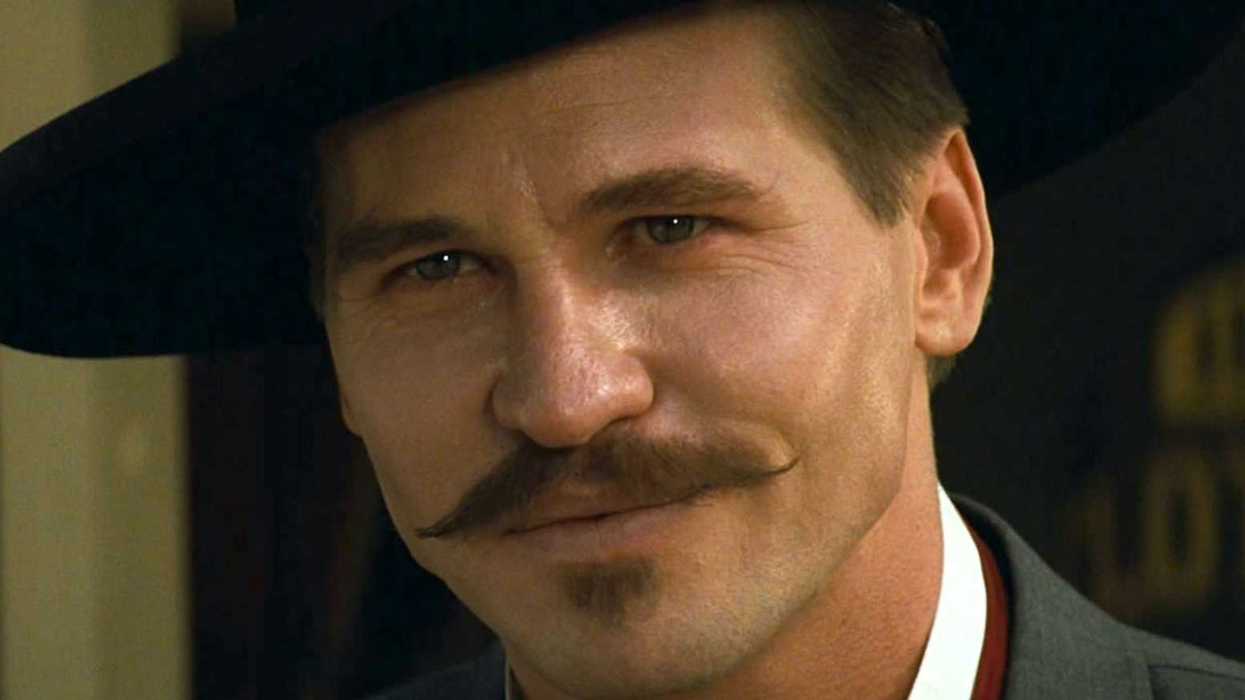
Tombstone (1993)
Well-written, witty dialogue doesn’t just tell us about a character’s sense of humor; it also tells us about the writer’s sense of humor. These are lines that could be said at various points in a movie, but they take the audience by surprise with their timing and wickedness.
Tombstone (1993) is a beloved Western movie brimming with moments of wit that make us laugh while also pulling us deeper into the scene. “Maybe poker’s just not your game, Ike,” is one such classic moment in a movie that is not short of them.
What makes this line such a fine example of witty writing? And what can we learn from it?
Let’s jump right in and explore.
What Is Tombstone (1993) About?
Tombstone (1993), directed by George P. Cosmatos and Kevin Jarre, follows lawmaker Wyatt Earp (Kurt Russell), who arrives in the silver mining town of Tombstone, Arizona, in 1881, with the hope of retirement.
Wyatt hopes to put his violent past behind him and live quietly with his brothers, Virgil (Sam Elliott) and Morgan (Bill Paxton). They are joined by an old friend, a witty and sharp-tongued gunslinger, Doc Holliday, played by Val Kilmer.
Cracks begin to appear when a ruthless outlaw gang, ‘The Cowboys’, enters town, led by Curly Bill Brocius (Powers Boothe) and Johnny Ringo (Michael Biehn). They defy locals, the police force, and the town’s general idea of peace.
Tensions escalate between Wyatt and his fellow men and the Cowboys, culminating in an iconic shootout in which the Earps and Holliday face the gang. Throughout the story, Holliday is quietly loyal to Wyatt and stands by him through difficult times. The film explores themes of friendship, loyalty, and the price of violence with witty banter and stellar action.
The Power Of The Line
“Maybe poker’s just not your game, Ike. I know! Let’s have a spelling contest.” is a line that is powerful, humorous, and wicked, but before we go into detail about why it works so well, let’s first try to understand the concept of “words over fists”.
None of us is strangers to the idea of characters exchanging a few customary words before breaking into a fight. We’ve seen it time and again in movies. What makes this scene different?
It uses words as a weapon and humor as ammunition.
As great as it might’ve been to watch a fist fight ensue in this scene, Val Kilmer’s Doc Holliday chooses to embarrass Ike with his words. For a sharp-tongued man like him, this shouldn’t be out of reach or out of character. Humiliating Ike with words makes him a joke in front of others, whereas a fight would feel like just another action scene breaking off amidst a bunch of people who are drinking.
Through this line, Holliday dismantles Ike’s bravado by exposing him twice. Once, in poker, and the second time in the basic skill of spelling. His insult lands with extreme precision and puts Ike in the spot, with little to defend himself with.
The line combines intelligence with “coolness”, a lethal cocktail known to work phenomenally on screen. It makes the audience root for Holliday even more. His effortlessness doesn’t just come from his confidence; it comes from his intelligence and wit.
This line is a fabulous example of a character establishing their dominance with just a few words. In a room full of observers, Kilmer’s delivery helps the dialogue cut through the noise in an understated but exceptionally effective way. Just like any other well-written line of dialogue, it fits perfectly with Holliday’s character and personality.
What This Can Teach Writers About Witty Writing
Doc Holliday’s dialogue can teach us so much about crafting dialogue that stings when we want it to. Let’s look at some lessons we can take from this line.
Being Direct Without Being Direct
Holliday doesn’t look at Ike in the face and call him a fool. He doesn’t use a derogatory term to undermine the man. He actually undermines him. By bringing attention to very specific and rather basic aspects of Ike’s struggle, Holliday’s insult is sharp and to the point.
Finding weak spots
As writers, we must know exactly what each of our characters’ weak spots is. Ike’s weak spots are clear on the page, but most importantly, they are clear to Holliday. He uses this knowledge to ridicule him with ease.
Few words, but the right words
Holliday does not burst into a monologue about Ike’s intelligence, or rather his lack of it. He is focused on two things. One, what Ike struggles with. Two, what would offend him significantly? He combines these two elements in a short but effective way, hitting him hard and fast.
Irony within irony
The irony in this line comes from the ridiculousness of the contrast at its core. Let me explain. Holliday does not talk about Ike’s poker weakness in combination with his weakness at blackjack or any other card game. He combines poker and spelling. The irony covers such a broad bandwidth that it makes Ike appear excessively stupid.
Leveraging tension
This line is uttered at a point of high tension. If done wrongly, it can defuse the tension and ruin the scene. But its sharpness ensures the opposite. By throwing a bunch of stinging words that are put together smartly, the writing leverages its existing tension and takes it up a few notches.
Impulsiveness
Witty dialogue often lands better when it is combined with a feeling of impulsiveness. Look at it like a chess game. The less a player thinks about a high-level move that works well, the better they come across. Holliday’s line comes through impulsively and quickly. There is calculation involved, but we don’t see that part. What we see is an incredibly witty line of dialogue uttered like a reflex action, consequently enhancing how well the scene lands.
Final Thoughts
Doc Holliday’s iconic line, “Maybe poker’s just not your game, Ike, continues to endure because it captures a man’s wit and his personality with utmost precision. The timing of its delivery and the effortlessness with which Val Kilmer says these words only elevate it from the page.
What are your favorite moments from Tombstone? Tell us in the comments.
- Read and Download the 'Tombstone' Script PDF ›
- What Does 'I'm Your Huckleberry' Mean From 'Tombstone'? ›
- Did Kurt Russell Actually Direct 'Tombstone'? ›
- 7 Most Iconic Lines From ‘Tombstone’ Ranked ›
- Learn the Science Behind Writing Funny Commercials | No Film ... ›
- What is Slapstick Comedy? | No Film School ›
- 5 Key Ingredients to Wes Anderson's Comedy | No Film School ›
- 7 Most Underrated Movie Insults Of All Time ›
- 7 Kurt Russell Movie Quotes That Define His Screen Legacy ›