“The D Is Silent”: The Iconic Line That Defined ‘Django Unchained’
Django took control of his own name.
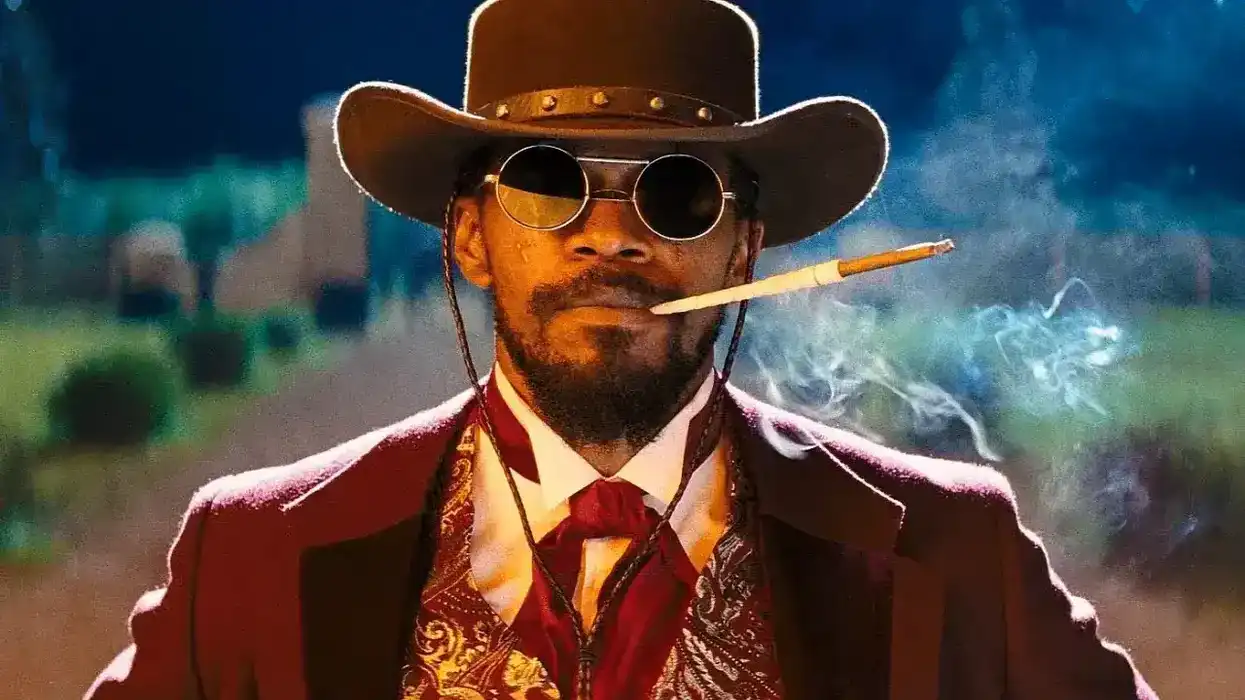
'Django Unchained' (2012)
In Quentin Tarantino’s Django Unchained (2012), the line “The D is silent” lands with quiet precision and feels like a thunderclap. This isn’t just a cool line said by a character; it’s a memorable moment when a freed slave reclaims his own name and identity.
When Django, who is still getting accustomed to life as a freeman, is asked to spell his name, he does so with bravado and newfound confidence. At the end, he emphasizes this by saying, “The D is silent,” not only highlighting his own intelligence but also making Franco Nero’s character realize that he is indeed a free man.
“D is silent” serves as a powerful reminder of Django’s self-worth, the independence of his identity, and his quiet determination to reunite with the woman he loves.
What is the deeper meaning of this line? What can it teach us about writing lines that define character?
Let’s jump right in and explore.
The Moment Django Claimed His Own Name
Before we get into the specifics of the line, let’s remind ourselves of the time Django says these words. The scene takes place in a saloon, and it marks the beginning of Django’s life as a freeman living life on his own terms, powerfully underlined by this single quote.
While Django confidently smokes away at the counter, Franco Nero’s character is seated right next to him. Nero’s character asks Django his name, and when Django answers, Nero asks him if he can spell it.
“D-J-A-N-G-O. The D is silent.”
Jamie Foxx’s delivery carefully exudes the type of confidence that one is forced to exude when their intelligence feels questioned. While the moment serves as a homage (Franco Nero famously played Django in a 1996 movie by the same name), it defines Django’s newfound gravitas and bravado that were unquestionably suppressed by being enslaved. With this line, Django goes from being an enslaved man to a free man who takes ownership of his own name and identity. The line is repeated, specifically in a scene closer to the end of the movie, when Django unleashes vengeful violence and repeats the line to almost remind us of his evolution.
Jamie Foxx says the line both times, in a starkly different manner. The saloon exchange is more of an identity emphasis and a counter to a question that appeared to insult his intelligence and freedom. The second one feels more like a stamp of Django’s authority; a man who isn’t just free, but is in a position of power and authority, regardless of what the times may tell.
How A Western Made A Cultural Statement
While Quentin Tarantino frames Django Unchained as a stylized spaghetti western, he uses singular moments such as this one to make powerful cultural statements.
By building a story around a Black enslaved protagonist who becomes a free man, Tarantino rewrites a genre historically dominated by white heroes. The line “The D is silent” becomes crucial in this context because it asserts Django’s self-worth and identity that has been systematically destroyed by slavery, along with everything else.
The line announces Django as a hero who lives life on his own terms. Tarantino cleverly creates frequent situations in which Christoph Waltz’s Dr King Schultz is asked whether Django is a slave, to which he quickly responds with “Django is a free man.” It is this repetition that reminds us that, even within the film's fictional world, Tarantino doesn’t lose sight of the context of the world he has set the story in.
“The D is silent” is not an explanation of the actual spelling; it’s a reminder of Django’s freedom, individuality, and intelligence, all at once. It breaks multiple demeaning and dehumanizing presumptions in a single sentence and remains one of the most powerful lines from the movie.
Writing Lessons From An Iconic Tarantino Line
We could learn a whole lot from Quentin Tarantino’s writing, but here are three crucial takeaways from the line “The D is silent.”
Writing A Line That Reveals Character And Intention
One of the most fascinating aspects of this line is how it defines Django’s character, a person who would fight against all odds for his freedom and the freedom of those he loves. But it doesn’t stop there. The line also defines Django’s intention as a man who does not take well to being insulted and a human being who wants to live a normal life just like anyone else.
Layer Sharp Lines With Meaning
On the surface, this line may sound like a mere correction, but its meanings run much deeper than that. Django proves his awareness of what he is presumed not to know. When Franco Nero asks him to spell his name, he probably presumes Django wouldn’t know how to. Django’s response is sharp, but it is layered with meaning that reminds us of how he is just as, if not more, intelligent than those around him.
Memorability Often Comes From Simplicity
Just like “Zed's dead, baby” in Pulp Fiction (1994), the simplicity of this line makes it more memorable. Tarantino is a master at writing choppy, unforgettable dialogue, but they are all rooted in simplistic ideas. “The D is silent” on paper sounds very much like just a correction, doesn’t it? But it is the way Tarantino incorporates the line to make it a stamp of authority and character that makes it an unforgettable moment from the 2012 movie.
Summing It Up
With “The D is silent,” Quentin Tarantino announces Django’s arrival, reveals his personality, and also gives us one of the film’s most iconic lines. The line serves as a reminder of Django’s newfound confidence and as a homage to another Django, from another world, seated right next to a protagonist about to embark upon a vengeance-fuelled journey.
Which is your favorite Quentin Tarantino quote of all time? Tell us in the space below.
- 10 Iconic Quotes from Quentin Tarantino Movies ›
- Tarantino's Trick for Learning to Write Dialogue ›
- What's Tarantino's Secret of Self-Discipline? | No Film School ›
- How Quentin Tarantino Came Up With His Directing Style | No Film School ›
- These Are the 7 Movies Tarantino Calls "Perfect" | No Film School ›
- The 'Django/Zorro' Crossover is Finally Happening ›
- The Hidden Cameos You Probably Missed in Django Unchained's Unmasking Scene | No Film School ›