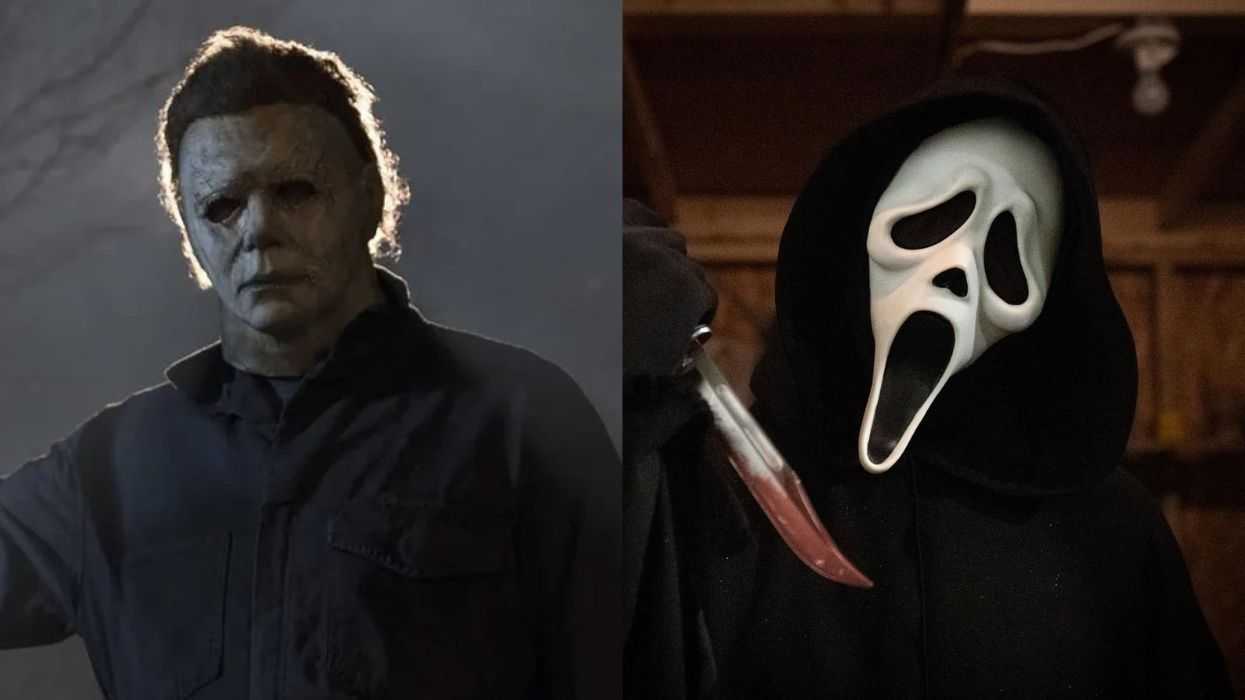
Both Michael Myers and Ghostface are synonymous with death and gore. However, if we were to compare them as iconic horror icons, Halloween and Scream have treated the horror of evil lurking in the suburbs quite differently, despite being in the same genre—slasher movies.
In this article, let us examine how the ideas behind Michael Myers and Ghostface differ, and how they shape the horror that the two legendary horror icons unleash in their respective movies.
Who Is Michael Myers?
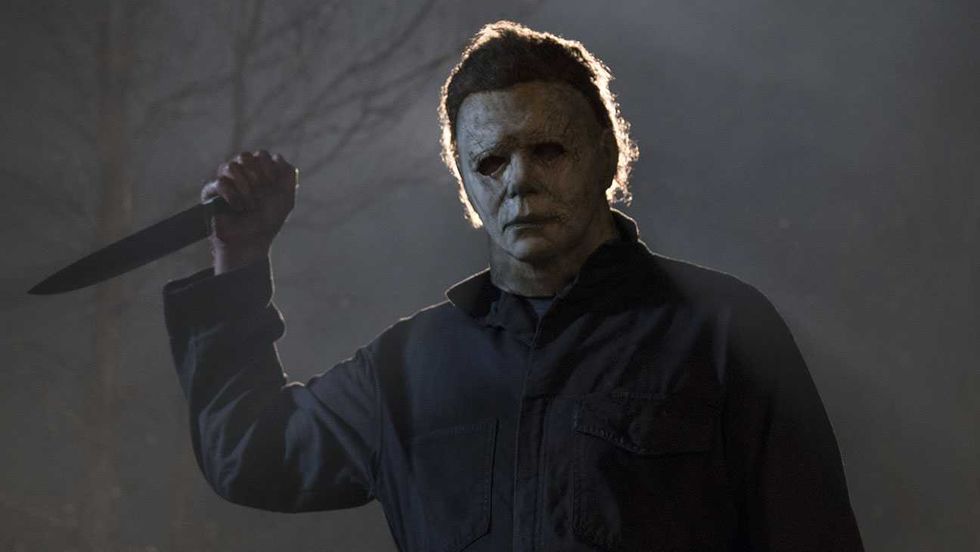 'Halloween' (2018)Source: Universal Pictures
Michael Myers—or as John Carpenter introduces him in the original Halloween film, The Shape—is the feared, unknown killer who takes the city of Haddonfield, Illinois, by storm.
Myers was cursed (revealed a few films into the franchise) as a child, which gave birth to an evil urge to kill his own family. Myers’ first victim was his 15-year-old sister, Judith, stabbing her to death when he was barely 6 years old. He is then sent away to Smith’s Grove Sanitarium as a child, where he spends 15 years until he is 21, when he manages to escape and find his way back to his hometown.
This time, he’s all set to claim more victims. Over the course of the sequels, the pattern slowly reveals that Myers is actually interested in killing his own bloodline under the Curse of the Thorn.
Over 13 movies, we are slowly presented with a story of a gruesome killer who was set into action as a child by a cult curse.
Exploring Michael Myers as an Embodiment of Evil
For quite some time, audiences and characters misunderstood Myers as a psychopath, until Halloween: The Curse of Michael Myers revealed the influence of the Curse of the Thorn.
Carpenter hinted at the supernatural in the first film, Halloween, when Myers vanishes into thin air after being shot by Dr. Loomis six times, but it only becomes evident in the sequels.
To sum it up, Myers' psychopathic traits were rooted in the supernatural and weren't dictated by emotions or his psyche.
Myers going out hunting only on Halloween subverts the traditions and beliefs associated with the festival. Halloween is believed to be the only night of the year when the boundaries between the living and the dead are weak enough to allow the spirits a free entry into the realm of the living.
In the beginning, people believed that dressing up as demons or spirits would trick the spirits into believing that they were one of their own and not harm them.
So, if we expect to trick evil with our masks, what’s stopping it from happening the other way round? With every other person in a mask, there’s every chance that evil is lurking amidst us. It also highlights that safety is a myth, because Myers lives among us, and we’re oblivious to both his presence and intentions.
Who Is Ghostface?
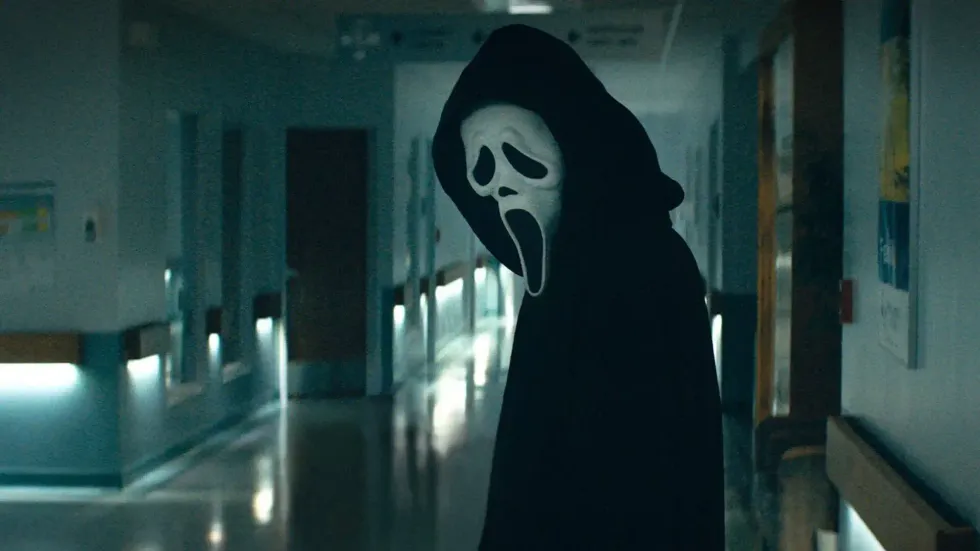 'Scream' (2022)Source: Paramount Pictures
Scream’s antagonist, Ghostface, is an idea or a persona. Over the course of six movies, different killer duos wear the mask and claim victims through deception.
The killing begins with a mysterious phone call where the caller engages the one being called in a game of trivia about horror movies, which slowly turns into a game of life and death. One incorrect answer will decide whether you live or die.
Exploring Ghostface as an Embodiment of Evil
Ghostface symbolizes unprocessed emotions, grief, or trauma. The killers are all blinded by grief or rage, which they ultimately externalize by brutally killing their targets.
Ghostface wearing a mask isn’t only about the killers trying to keep their identities hidden. I think it also has something to do with a sense of guilt and shame that comes with killing people.
Key Differences Between Ghostface and Michael Myers
Michael Myers | Ghostface |
Driven by a supernatural force | Driven by emotions and trauma |
A single cursed individual | A persona adopted by various killers |
Voyeuristic and uses brute force | Conducts psychological warfare |
Both movies share many similarities; for instance, they employ the final girl trope and feature killers who seek spectacular kills. But upon a closer examination of their antagonists’ motivations and characterization, we realize that they’re hardly two sides of the same coin.
Who are you more afraid of? Let us know in the comments.
- 3 Elements of Horror Logic in ‘Scream’ That Saved the Slasher Genre ›
- The Ultimate Ranking of the 'Scream' Movies ›
- You Can Learn About Horror Genres from 'Scream' ›
- How To Create a Unique Slasher Villain ›
- The Lighting in 'Halloween' Is a Masterclass in Creating the Classic Horror Look ›
- Making the Cut: Our Definitive Ranking of the 15 Best Slasher Villains ›
- The $2 William Shatner Mask That Made ‘Halloween’ Legendary ›
- Is the Michael Myers Mask William Shatner? ›
- 8 "Masked Killers" Whose Reveal Was Actually Worth the Wait ›