How can we create fuller characters that occupy stories with thematic resonance?
It's an easy question with no straightforward answer. There are dozens of ways to tackle character development, and we've covered a ton of them. But today we're going to look at how the unconscious can play into a character's journey, which affects everything from the action to their dialogue.
The inspiration and guidance for this one is coming from a great Film Courage video with writer Adam Argot, who discusses his new book, The Story Ritual.
Check out the video, then get into the lessons.
- YouTube www.youtube.com
Understanding the Unconscious in Character
Your character's deepest motivations usually don't come across in their dialogue. They live in a belief system they probably aren't even aware of.
A character might say, "Anyone who commits a crime should go to jail."
But then, in a story, their loved one might murder or steal, and this character chooses to help them avoid prosecution. It's contradictory but revealing—what does that character really believe? Maybe it's that they'll do anything for love, or maybe it's that they're above the law.
Argot visualizes the unconscious as a tree structure with different tiers of beliefs.
At the core is the sacred—the fundamental beliefs that anchor a character's identity. Branching out from there are the practical beliefs characters use to navigate the world, and finally, the peripheral beliefs at the outer edges. Each branch represents a series of interconnected beliefs.
But what does this mean for writers? A story, he says, usually addresses one branch of that tree.
"Most story is there to push [characters] through conflicts that start to pull off their masks until they reveal their deeper beliefs," Argot says.
Considering what your characters believe, even if they don't vocalize it, can make them fuller and more interesting. Your character's beliefs move them to action, even if they're saying something else. (You know, like how actions speak louder than words.)
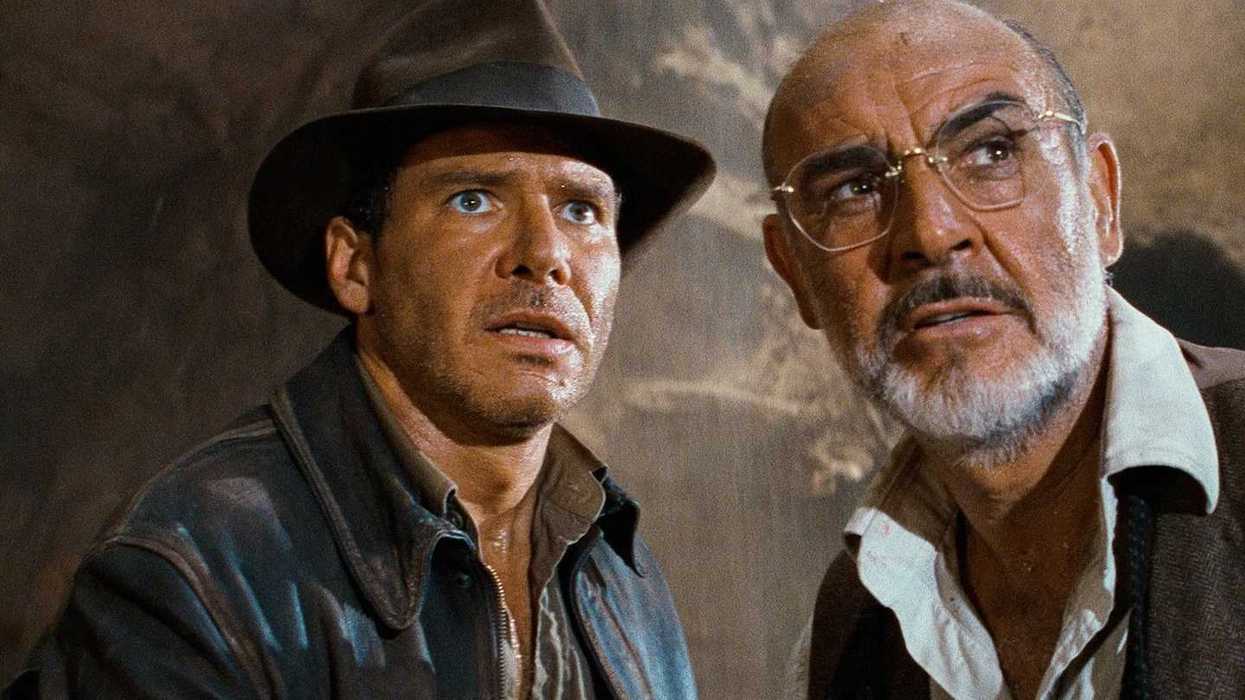
Take Indiana Jones in The Last Crusade. On the surface, Indy acts like he doesn't need his father's approval. He's dismissive of his father's obsession with the Holy Grail and keeps his distance. But then he follows in his father's footsteps, researching the very artifact his father spent decades on. He risks his life repeatedly to save Henry, even when Henry is critical of him. Indy can say he doesn't care what his father thinks, but his actions tell a different story.
If you're looking to nail down your character's beliefs, look at some of the biggest examples from film and TV and build from there.
 Indiana Jones and the Last Crusade Credit: Lucasfilm
Every Character Has an Achilles Heel
Every compelling character arc starts with a lie the character tells themselves, usually one they've been telling since childhood.
If this sounds familiar, it should. Argot's concept of the "Achilles heel" as a limiting belief aligns closely with screenwriter James A. Hurst's "misbelief" in his character development framework.
Both describe the same fundamental story mechanism of a false assumption formed in the character's past (usually childhood) that now drives their destructive behavior.
Some refer to the "wound" as the traumatic event, and the "misbelief" is the lie the character tells themselves as a result. Argot calls this limiting belief the "Achilles heel" and emphasizes that it sits at the core of the character's belief tree. It's one of those sacred beliefs that anchors their entire identity.
How External Conflict Exposes Internal Beliefs
That brings us to the next big point. Your plot throws obstacles at your character, but those obstacles only matter if they force the character to confront what they actually believe.
"Every time they pursue an objective, they have to confront conflict that forces them to have to look inward," Argot says. "And that forcing them to look inward is what exposes the Achilles heel. It is the limiting belief they're navigating, or they're using to navigate the world."
When you challenge the Achilles heel through external conflict, you're essentially asking the character to uproot their entire understanding of themselves.
Of course, your story can be just a series of events and obstacles for your character, but it will feel pretty bland in the end. A stolen artifact, a tank chase, a booby-trapped temple. The end.
But look at The Last Crusade again, which has all those obstacles and more. This story is really about Indiana's unconscious desire to please his father, and his limiting belief is that his father never valued him or his work.
Most external obstacles in the film force Indy to work alongside Henry, slowly revealing that his belief was wrong. The climactic moment isn't when Indy defeats the Nazis. It's when his father calls him "Indiana" for the first time, validating the path his son chose and showing that their connection is more important than a holy relic. (So good.)
If external conflict doesn't connect to internal beliefs, you just get superficial storytelling.
- YouTube www.youtube.com
The Epiphany Is When Characters Transform
So we can see that a character transformation doesn't happen when your protagonist defeats the villain. It happens when they replace their limiting belief with a new one. Confronting that misbelief through story ultimately leads to an epiphany that births a new belief system.
"The transformation or a character arc is ultimately the series of conflicts that get them to drop their masks, their pretense of beliefs, until they're forced to accept their sacred belief, and then they experience an epiphany," Argot says. "And the epiphany is ultimately the completion of a character arc."
Here are some easy examples. In Finding Nemo, Marlin finally lets Nemo swim down to save Dory—his belief shifts from "control keeps my son safe" to "I can let go, and my son can make his own decisions."
In Shrek, the titular ogre sees himself as a monster who is better off alone. The first film challenges this by constantly pairing him with Donkey and sending him on a quest. At the end, when Fiona transforms into an ogre at sunset and says she's not supposed to be beautiful like this, Shrek responds, "But you are beautiful." He learns he can be himself and be loved.
If you'd like to dive into this more, check out our article on transformative character arcs.
What Modern Writers Are Getting Wrong
Argot says this basic storytelling tenet has been forgotten over the past 10 years, and few filmmakers connect external and internal conflicts.
"We just have characters who represent the right and characters who represent the wrong," he says. "They go in conflict, and one wins and one loses. That's ultimately not very revelatory. And I think it's the relationship between the external conflict and the unconscious values that ultimately creates the epiphany in the character and then ultimately in the audience if they're connected with it."
He also points out that too many films today mistake moral positioning for character development, giving us heroes and villains who never grapple with anything internal. When the protagonist's victory doesn't require them to confront their Achilles heel, when the final confrontation doesn't force them to choose between competing values, the audience walks away unsated.
We watch things happen, but we don't experience catharsis.
The solution isn't complicated, but it does require more intentional storytelling. Before you write your action set piece or dramatic confrontation, ask yourself what internal belief is being challenged. What does this external conflict reveal about your character's unconscious value system? How can every obstacle tie back to your central argument/theme?
Check out why character is king and how a Stanford professor breaks down characterization and story.
- Can Character Development Get in the Way of Good Movies? | No ... ›
- How to Develop Characters with Action | No Film School ›
- Michael Corleone's Arc in 'The Godfather' Films Proves He's the Best ... ›
- How to Write Character Development | No Film School ›
- The Five Things That Get an Audience to Care About Character ›