The 40 Most American Movies of All Time: Your 4th of July Watchlist (Part 3)
Join us for a celebration of quintessentially American films.
'The Social Network'
It's the week of America's 250th birthday and almost the Fourth of July, so what better time to look back on some of cinema's most iconic films? These 40 films peer deep into what America is and who gets to belong in it. They give us the factories that grind people down, the highways that promise escape, the coal mines that own your body, the Kansas farm you can't stop thinking about, the dream of freedom that turns out to look different once you're living it.
Each of these filmmakers made a choice about how to mirror America and its people. They were trying to capture something true about the labor, the landscape, the longing, the disappointment, the hope.
These films, in no particular order, are about America revealing itself. Let's dive in.
Check out Part 1, Part 2, and Part 4!
Clueless (1995)
- YouTube www.youtube.com
Amy Heckerling adapted Jane Austen's Emma to '90s Beverly Hills, but what mattered to her most was world-building. She told The Wrap, "I was making up a world that I liked, and that's the way I want the world to be. Everyone is equal. I just wanted this fake world that you would see in a comedy of manners about the turn of the century—something more beautiful and happy than what really is."
She packed the script with period slang, gave each character a linguistic signature, and created a comedy of manners disguised as a teen flick.
Many wrote the film off. But critics didn't understand that girls' stories, when done with intelligence and precision, have a special power.
Do the Right Thing (1989)
- YouTube www.youtube.com
On the hottest day of summer in Bedford-Stuyvesant, a man is killed. Spike Lee refused to provide answers to the film, which frustrated critics who wanted reassurance. Lee told a San Diego newspaper on the film's anniversary, "White people still ask me why Mookie threw the can through the window. Twenty years later, they're still asking me that. No Black person ever, in 20 years, no person of color has ever asked me that" (via Herald Tribune).
The film ends with two competing quotes (Martin Luther King on nonviolence, Malcolm X on self-defense as intelligence), and Lee refuses to pick the right one for you.
All the President's Men (1976)
- YouTube www.youtube.com
Alan Pakula interviewed everyone involved in the Watergate coverage, then directed a film about journalism that feels exceptionally modern. Throw this on today, and it's just as gripping.
New York Times critic Vincent Canby wrote it was "the first film to come remotely close to being an accurate picture of American journalism at its best."
Pakula's precision honored the investigative labor that tends to disappear behind the headline.
Network (1976)
- YouTube www.youtube.com
Network feels more prescient and more American than ever these days. Sidney Lumet directed Paddy Chayefsky's satire and then insisted it wasn't satire at all. Lumet told PBS, "What one of the fascinating things about Paddy is that he writes a character whose protest becomes a byword today. I mean, it's in the language: 'I'm mad as hell, and I'm not gonna take it anymore!'"
It's a film full of terrible characters doing terrible things to get ahead. And that's pretty American, if you ask us.
Sunset Boulevard (1950)
- YouTube www.youtube.com
Billy Wilder had been obsessed with American pop culture since Berlin in the 1920s, collecting stories about the silent stars living in mansions on Sunset Boulevard. He created a film about decline, asking audiences to pity Norma Desmond even as she destroys the man in her orbit.
Wilder said (via Cinephilia & Beyond):
"You will not find in my pictures any phony camera moves or fancy setups to prove that I am a moving-picture director. My characters don’t rush around for the sake of being busy. I like to believe that movement can be achieved eloquently, elegantly, economically and logically without shooting from a hole in the ground, without hanging the camera from the chandelier and without the camera dolly dancing a polka."
Night of the Living Dead (1968)
- YouTube www.youtube.com
George Romero made a $114,000 horror film about eight people trapped in a house, and accidentally launched the modern zombie genre.
When asked why he cast Duane Jones in the lead, a bold choice for 1968, Romero said he simply gave the best audition.
What made the film devastate audiences wasn't gore alone but Romero's understanding that a siege narrative is about people collapsing under pressure, turning on each other even as an external threat closes in.
Singin' in the Rain (1952)
- YouTube www.youtube.com
Gene Kelly choreographed, co-directed, and starred in this musical stunner, which meant he was carrying the film on his shoulders while running a 103-degree fever on the day they shot the title number.
He said later, "It was an easy number, dance-wise. It was a scene. It had a beginning, a middle, and an end" (via ET Online).
Singin' in the Rain offers a sentimental but sharp look back at old Hollywood, though the filmmakers didn't know they were still in the heyday of studio filmmaking.
The Searchers (1956)
- YouTube www.youtube.com
This grim Western is an essential portrait of the American frontier. John Ford built a five-year obsession into Monument Valley and filmed it as a portrait of a man who can't come home.
You know the final shot. John Wayne standing in a doorway, one of cinema's loneliest images. When Peter Bogdanovich asked Wayne about the pose, he said, "I knew a guy who stood like that all the time. And the pose always seemed so lonely to me. I thought it would work well in that last shot" (via Cinephilia & Beyond).
The Social Network (2010)
- YouTube www.youtube.com
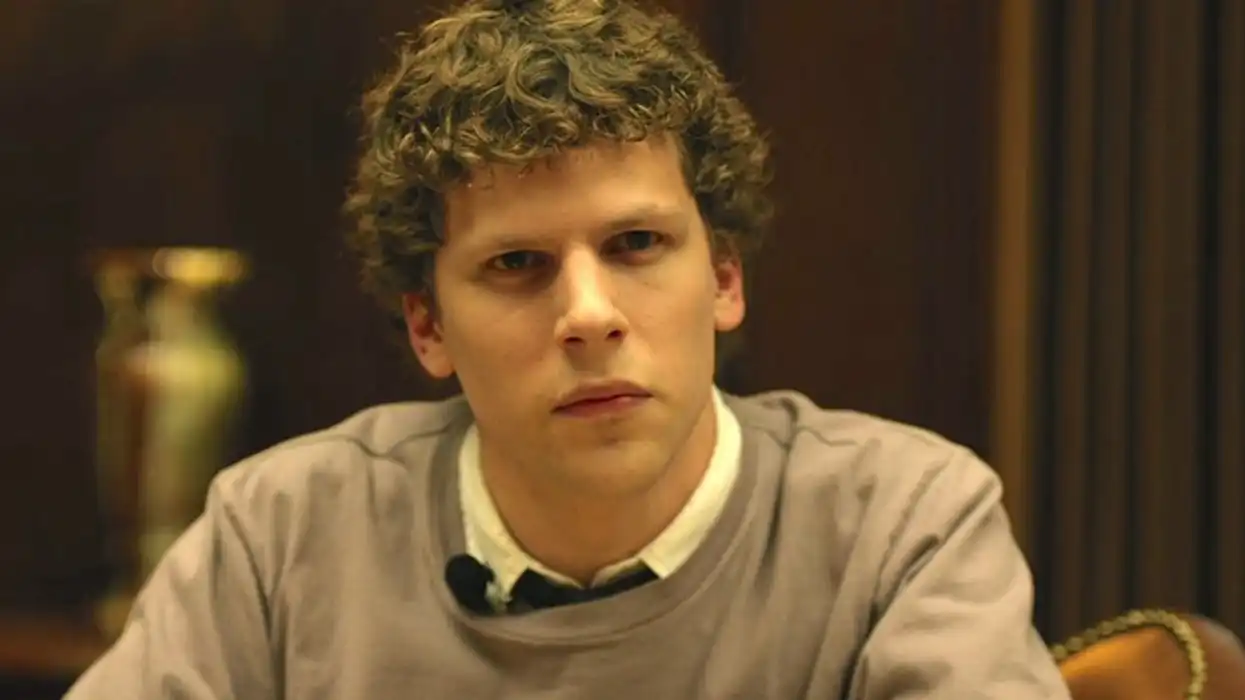
David Fincher held a 166-page screenplay and tested Aaron Sorkin's first nine pages with a stopwatch, timing him reading aloud. Fincher told Time Out, "The first scene in a movie should teach the audience how to watch it."
A couple sparring at a bar, talking faster than they listen. Viewers learn immediately that they have to pay attention or get left behind.
Fincher turned a film about connection into an examination of how technology can leave you fundamentally alone. It's a feeling that's all too familiar in modern America.