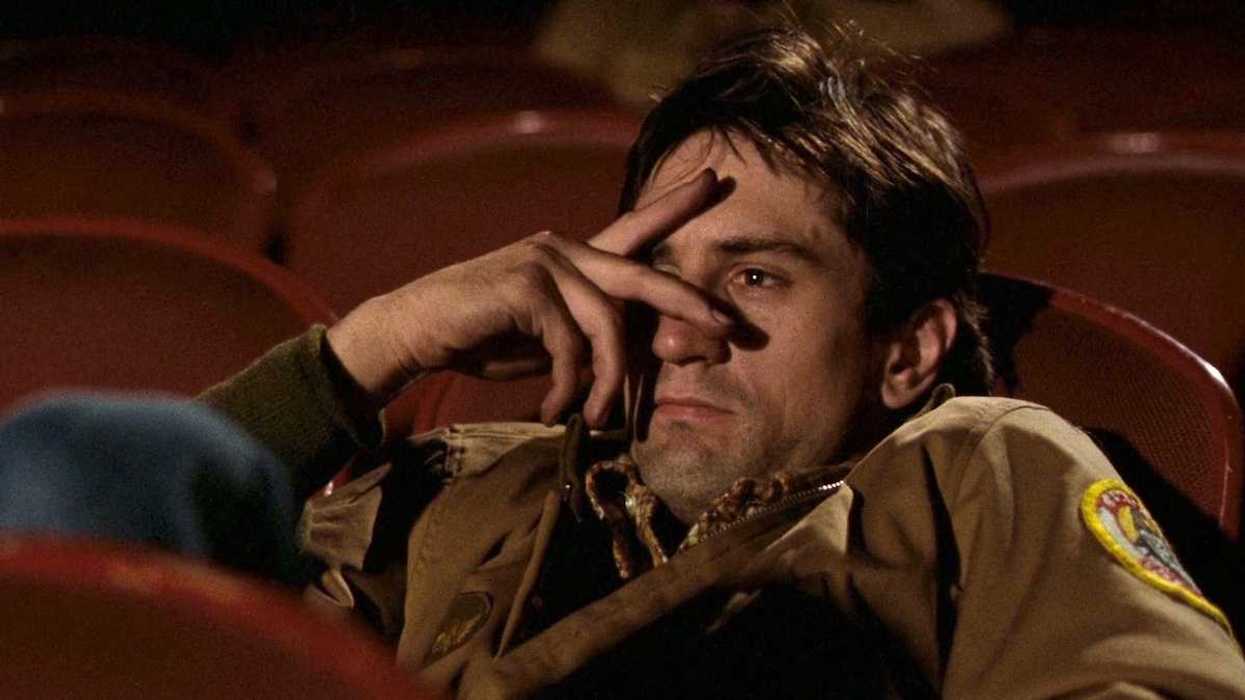
As Westerns were in decline in the 1970s, a new wave of auteur filmmakers rose to prominence. They made films that were highly distinctive in their visual style and thematic depth—the films were bold, edgier, and riskier.
Filmmakers at the time pushed the boundaries by telling us stories with unsettling endings, and where heroes have to suffer. Many of these movies are rewatched and studied for their storytelling mastery. They challenge the audience’s perceptions of morality and complex human nature, ultimately forcing us to reflect on them as well.
So, here are the nine most intense movies that came out of the ‘70s cinema vault.
9 Intense Movies from the 1970s That’ll Test Your Limits
1. A Woman Under the Influence (1974)
 A Woman Under the Influence (1974)Credit: Faces Distribution
The film tells the story of a desperate and lonely working-class housewife whose increasingly volatile behavior disturbs her husband and exposes his quiet yet firm stances on social expectations.
Gena Rowlands and Peter Falk, John Cassavetes’s (director) wife and close friend, respectively, deliver two all-time greatest performances as Mabel and Nick Longhetti. A Woman Under the Influence is emotionally intense, and feels like witnessing a live breakdown and attempts to sanitize mental illness.
The story was initially conceived as a stage play; however, director John Cassavetes adapted it for the screen because he thought Mabel Longhetti’s character was too intense to perform as a regular deal on stage.
2. Don’t Look Now (1973)
 Don’t Look Now (1973)Credit: Paramount Pictures
After their daughter passes away, a grieving couple shifts to Venice, where they encounter two old psychics who claim to have been in touch with their deceased daughter. Thereafter, bizarre visions and premonitions surround the family as they start seeing their daughter in a red coat on the streets of Venice.
In Nicolas Roeg’s Don’t Look Now, you feel the slowly building psychological dread until one of the most unforgettable final moments in a movie. The family’s grief over their daughter’s death takes over, and it starts feeling like a horror movie.
From using the red color as a storytelling medium to telling the story through fragmented editing, Nicolas Roeg incorporates all the possible filmmaking elements to make us feel uneasy.
3. Straw Dogs (1971)
 Straw Dogs (1971)Credit: Cinerama Releasing
A mild-mannered David Sumner (Dustin Hoffman) and his newlywed wife Amy (Susan George) arrive at a rural town in Cornwall for a retreat, where Amy was raised. However, a horrific incident with his wife involving locals, a civilized David is forced to choose the road of violence for redemption.
Straw Dogs is ugly, disturbing, and hard to take in, just like it should be. Its violence is not just mechanical; it terrorizes you by showing the extreme side of crumbling civility in people.
The film is about masculinity and how a man overcomes his fear to unlock a primal urge to defend himself and his loved ones.
4. Marathon Man (1976)
 Marathon Man (1976)Credit: Paramount Pictures
Dustin Hoffman plays a Columbia graduate, long-distance runner, Thomas ‘Babe’ Levy, who, after his brother’s death, gets embroiled in a deadly hunt involving Nazi war criminals.
Laurence Olivier delivers one of the most notoriously frightening performances for which he was nominated for the Academy Awards for Best Supporting Actor, but won the Golden Globes in 1977. Dustin Hoffman is also in this film as a helpless man on the run.
One particular scene involving dentistry will leave you hating the entire profession and is surely not for the faint-hearted.
5. The Wicker Man (1973)
 The Wicker Man (1973)Credit: British Lion Films, Abraxas Releasing
Sergeant Howie (Edward Woodward) arrives on a remote Scottish island to investigate a case of a missing child, where he encounters almost all the residents’ strange lifestyles and shocking spiritual rituals. The more he finds out about their sinister intentions, the closer he gets to the truth.
Director Robin Hardy’s The Wicker Man is a deeply unsettling and visually brilliant film. What makes the movie so intense is its depiction of the dangers of cult mentality. Moreover, putting a conservative, religious Christian ideology in confrontation with the idea of strange paganism is enough to build up a tense ambience in the movie.
6. A Clockwork Orange (1971)
 A Clockwork Orange (1971)Credit: Warner Bros.
Alex (Malcolm McDowell) is a charismatic sociopath who goes on a final violent rampage before getting arrested for murder and rape. To get his freedom back, he agrees to undergo a behavior modification program, an experiment to reduce the ability to do violence.
With Kubrick’s brilliant direction and screenplay (based on Anthony Burgess), A Clockwork Orange is both a technical and ideological masterpiece. It’s definitely one of his most divisive movies, as it delves deep into the violence in modern society. The movie also shows a strong influence of mass media, as the Ludovico treatment becomes a popular metaphor for institutionalized violence.
7. Jaws (1975)
 Jaws (1975)Credit: Universal Pictures
When the tourist town of Amity Island gets attacked by a giant white shark, police chief Martin Brody (Roy Scheider) teams up with a biologist and a local fish hunter to take down the creature.
Following the initial failures in the mechanical shark, Steven Spielberg didn’t introduce the shark clearly till the middle of Jaws. This creative improvisation turned out great for the film, as the anticipation only fueled the viewers' imagination, and the idea of the shark became more lethal until the final reveal. Steven Spielberg is truly a cinematic genius who spellbinds you every time with his intense storytelling.
8. The Texas Chain Saw Massacre (1974)
 The Texas Chain Saw Massacre (1974)Credit: Bryanston Distributing
On their way to visit a family estate, a group of friends stop by a creepy, deserted farmhouse. Little do they know that they have invaded a crazy, cannibalistic family who hunt them one by one with chainsaws.
Tobe Hooper’s film is one of those few small-budget masterpieces which shocked the world with its unique story and gore. Much of the movie’s disturbingly intense scenes rely heavily on the viewer’s imagination rather than explicit visuals. Using handheld camera techniques and a documentary-fiction style of filmmaking definitely makes the horror feel innovative and real.
9. Taxi Driver (1976)
 Taxi Driver (1976)Credit: Columbia Pictures
Martin Scorsese’s Taxi Driver is an all-time classic that follows a lonely and insomniac taxi driver slowly becoming detached from the materialistic, civilized world and becoming a crime-fighting vigilante to save a 16-year-old prostitute.
Martin Scorsese and Robert De Niro have created a surreal portrait of urban alienation and loneliness on the streets of 1970s New York. Robert De Niro plays Travis Bickle, who slowly descends into madness as he can’t fit into the civil and obedient structure of society.
Scorsese’s camera work is highly applauded in the movie, especially in a scene where the camera pans right to spare us from the desperate visuals of Travis Bickle, who is on call, trying his hardest to get a response from a girl who has ghosted him.
Summing Up
The intense and uncompromising cinema of the 1970s, along with many others, has been a huge contributor to filmmaking aesthetics today. Their ideas were bold and one of a kind, which still continues to fascinate and inspire filmmakers.