The Legal Fallout: 9 Movie Scenes That Sparked Lawsuits
From defamation and unauthorized likeness to intellectual property theft, these films famously sparked some interesting legal fights.
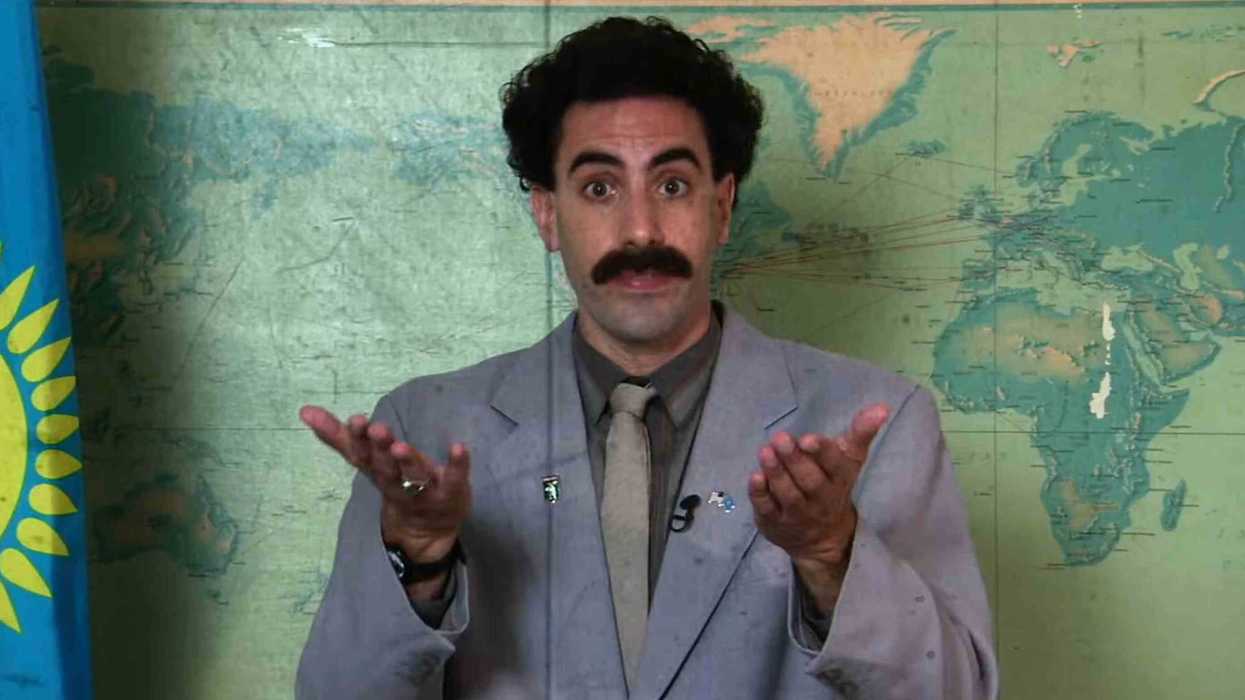
‘Borat’ (2006)
Ideally, cinema is a medium of dreams, imagination, and stories, but ultimately, it still exists in the real world. And sometimes, in the real world, these dreams get ugly.
In today’s fast-paced, super-connected world, information spreads like wildfire. That has caused studios to operate under the “move fast, break things” mantra. Instead of spending years planning or waiting for every single clearance, the makers strive to get the product, script, and film finished and released—before anyone else does. It’s very important to be the first in the market and capture the creative spark, or the whole momentum, while it’s still fresh.
As you must have guessed, this strategy gets your product out there, but it sometimes violates intellectual property laws or personal rights. That causes litigation. Sometimes it’s valid; sometimes an opportunist is just trying to get a bite of the pie with a flimsy claim. Stolen concepts, stolen aesthetics, unauthorized likeness, defamation—whatever the claims may be, they show that a “creative inspiration” can easily cross the line into litigation.
We have lined up 9 such cases that triggered significant legal battles.
9 Movies That Landed Filmmakers in Court
1. Mary Magdalene’s Sensual Introduction Scene (The King of Kings, 1927)
Written by: Jeanie MacPherson | Directed by: Cecil B. DeMille
Actress Valeska Surratt and writer Mirza Ahmad Sohrab filed a plagiarism lawsuit against director Cecil B. DeMille. They claimed that a certain scenario in the film—the erotic introduction of Mary Magdalene’s character—was taken from one of their scripts. The case didn’t survive for long and was dismissed, but it shows the beginning of how creative property disputes started in Hollywood.
2. Crispin Glover’s Likeness Controversy (Back to the Future Part II, 1989)
Written by: Bob Gale | Directed by: Robert Zemeckis
Crispin Glover was meant to return to the sequel, but he demanded a higher fee. The studio rejected his demands and instead hired another actor, Jeffrey Weissman. It was fine until this point. The trouble started when the studio decided to make Weissman look like Glover. For this, they used the molds of Glover’s face to create prosthetics. In addition, they also used some archival footage from the earlier film without Glover’s permission. When Glover got wind of this, he sued Universal Pictures. The lawsuit was later settled for $760,000, and also established Screen Actors Guild rules preventing unauthorized replication of any actor’s likeness.
3. The Surreal Future City Design Sequences (12 Monkeys, 1995)
Written by: David Webb Peoples and Janet Peoples | Directed by: Terry Gilliam
Architect Lebbeus Woods sued Universal Pictures when he noticed a striking resemblance between an interrogation/torture chamber scene and his 1987 drawing, “Neomechanical Tower.” The court sided with Woods and agreed that the film’s distinctive imagery indeed seems like it was copied from Woods’s architectural work without permission. The lawsuit brought an injunction, which stipulated that the release be delayed until the settlement is reached.
4. John Milton’s Apartment Sculpture Scene (The Devil’s Advocate, 1997)
Written by: Jonathan Lemkin and Tony Gilroy | Directed by: Taylor Hackford
Similar to the 12 Monkeys case, sculptor Frederick Hart sued Warner Bros., claiming that the wall sculpture in the devil’s (Al Pacino) apartment was a copy of his “Ex Nihilo” work. He also argued that the film’s depiction portrayed his art as demonic. The studio settled by agreeing to add stickers to VHS copies and editing the sculpture out of certain scenes for future home media releases.
5. Various Hidden-Camera Scenes (Borat, 2006)
Written by: Sacha Baron Cohen and collaborators | Directed by: Larry Charles
Borat, as funny and bold as it was, proved to be quite a magnet for lawsuits. One of the lawsuits came from two frat brothers, who claimed they were tricked into getting drunk and then participating in a scene filled with profanity. Most other lawsuits were about defamation and fraud, which claimed the film’s “ambush” style purposefully humiliated them for entertainment. Most cases were dismissed because the plaintiffs had signed standard release forms. This proves that a valid waiver is a studio’s strongest shield against claims of emotional distress or deceptive filmmaking practices.
6. The Bomb-Disposal Heroism Scenes (The Hurt Locker, 2008)
Written by: Mark Boal | Directed by: Kathryn Bigelow
U.S. Army Sergeant Jeffrey Sarver sued the filmmakers, claiming that the protagonist, Will James (Jeremy Renner), was a “direct, unauthorized theft” of his life story. His argument included the film used his specific “call sign” and certain heroics that he performed in the Iraq War. The court, however, ruled against him, citing First Amendment protections for stories that are “matters of public concern.”
7. The Mike Tyson Face Tattoo Scene (The Hangover Part II, 2011)
Written by: Craig Mazin, Scot Armstrong, Todd Phillips | Directed by: Todd Phillips
S. Victor Whitmill is the tattoo artist who designed and inked Mike Tyson’s tattoo. In the film, Stu (Ed Helms) wakes up from the eponymous hangover, and he finds his face tattooed just like Tyson's. This created ground for Whitmill to initiate a lawsuit for copyright infringement. His argument stated that he owned the rights to this tribal design and that the film replicated it without his knowledge or any compensation. The court favored Whitmill’s argument, leading the studio to make a quick out-of-court settlement to avoid an injunction on the film’s release.
8. The High-Speed Fighter Jet Training Sequences (Top Gun: Maverick, 2022)
Written by: Ehren Kruger, Eric Warren Singer, Christopher McQuarrie | Directed by: Joseph Kosinski
The original Top Gun (1986) was officially based on an Israeli writer, Ehud Yonay’s 1983 article. The rights to the material were not renewed for the sequel. So, when this 2022 sequel showed high-stakes training sequences and aerial themes that were a creative extension of the original film, Yonay’s family sued Paramount for copyright infringement. They argued that these sequences were derivatives of the original work (the article), which were produced without a valid license under the Copyright Act’s termination grant. However, the judge dismissed the case, noting that these specific sequences and characters were not substantially similar to the original journalistic article.
9. The Alleged Unscripted Assault Scene During Filming (Horizon: An American Saga – Chapter 2, 2024)
Written by: Kevin Costner and Jon Baird | Directed by: Kevin Costner
Stunt performer Devyn Labella sued Kevin Costner and his production team with an allegation that he was forced to perform an unscripted scene of sexual violence without her consent or an intimacy coordinator present. The lawsuit mentions that the actress Ella Hunt refused to do the scene, leading to a traumatic experience on the set. Costner’s legal team denied the accusations, citing a “thumbs up” from a performer and existing rehearsals. The court denied Costner’s bid to dismiss the case, and as of today, the case is still active.
- The 10 Funniest Mockumentaries Ever Made | No Film School ›
- Can a Comedy Topple a Political Regime? | No Film School ›
- 'Borat' Joins 'The Godfather' with Historic Oscar Distinction | No Film School ›
- 'Borat Subsequent Moviefilm' Touts Tens of Millions of Views in Its First Days | No Film School ›
- The Guys Who Edited 'Borat' Tell All | No Film School ›
- Borat Doesn't Work Here Anymore | No Film School ›