The Improvised Scene That Defined ‘Reservoir Dogs’
How Michael Madsen’s instincts turned a scripted cop torture scene into cinema infamy.
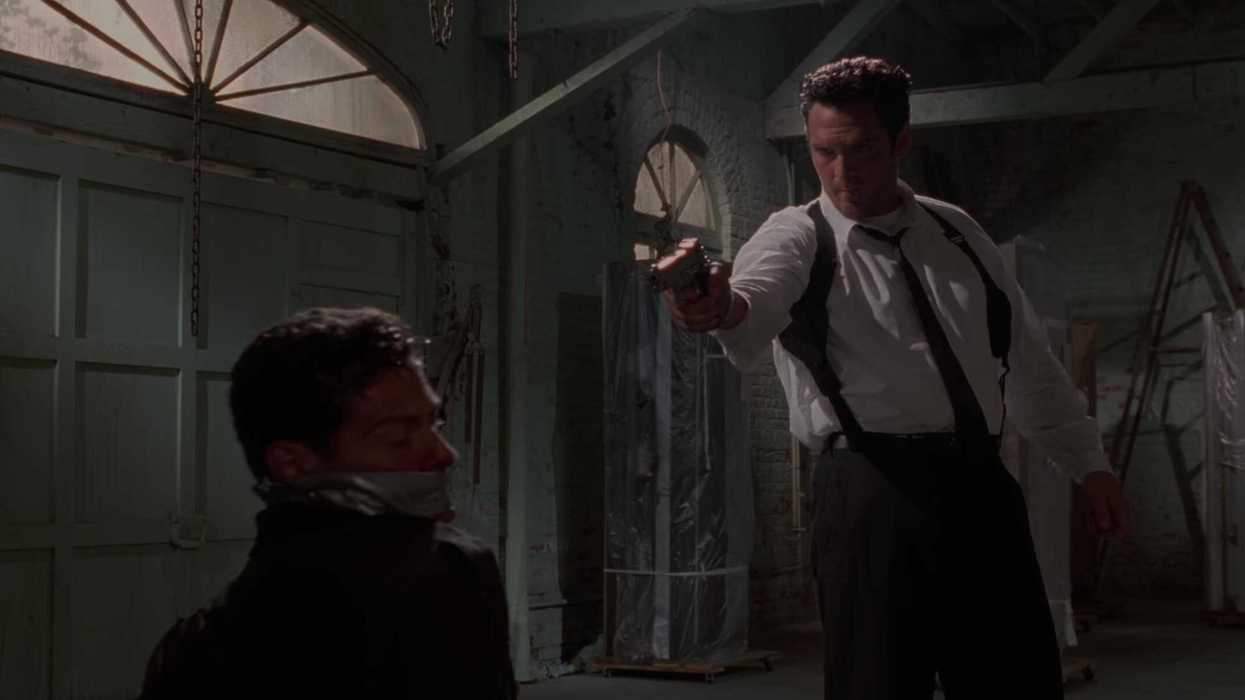
Reservoir Dogs (1992)
We are already a quarter of the way (and 11 Quentin Tarantino movies) through the 21st century; we have made our peace with movie violence. If you go to a Tarantino movie now, you know what to expect: movie brilliance obviously, but also some voguish splashes of red. But in 1992, when Tarantino’s name could easily be followed by “Who’s that?”, things were different. So, if you decided to go for Reservoir Dogs, and someone “alerted” you to watch out for a particular warehouse scene, that would be understandable.
The ear-cutting moment is what earns the warehouse scene this “watch out for” honor. In fact, there is a chance you might be aware of this scene even if you haven’t yet watched the film. It’s kind of a standout moment.
And anything that stands out is often susceptible to some rumors and myths. This one is no exception. For years, people have been told or suspected that the scene went a bit out of control and was improvised. True? Not true? Let’s find out.
The Scene That Made You Wince
The Scripted Vision: Tarantino’s Text
Let’s start by clearing out the key confusion: was the scene filmed 100% as it was written?
The answer is yes—if you take into consideration the intentional blank space left in the script for the actor’s interpretation.
The scene is about Mr. Blonde (Michael Madsen) cutting off Officer Marvin Nash’s (Kirk Baltz) ear as a torture method to extract information from him. The script clearly mentions “Stuck in the Middle with You” playing in the background as well as the ear-cutting part, so they are not improvised.
What the script doesn’t explicitly dictate is how Mr. Blonde behaves moment to moment. For example, the script mentions:
“He turns on the radio.
Stealer's Wheel's hit "Stuck in the Middle with You" PLAYS over the speaker.
NOTE: This entire sequence is timed to the music.
Mr. Blonde slowly walks toward the cop.”
It says Mr. Blonde slowly walks toward the cop. How? That’s left to Madsen to decide. And Madsen decides to sway-walk on the song’s tune.
Michael Madsen’s Interpretation
Madsen viewed Mr. Blonde, a.k.a. Vic Vega, as a complete psychopath. A man who truly relished the dark side of his work. Madsen’s casual sway-walk and relaxed pacing were his way of showing the physical manifestation of that relish. He treats the torture like a regular errand. Madsen portrays that through his movements and gestures, which are aligned with the song’s rhythm. The relaxed physicality reframes the character as disturbingly at ease. This accentuates the intensity of the violence.
All this was quite a calculated interpretation. And it was crucial, in the sense that Mr. Blonde wasn’t only doing his job, but he was putting on a show. The scene unnerves you because of this internalized logic.
Kirk Baltz’s Reactions and Unscripted Pleas
Baltz also contributed to the chaotic tone of the scene through his bits of improvisation. While his dialogue was mostly performed as written, he also improvised some unscripted pleas, screams, and panic. It heightened the imbalance of power between the two characters.
The performance seems messy because fear is never scripted. It comes as a shock, and we react to that shock. This authenticity made the scene more disturbing than shocking.
Music, Editing, and the Illusion of Spontaneity
The source of the speculation regarding the scene’s alleged improvisation lies in certain filmmaking choices. For example, the choice to play an upbeat song instead of using a background score. While a background score would have heightened the on-screen tension, the song clashes with the brutality taking place on the screen. It creates subconscious emotional confusion in the viewers’ minds.
Another directorial choice is that the camera pans away from the ear-cutting action. This brings some random, unimportant visual in focus, which forces the audience to allow the auditory factors to dominate memory. This is where Nash’s muffled screams, the lingering song tune, and Mr. Blonde’s matter-of-fact humming start telling us the story. This gives us the real-life experience of watching an event, complete with disturbances and obstructions.
The editing favors long, uninterrupted takes. This preserves the improvised beats instead of smoothing them out.
That’s how, even though the structure is tightly controlled, the use of music, camera movement, pacing, and performances together creates the illusion of chaos.
Conclusion
The ear-cutting scene had improvisational elements, but it wasn’t “improvised” as the myth suggests. The “what” part was planned, the “how” part was left to interpretation. The messy, on-the-go feel is the product of freedom given to the actors.
The takeaway from this scene is that discomfort is unpredictable, and it cannot be achieved through excess detail. It can only arise when natural behavior takes its own organic course—even in horrific situations, such as this.
- Watch: Does Tarantino's 'Reservoir Dogs' Stand the Test of Time ... ›
- Which Kubrick Movie Inspired Tarantino's 'Reservoir Dogs'? | No ... ›
- Tarantino Reveals How 'Golden Girls' Helped Make 'Reservoir Dogs ... ›
- How Tarantino Hides The Camera In the 'Reservoir Dogs' Opening ... ›
- Striding into Legend: 10 Most Iconic Walks in Cinema History ›