5 Times Movies Cleverly Referenced Other Films
These references were subtle but significant.
'Raging Bull' (1980)
One art form referencing another is a well-known phenomenon. We’ve seen song references in movies, movie references in songs, and other such exchanges that only energize ideas of inspiration and influence between distinguished art streams.
Movies have always been part of conversations in other movies. We’re used to characters talking about a scene from another movie or associating themselves with other popular characters.
Filmmakers frequently pay homage to the films that inspired them through small and often quiet moments in their movies. Sometimes it's a familiar line, sometimes it's an entire monologue, or sometimes it's a subtle reference that only a few movie buffs would notice. These references are rarely explained, even in retrospect. However, for audiences who are interested in drawing parallels between films, these moments add layers of meaning.
Let’s take a look at five films that cleverly referenced other movies.
5 Movie Moments That Brilliantly Referenced Other Films
Here are five cinematic moments that paid homage to other movies.
1. Raging Bull (1980)
Directed by Martin Scorsese | Referenced On The Waterfront (1954)
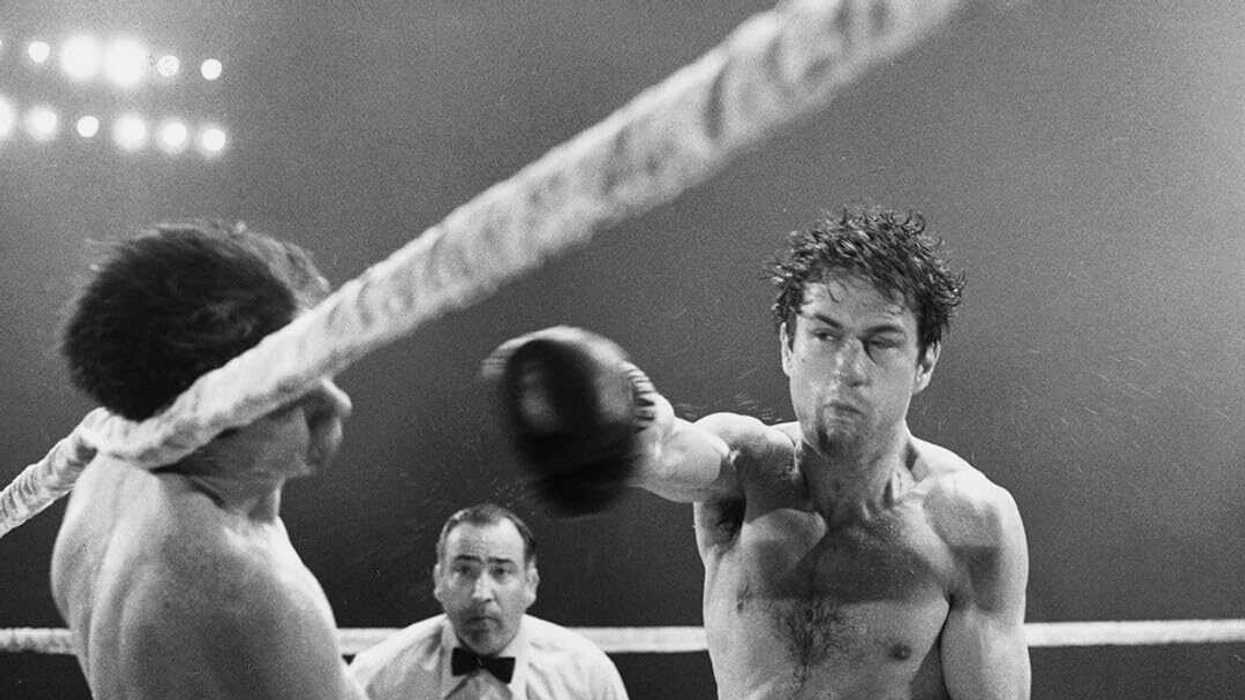
Martin Scorsese’s all-time classic, Raging Bull, features one of the most honest and deliberate tributes to another film. Late in the movie, Robert De Niro’s Jake LaMotta contemplates a life gone by and the relationships he lost. He laments the broken relationship he shares with his brother, Joey LaMotta, played brilliantly by Joe Pesci. During this reflective scene, Jake recites Marlon Brando’s iconic “I coulda had class. I coulda been a contender. I coulda been somebody,” monologue from On the Waterfront.
The relationship between the two films is so perfectly intertwined that it puts viewers who have seen the Elia Kazan movie in a genuine position of deep contemplation. Back in Kazan’s film, Brando recites the line with the quintessential poignancy he became so revered for, and De Niro's repetition comes at an ideal time in Scorsese’s movie as Jake asks himself whether all is lost. The parallels between the two films raise questions such as: What good is a sportsperson’s potential without those closest to him? How important is human support for a person to “contend” and live up to their potential?
2. The Lion King (1994)
Directed by Roger Allers & Rob Minkoff | Referenced Hamlet
Considered one of the greatest animated works of all time, in The Lion King, Simba’s story carefully references that of Hamlet. While this may not be a film reference per se, the animated movie does a phenomenal job of holding up to films that came later, such as Kenneth Branagh’s Hamlet (1996), one of the most widely recognized adaptations of William Shakespeare’s epic.
In both films, a young prince must confront his father’s murder and face his power-hungry and corrupt uncle, who has taken over the throne. Simba’s exile and eventual return to Pride Rock closely echo Hamlet’s struggles after his father’s death. Perhaps the closest reference to Hamlet is the scene (clip attached) in which Simba sees his father’s ghost and is reminded of his role in restoring peace in Pride Rock.
3. Kill Bill: Volume 1 (2003)
Directed by Quentin Tarantino | Referenced Game of Death (1978)
Quentin Tarantino’s Kill Bill movies are layered with multiple movie references across genres. One particular one that stands out is the Crazy 88 battle sequence, in which Uma Thurman’s The Bride wears an iconic yellow-and-black tracksuit, similar to the one Bruce Lee wore in his 1978 film, Game of Death.
The reason this sequence and particular reference stand out is that it is probably the most elaborate action sequence in the film, if not in Tarantino’s entire career. While the tracksuit might be the main point of comparison between the two movies, the real comparison, to me, comes from how both Tarantino and Bruce Lee redefined action cinema in their own, visually alluring ways.
4. The Untouchables (1987)
Directed by Brian De Palma | Referenced Battleship Potemkin (1925)
Brian De Palma is known for directing some of the most jaw-dropping sequences in movie history. The stairway shootout scene in his 1987 film, The Untouchables, is one of cinema’s greatest set-pieces, and it drew inspiration from the iconic film Battleship Potemkin.
The sequence is a direct, masterful homage to Sergei Eisenstein’s silent masterpiece, specifically the Odessa Steps sequence. De Palma almost “freezes” the moment with impeccable craftsmanship and a keen eye for detail.
5. La La Land (2016)
Directed by Damien Chazelle | Referenced Singin’ in the Rain (1952)
Damien Chazelle’s vibrant musical, La La Land, is packed with references to Hollywood’s golden age. Its deepest, most-inspired homage is to the 1952 classic Singin’ in the Rain.
Emma Stone’s Mia and Ryan Gosling’s Sebastian share dreamy conversations that echo the 1952 film’s romantic strolls and dance sequences. Chazelle brilliantly uses these references to explore a changing musical landscape and film industry, but constantly reminds us that the responsibility of keeping the magic alive lies with all of us.
Summing It Up
Every great work of art is usually built on a foundation of inspiration from various places. These five moments serve as powerful examples of filmmakers paying homage to the films that moved and influenced them. When audiences find these references, it only enhances their experience and deepens their connection to the movies.
Which is your favorite movie homage moment? Tell us in the comments below.
- The Duffer Bros Explain Why Their 'Stranger Things' Finale Was Not a Bloodbath | No Film School ›
- An Ode to Marlin, the Greatest Dad in the Seven Seas ›
- 8 Movie Moments That Made Audiences Applaud in Theaters | No Film School ›
- How ‘Raiders Of The Lost Ark’ Hid R2-D2 And C-3PO In Egyptian Hieroglyphics ›
- I coulda been a contender. ›