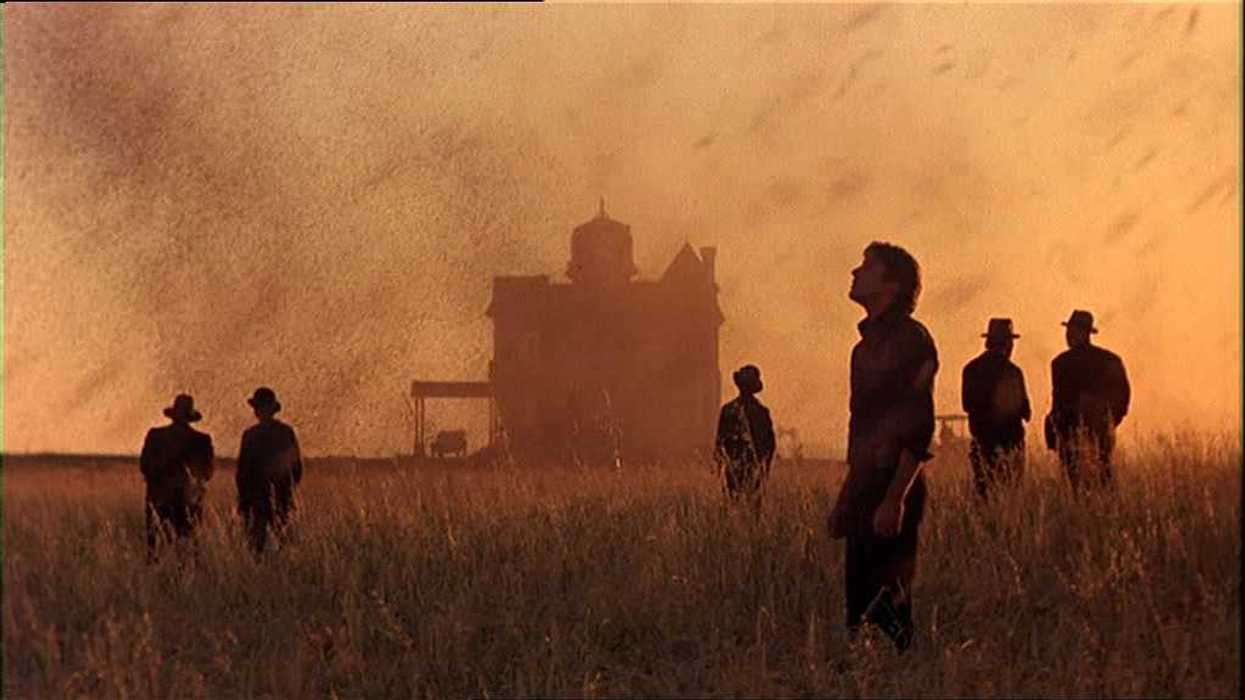
Shooting with natural light is often considered treacherous. But then there are filmmakers like Terrence Malick who walk those roads with a smile on their face.
Days of Heaven, one of Malick’s most memorable films, is religiously shot in natural light. It is from a time when Hollywood had transitioned away from natural lighting, and people were accustomed to well-lit, shadowless frames with a polished look and feel. Naturally, the crew took quite some time to understand the vision as they worked on it.
However, Malick and cinematographer Néstor Almendros were clear that they did not want artificial lighting in their period film, even if it meant breaking cinematic traditions or facing creative skepticism from their crew.
Their creative rebellion and hard work paid off, as the natural lighting in Days of Heaven became one of the narrative's main characters. Not to forget, Almendros also won the Academy Award for Best Cinematography for Days of Heaven.
In this article, let’s learn about the inspiration behind the natural lighting in the movie and its impact on the narrative.
To Give You a Little Context
Set in 1916 Texas, Malick’s Days of Heaven follows a poor young couple, Bill and Abby, who pretend to be siblings to con a dying, rich and handsome farmer, when they learn that he has fallen in love with Abby. Bill convinces Abby to marry the farmer, as he has less than a year to live, and conspires to usurp his estate after his death.
However, the marriage proves to be healing for the farmer, who begins to recover.
With death failing their plan, and Abby slowly falling for her husband, things get ugly quickly, especially after the farmer learns the real relationship between the “siblings.”
The Natural Lighting in Days of Heaven
Almendros is an ardent admirer of King Vidor, Josef von Sternberg, and John Ford, and Days of Heaven reflects that.
The Vision Behind Lighting
The lighting in Days of Heaven is focused on uniting the light with the mise-en-scène to an extent that it actually becomes a part of the visual. Both Malick and Almendros were on the same page that they didn’t want “the artificial glossy look of the films in the recent past.”
Almendros drew heavily on the works of American painters such as Andrew Wyeth and Edward Hopper for Days of Heaven.
Days of Heaven was mainly shot in Canada, and once Almendros was on location, his first step was to study the character of the natural sunlight. Traditionally, when shooting in the sun, shadows have to be filled, thereby reducing photographic contrast. But Malick wanted the shadows and the contrast. This also stripped the sky of its blue, which further pleased the filmmaker.
The vision was to eliminate bright, pop colors from an era predominantly defined by muted tones. So, Almendros focused on “de-illuminating.”
In this film, the two captains sailing the ship didn't care if the actors’ faces were well-lit—the focus was all on storytelling and recreating a time gone by.
The Process
 'Days of Heaven' (behind the scenes)Credit: Paramount Pictures
Natural lighting would have failed miserably if the production design and costumes didn’t play their part in recreating the past. Production designer Jack Fisk worked closely with Almendros in creating the perfect look and feel for this tragic love triangle. The production design was rooted in muted colors—from sets to props, everything mirrored the early 20th century.
Costume designer Patricia Norris further elevated the look and feel of the costumes, making them scream the era, using muted or dark textiles that didn’t have a synthetic or machine-made feel.
Needless to say, the synergy between the three visual departments is far too evident in Days of Heaven.
The Impact of Natural Lighting in Days of Heaven
 'Days of Heaven'Credit: Paramount Pictures
Malick’s Days of Heaven is a story about runaway laborers in 1916, told from the perspective of a young child, Bill’s sister, Linda. The Great War was ongoing, and people were living their lives on edge. Those were rough times.
Natural lighting allowed Malick to present the time without any gloss. It’s rustic, it’s dark, and it’s definitely not very pleasant.
The shadows, muted skies, beige fields, dusty roads, and dark faces mirror the dark times the characters are living in, both politically and psychologically. By stripping away the gloss, Malick and Almendros take us close to characters’ peril, even though we’re watching it from the other side of the screen. At the same time, it presents the contrast of the couple’s gold ambitions against the decaying times.
 'Days of Heaven'Credit: Paramount Pictures
The natural lighting also adds realism to the narrative with its muted palette. Every element is carefully arranged on the frame, and the natural light adds a playful recklessness in the visuals, with how the characters’ faces aren’t always well-lit or the sky isn’t the bright blue you’re used to seeing.
Overall, the natural light becomes Linda’s mic as she tells the story.
Days of Heaven makes a daring, creative choice, and we’re thankful! Would you choose natural lighting for your film?
- Tips for Managing Natural Light in Film and TV ›
- No Lights? No Problem—Four Ways to Manipulate Natural Light ›
- Colin Farrell Tells a Wild Terrence Malick Story ›
- Watch: Terrence Malick's Transcendence Through Nature ›
- Watch Terrence Malick Bring His Daydream Visuals to This Commercial ›
- 7 Best Films by Terrence Malick ›
- Why Do Terrence Malick Movies Look the Way They Do? ›