Obi-Wan’s “Certain Point Of View”: The Line That Still Divides ‘Star Wars’ Fans
Kenobi’s words hid a moral blind spot.
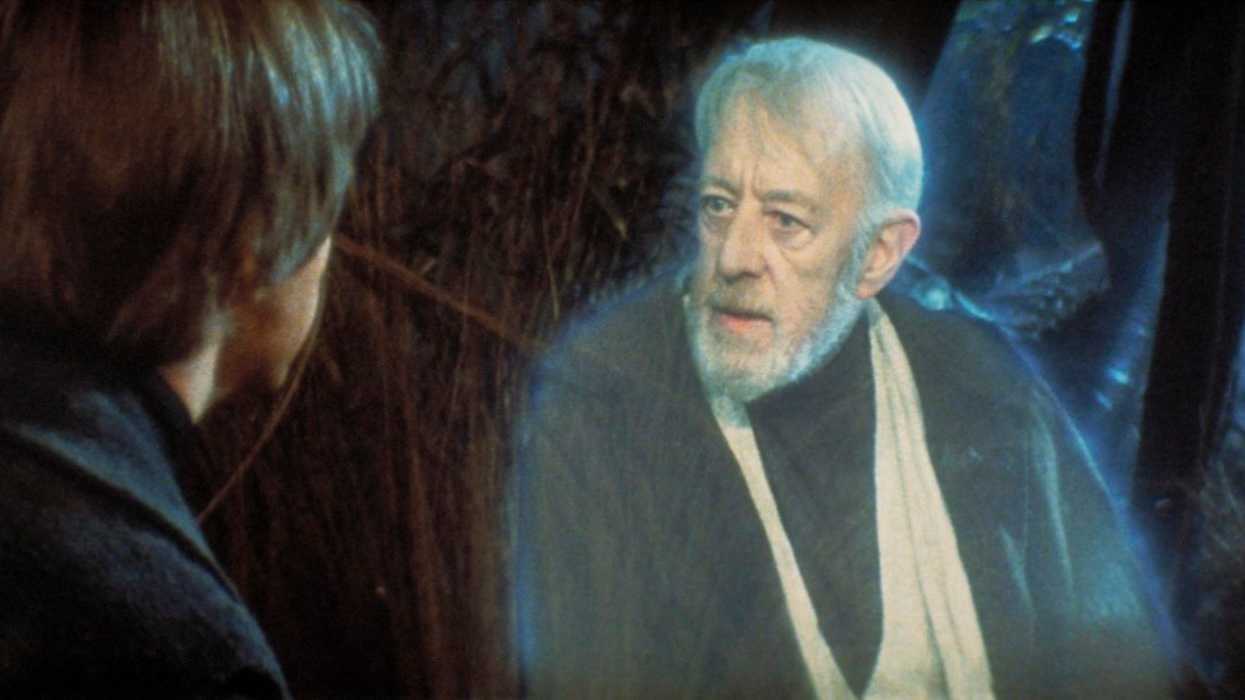
'Star Wars: Episode VI - The Return of the Jedi' (1983)
In Star Wars: Episode VI - Return of the Jedi (1983), directed by Richard Marquand, Luke Skywalker confronts Obi-Wan Kenobi about a painful truth: his father’s identity.
Obi-Wan had previously told Luke that his father was betrayed and murdered by Darth Vader. When Luke presses him on the half-truth, Obi-Wan delivers one of the most debated and divisive lines from the whole Star Wars saga: “What I told you was true, from a certain point of view.”
While the line is philosophically sound to some extent, it is also evasive and presents a huge blind spot in the Jedi way of thinking. The moment has sparked endless debates among fans for decades, touching on truth, deception, and moral flexibility.
What exactly did Obi-Wan mean by his point of view argument? Why does this line still divide fans today?
Let’s jump right in and explore.
What Obi-Wan Meant: The Jedi Perspective
The line “What I told you was true, from a certain point of view” is said by Obi-Wan Kenobi (Alec Guinness) to Luke Skywalker (Mark Hamill) in Star Wars: Episode VI - Return of the Jedi.
From Obi-Wan’s perspective, Anakin Skywalker, the brave and idealistic Jedi he taught, was effectively murdered the moment he embraced the dark side and became Darth Vader. To him, Anakin and his misdirected rage constituted an entirely unrecognizable person.
The one who enforced the Empire’s tyranny was not the Jedi Obi-Wan believed he had trained and nurtured. For the Jedi, identity is closely linked to moral alignment. We could even argue that moral alignment would be more critical to the Jedi than biology as a concept. So, in the strictest sense, Anakin Skywalker “ceased to exist” the moment he embraced the dark side.
Later on in this conversation, Obi-Wan continues by saying, “Luke, you’re going to find that many of the truths we cling to depend greatly on our point of view.”
With these words, the Jedi master emphasizes the fact that a person’s point of view is critical in determining what is true and what is not. So, from the Jedi point of view, Anakin Skywalker was, in fact, betrayed and murdered by Darth Vader. By doing so, Darth Vader “consumed” him to a point where the biological similarities between him and Anakin did not matter anymore. The result was a newer, darker identity that was completely different and dissociated from the Anakin Skywalker Obi-Wan knew very closely and had trained.
Spiritual Death vs. Physical Death
Before we jump into how Obi-Wan’s reasoning continues to divide fans decades after Return of the Jedi was released, let’s try to understand the difference between spiritual death and physical death, because it is critical to the Jedi way of thinking.
For a moment, if we stop looking at Obi-Wan’s line as just an excuse and a drastic example of moral flexibility, we might find a deeper truth about life and death inside his words.
Obi-Wan’s line hinges on a distinction between physical survival and spiritual annihilation. After the Mustafar duel, while Anakin’s body endured and “survived,” the Jedi Knight he loved was gone.
“You were the Chosen One” is perhaps the most memorable line from this scene. It perfectly captures Obi-Wan’s heartbreak. He has “lost” his pupil, a Jedi Knight he personally groomed for a brighter future. In Return of the Jedi, Obi-Wan’s line “from a certain point of view” is closely linked to this quote on Mustafar.
Physically, Anakin lives as Darth Vader, but spiritually, he was dead the moment he embraced darkness. This take, which understandably created large-scale debates among fans, favors essence over flesh and one’s moral alignment over the existence of their body.
Why The Line Still Divides Fans
When we read about arguments regarding Obi-Wan’s “certain point of view” line, I don’t think the crux of the debate actually is about Obi-Wan’s reasoning, but more about how it is used to hide a glaring truth. Let’s try to break this down from the fans’ perspective.
If, in a hypothetical situation, the “certain point of view” argument were made in association with the death of someone not closely linked to Luke, it would perhaps have been digested more easily by the fans. It is the fact that Luke was shielded from his father’s identity that causes serious debates.
While the spiritual reasoning can be observed the way we did, it is not unreasonable to view this line as a cop-out: a straight-up lie dressed in philosophy. Yet another way of looking at it is how it undermines the trustworthiness of the Jedi order. Is the moral blind spot really that evident? Will the deepest, most important truths be hidden in favor of philosophical thoughts? These are important questions that aim at the heart of the Jedi way of thinking.
Some fans, who view Obi-Wan as a flawed mentor, are actually appreciative of the “certain point of view” argument. From their perspective, a mentor cannot be perfect, and this quote is a great example of how he protects Luke from the truth.
The arguments for and against this quote are seemingly endless, and that’s precisely what makes Star Wars such an epic saga, one that cannot always be agreed upon.
Summing It Up
Obi-Wan’s “From a certain point of view” line is one of the most debated quotes from all of Star Wars. Whether you see Obi-Wan’s words as philosophy or deflection, the line captures why the saga endures: it forces us to question heroes and villains alike.
Which is your favorite Obi-Wan Kenobi quote? Tell us in the comments below.
- “You Were the Chosen One!”: The ‘Star Wars’ Line That Broke The Jedi Myth ›
- “I’ve Got a Bad Feeling About This” — How a Running Joke Became A ‘Star Wars’ Tradition ›
- The 10 Best Star Wars TV Characters ›
- 9 Iconic Quotes From the Star Wars Franchise ›
- Heard of The New, Controversial Script Coverage Service The Gauntlet? | No Film School ›
- 'The New Radical': Inside the Year's Most Controversial Doc | No Film School ›
- 10 Most Controversial ‘90s Movies That Pushed Every Boundary | No Film School ›