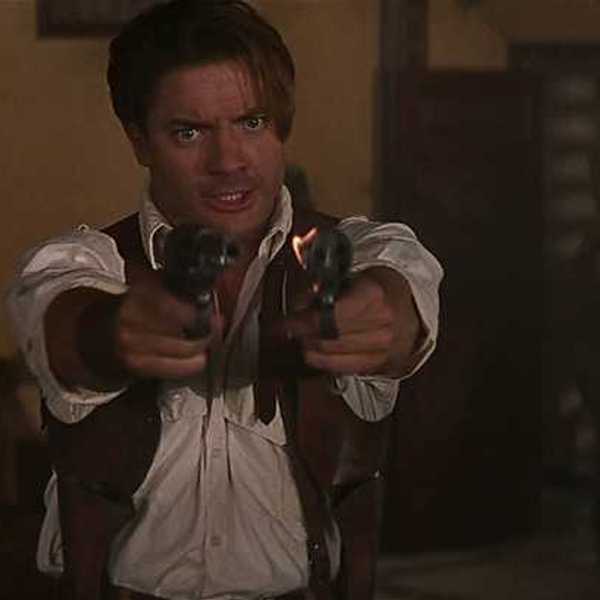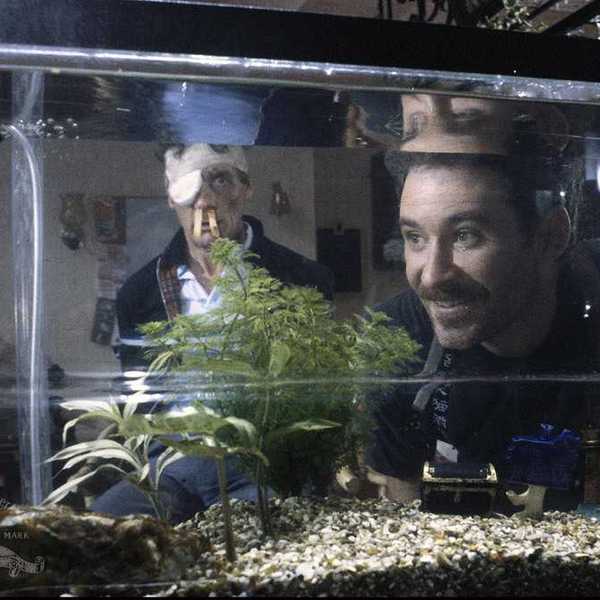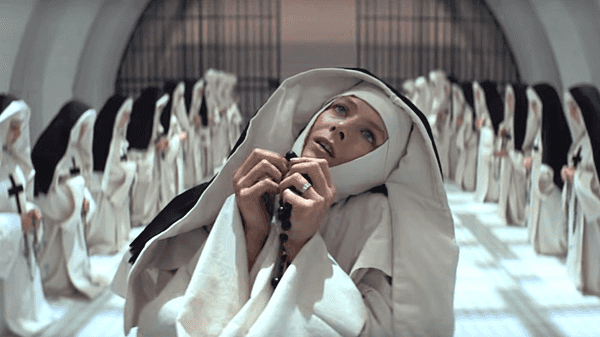
I watched two movies last Friday. One was Five Nights at Freddy's 2. The other was Lawrence of Arabia. (I contain multitudes.)
Even though these are very different movies, I had a similar thought watching both. The things that were real in the frame looked really good, and they would have looked worse if they were fake.
For Lawrence, this is obviously everything they shot, because nothing could be faked digitally when David Lean made that film. The film gave us some of the greatest cinematography of all time. There's just no way to manufacture the scope and light of those gorgeous desert sequences (a fact Greig Fraser probably knows well). The experience of watching the film is buoyed by the thought that everything you're seeing is really happening. There are really a hundred men on horseback; they are actually climbing on a train.
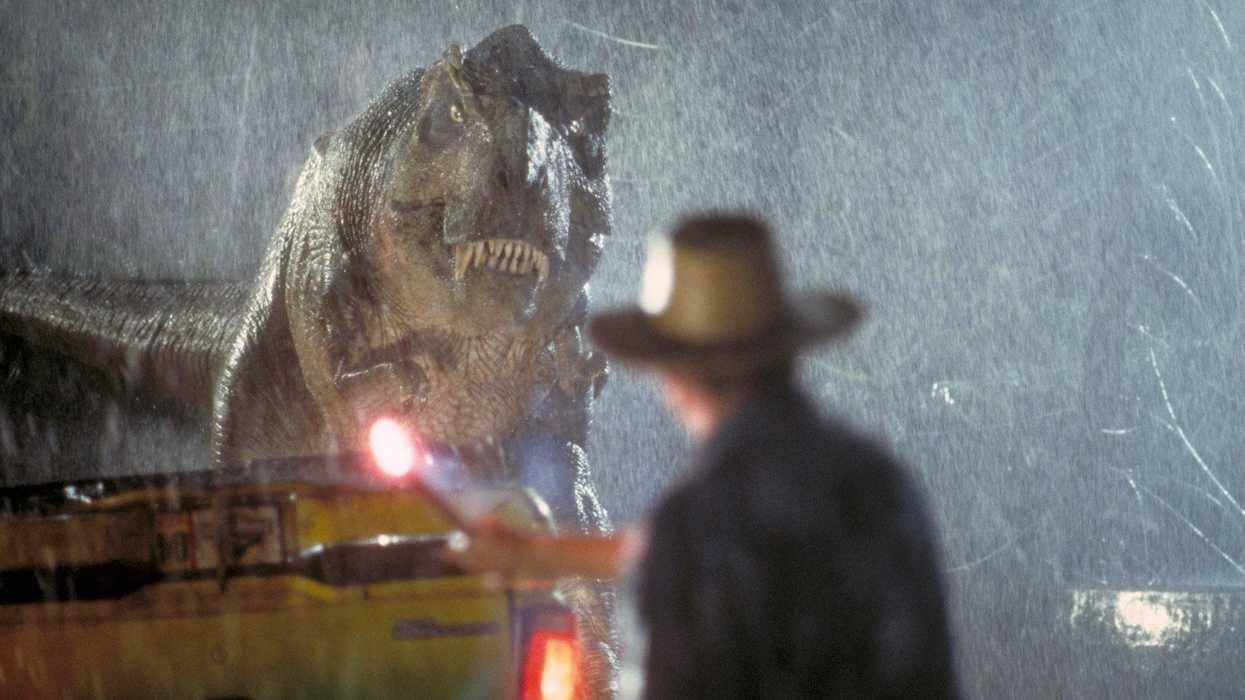
For FNAF 2, a film with a much lower budget and smaller scope, I just really appreciated the tactile nature of those animatronics, which were physically in the room with actors, catching light and occupying space. They were made by the Jim Henson puppet studio. I felt such relief that the filmmaking team was still committed to those practical effects. It could have very easily gone the other way.
We've talked about bad modern CGI already. But why is it so bad so often?
So it seems timely this morning that I caught Lukas da Kid's video on the subject of CGI vs. practical effects. Check it out.
- YouTube www.youtube.com
The Problem Isn't the Technology
Film has always been an industry of innovation. New techniques often crop up to help a director achieve their vision. If you want cool space battles, maybe you get creative with minatures and cameras like George Lucas. If you're a perfectionist like James Cameron and need to come up with a whole new world, maybe you pioneer performance capture or underwater filming for Avatar. If you want a scene to look bigger and/or different, maybe you use matte paintings or flats.
Unfortunately, a lot of these options are very expensive and require large teams of talented artists.
CGI didn't take over because it looks better. It took over because it's cheaper and faster and grants a greater degree of control in post-production.
Cheap is good for accessibility, which we love. But it doesn't necessarily mean "better."
CGI's Drawbacks
There's a pretty well-known behind-the-scenes clip of Natalie Portman during the filming of Attack of the Clones. Lucas is trying to walk her through a sequence on a soundstage. It's all bluescreen. She will eventually be edited into a factory setting with loud, dangerous machinery, but obviously, she can't see any of that. She stops mid-rehearsal to say with a laugh, "This is just a mean joke. This isn't part of the movie at all."
The level of trust an actor has to have in that moment is enormous, because chances are, they feel like a fool acting against nothing in an environment they might not even be able to imagine.
Actors perform differently when they're interacting with real objects in real spaces. They just do.
While Lucas is an often-cited example for practical effects when it comes to the original trilogy, by the time he finished the prequels, he'd bought into the early CGI craze, and you can see the actors struggling with it a bit in empty sets on lumpy fake animals or fighting faceless blue-suited stunt performers.
Sure, actors are really good at pretending, but sometimes these sequences are asking a lot of them. Imagine telling Peter O'Toole, "Pretend you're riding a camel and the sun is beating down on you and you're surrounded by nothing but white sands."
I mean, he could do it, but it probably wouldn't have been the same.
 Lawrence of ArabiaCredit: Columbia
In addition, both practical effects and CGI age can look wonky as they age. But we'd venture that most CGI from 10 years ago often looks worse than practical effects from 40 years ago. Technology moves that fast.
Our brains have gotten incredibly good at detecting digital artifacts. We know what CGI looks like now, so we can spot it when it's bad.
Practical effects were real when they were filmed, and they're still real when you watch them decades later. They might have a certain gritty charm
What Works Today
You don't necessarily have to choose sides between practical and digital. You can use both.
When George Miller made Mad Max: Fury Road in 2015, deep in the CGI era, he deliberately chose practical effects for almost everything. Over 150 real vehicles, many destroyed during filming, with real explosions and real stunt performers throwing themselves around. It was so thrilling to watch on the big screen.
It's not exactly a modern example, but Jackie Chan's Police Story is so fun to watch for the same reason. The stunts in that film are absolutely wild, and you get a very visceral sense of these performers being in physical danger because, heck, they didn't have the ability to remove safety cables in post. So Jackie Chan just jumps from a balcony onto a light fixture.
Now, the best of both worlds would be to have those safety measures in place to be scrubbed out later. And that would be a great way to use CGI. The opposite would be for no one to do the stunts and just have floppy digital performers in fight scenes with bad ragdoll physics. Which always look bad.
Practical effects create the physical foundation that actors can respond to, and audiences register them as authentic. CGI can be a tool, not a full replacement for reality.
- YouTube www.youtube.com
Getting Started with Practical Effects
If you're working at the indie level, practical effects never went anywhere. Budget constraints naturally push you toward physical solutions.
We've covered practical effects extensively, and there are resources for filmmakers at every level. Joey Shanks (Shanks FX) has demonstrated how to create cosmos effects with household items like food coloring, sweetened condensed milk, and a sheet of glass.
For horror filmmakers, creating convincing gore doesn't require a massive budget. Beige stockings can become organs. The right mixture of paint and synthetic blood creates realistic wounds. When it comes to great gore effects, practice and skill are the limiting factors.
Simple in-camera optical effects can elevate your cinematography. Warped plexiglass creates interesting focus effects. Chandelier crystals produce a kaleidoscope look. Edison bulbs generate natural flares and distortions. These are items you can pick up at a hardware store for a few bucks.
Even action sequences benefit from practical approaches. You can use minatures, too.
What's important is understanding what each technique brings to your specific story. What tool serves your story in each moment?
- Learn How to Re-Create the 'Interstellar' Black Hole Using Practical ... ›
- Before CGI Took Over: Cinema's 8 Best Practical Effects ... ›
- SFX vs. VFX: Two Effects Artists Discuss the Differences Between ... ›
- Why Practical FX are Almost Always Better Than CGI | No Film School ›
- How to Design Costumes That Serve Story and Fandom for FNAF2 ›
- How Did 'Project Hail Mary' Manage To Shoot a Space Movie with NO Green Screen? ›
- How 'Terminator 2' Pulled Off the Iconic T-1000 Blade Shot (Without CGI) ›
- Wicker trailer ›