Ripley’s Most Savage Line in 'Aliens' That Changed Sci-Fi Forever
Ellen Ripley’s face-off with the queen alien remains one of cinema’s most empowering acts of defiance.
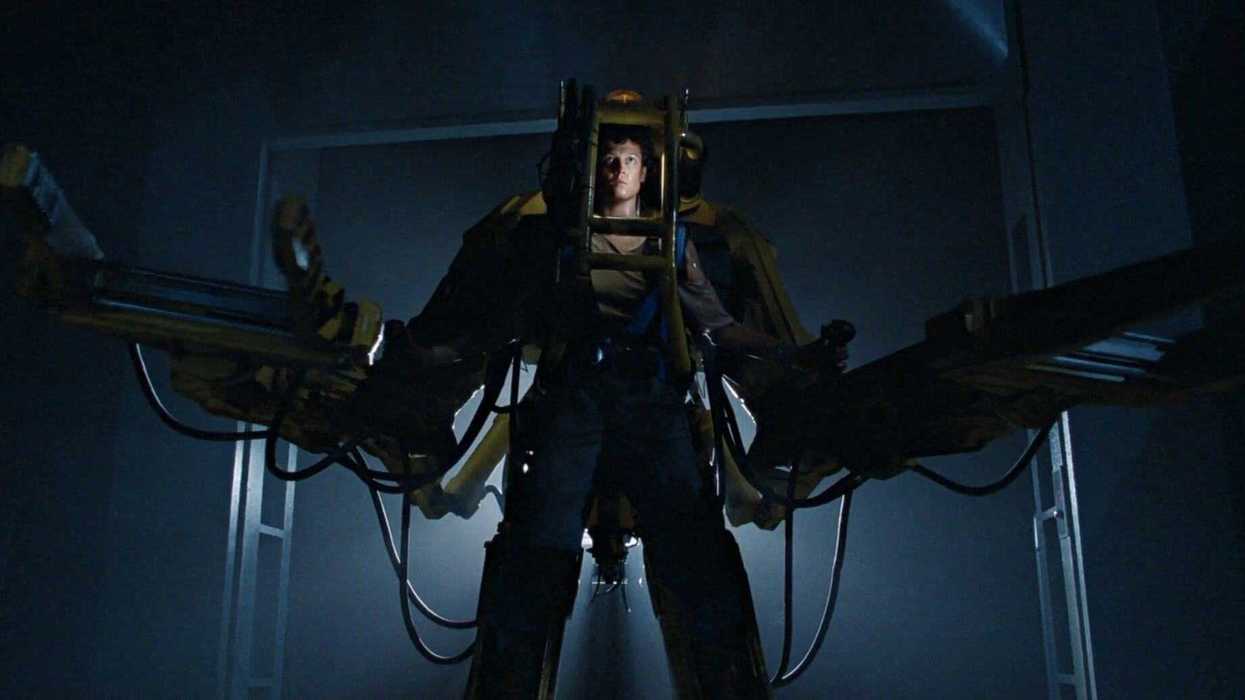
Aliens (1986)
The moment is the film’s final battle—human vs. alien. The titular villain, the queen alien, is pursuing Rebecca “Newt” Jordan (Carrie Henn), an orphan girl whom Ellen Ripley (Sigourney Weaver) has become protective of. Emerging from the shadows in a mechanical power loader, Ripley confronts the nightmare of acid and claws and snarls through gritted teeth:
“Get away from her, you bitch!”
The moment perhaps wasn’t written with a feminist approach in mind. Perhaps it was meant to be a moment of survival and nothing more. And yet, Weaver’s wrath and director James Cameron’s direction gave it this added layer: fierce motherhood. This was long before mothers, like Molly Weasley, Beatrix Kiddo, and Catelyn Stark, showed how far mothers could go to protect their cubs. The audience cheered, not only because she beat the alien queen, but because she stood her ground like no one else before.
This was the moment that gave a woman the last word in a genre that was (and still is) ridiculously dominated by male characters. This was the moment when female characters stopped being damsels in distress and became badass rescuers.
The Badass Moment
The Queen vs. The Survivor
When Ripley faces down the alien queen, the perfect predator, she is no longer the same passive survivor from Alien (1979). She has endured fire, trauma, and loss and is forced to become a warrior. She sees Newt as her own child, the seeds of which are sown in the fact that since Ripley was cryogenically frozen for 57 years, she never got to see her own daughter grow up. So when she sees the queen alien looming over Newt’s cocoon, it becomes clear to Ripley that not only the child is in danger, but motherhood too.
The Line That Made History
Weaver delivers these six words with such conviction and deep-seated fury that it becomes a war cry. She growls out the first five words and spits out “bitch” like poisonous bile from inside her soul. At this precise moment, she locks in the audience, tying their fate with hers, making it our fight as much as it is hers.
Feminist Power Packed Inside
Motherhood and Protection
Within the film’s story arc, Ripley’s relationship with Newt is of high importance. It’s because of Newt that Ripley’s fight doesn’t remain just a fight for dominance or survival; it becomes the fight of a mother. It gives the film a feel of the wild savannah, a tigress protecting her cub. This maternal instinct is not as soft and gentle as we often see; it’s strategic and fierce. This comes off as a radical twist in a machismo-obsessed cinematic landscape.
Breaking the Male-Coded Action Mode
This moment also highlighted the action genre’s cinematic shift from virility, patriarchy, muscle mass, chauvinism, and brute force to femininity, empathy, willpower, and endurance. Neither Weaver nor Ripley followed their male counterparts’ footsteps, and that’s why their fights showed us what a hero could look like in a different light.
Conclusion
Aliens was conceived as a sci-fi action movie, and its feminist approach was accidental, yet it was iconic. In this instant of rage and adrenaline rush, Ripley represented the fury, love, and tenacity of millions of women who refuse to back down.
“Get away from her, you bitch!” is more than just a bark. It’s a pronouncement that strength can arise from compassion, and it can wear any face. It’s been almost forty years now, but Ripley’s voice and that intense snarl still pulsate with resounding intensity and remind us that when survival and protection are heart-born, it’s a different sort of revolution altogether.
- What Ripley From 'Alien' Can Teach You About Writing Iconic ... ›
- How 'Aliens' Gave Birth to the Modern Action Movie | No Film School ›
- What's the True Meaning Behind 'The Terminator' and 'Aliens?' | No ... ›
- Download and Read James Cameron's 'Aliens' Script PDF | No Film ... ›
- James Cameron Clarifies the 'Aliens' Dollar Sign Pitch | No Film ... ›