One way to scare audiences in the horror genre is by turning the camera into a character itself. A famous example is the opening scene of Halloween (1978). The slow camera movements establish the chilling patience of Michael Myers.
The exact opposite effect was when director Sam Raimi made his 1981 cult classic and his feature directorial debut, The Evil Dead. The film’s low budget meant he couldn’t afford a fancy crane shot. Raimi and his crew had to improvise, resulting in a camera rig that gave you the perspective of a demon, with twisting movements and frantic speed, like a bat out of hell.
When Horror Movies Set the Tone Right Away
Director John Carpenter and DP Dean Cundey used the Panavision Panaglide to put you in the POV of Michael Myers for the opening of Halloween, to see when he commits his first kill as a young boy. You are immersed in the scene, by seeing through the eyeholes of a mask, and with the “floating” motion of the scene that pulls you along.
In the 2003 documentary, Halloween: A Cut Above the Rest, Carpenter wanted a long tracking shot, but he knew a traditional dolly shot would be time-consuming for the low-budget restraints of Halloween. The Panaglide was the cheaper alternative; director Sam Raimi and DP Tim Philo found an even cheaper method for the opening of The Evil Dead.
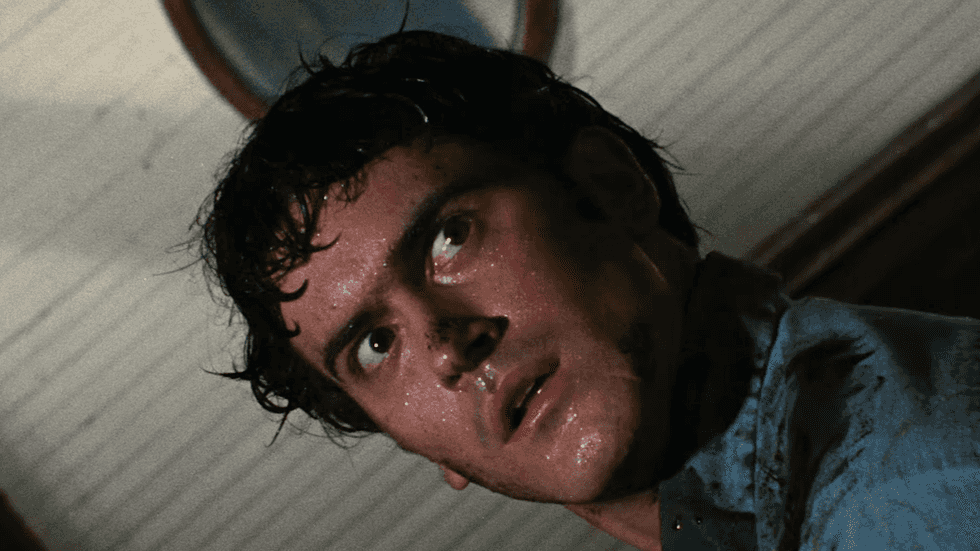
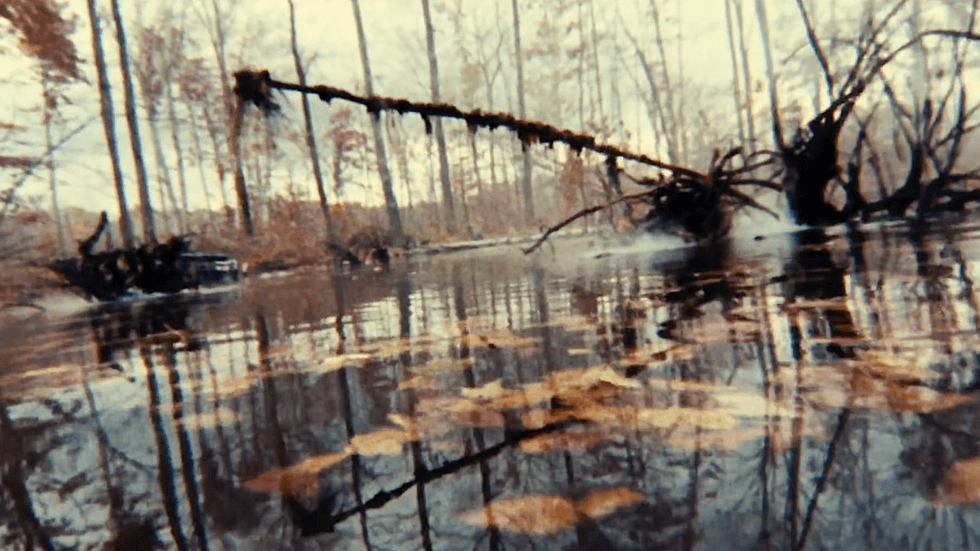
While Ash (Bruce Campbell) and his friends are driving to a cabin in the woods, they are unaware of a dangerous presence. The camera hovers over the murky waters of a foggy swamp, getting closer to the car with Ash and his friends. You don’t see who this sweeping POV belongs to, but the otherworldly movements and the whooshing sound design accompanying it set up one of horror’s scariest, out-of-control depictions of demons, all with a DIY filmmaking approach.
A Director With a Demonic Vision
The process to capture the demon’s POV shot was a two-person job, as mentioned in Bruce Campbell’s autobiography, If Chins Could Kill: Confessions of a B-Movie Actor. Raimi was in a rubber raft, leaning in front while holding the camera. Campbell was behind, standing in the swamp water and pushing the raft. A more stable method would be needed to create the unseen demonic presence that is seen later in the film.
 ‘The Evil Dead’ (1981)Credit: New Line Cinema
In an interview, DP Tim Philo shared one idea that was brainstormed to get the shot Raimi wanted for the demon racing through the woods. “We considered riding atop a bulldozer,” Philo said, “keeping the blade of it out of frame, but seeing the effect of the trees falling from its power.” It was deemed too unsafe.
In Campbell’s autobiography, the Shaky Cam was created to get the job done. He went on to describe the rig that Riami’s crew built as “a three-foot hunk of two-by-six board with the camera bolted in the middle.” With a pair of cameramen holding each end, they ran and got the desired motion. It would be one of many DIY camera rigs made for this film.
The Evil Dead Makes a Mess
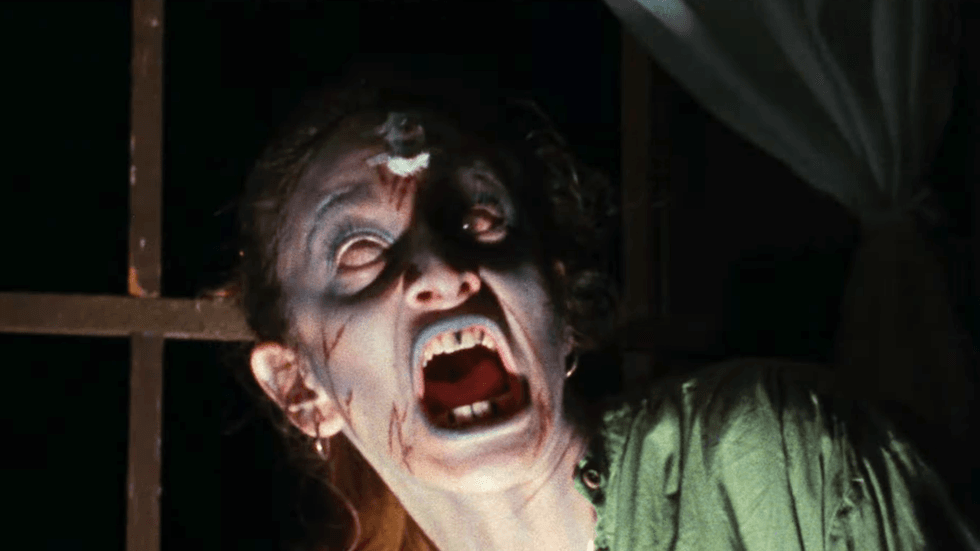
The cabin that Ash’s friends are in gets ambushed by a demon as it crashes through a window, for a shot that is viewed from the demon’s POV. That meant the window had to shatter as if the camera had done it. From the pages of If Chins Could Kill, the rig named the “Ram-o-Cam” allowed a camera to do just that, ram through a window, but not be damaged and not hurt the camera operator.
 ‘The Evil Dead’ (1981)Credit: New Line Cinema
A “T-Bar” was placed in front of a two-by-four board where the camera was on, resulting in the glass shattering before the camera made contact. These incredibly simple camera rigs made for iconic moments in horror, and would go on to inspire another famous director.
From the Monster’s POV
In the PBS series American Cinema, director Joel Coen explained how his influences early on in his career came from the exploitation movies he worked on, including when he met Raimi while Coen worked as an assistant editor for The Evil Dead.
The Coen Brothers’ 1987 crime-comedy Raising Arizona even has a direct homage to Raimi during a nightmare sequence. Nicolas Cage’s character dreams of a demonic biker, where the camera suddenly becomes infected by the biker’s presence, when it flies low to the ground before soaring over a car and rushing up a ladder, into a baby’s room.
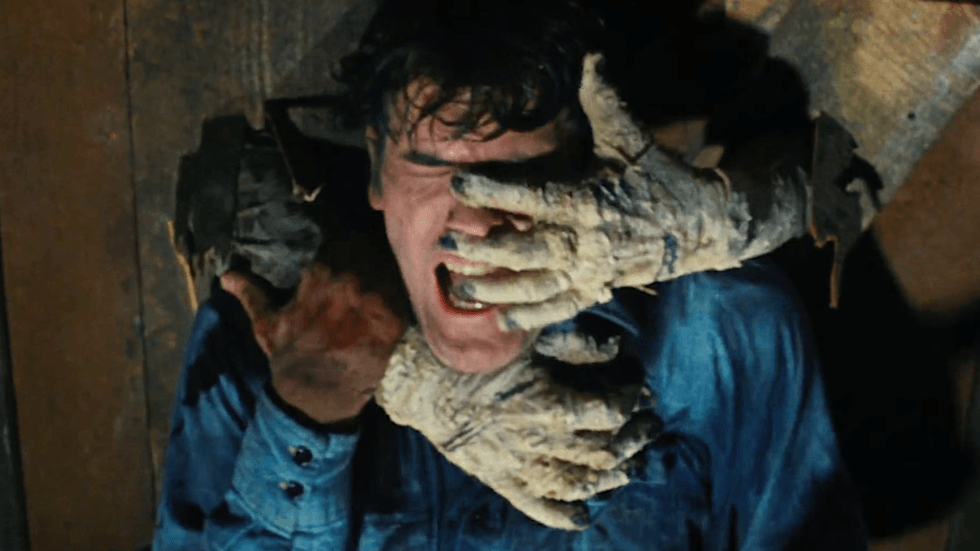 ‘The Evil Dead’ (1981)Credit: New Line Cinema
But before that demon biker, the Shaky Cam was just one trick among others that Raimi used for The Evil Dead, along with the Ram-o-Cam and a rubber raft. The cheap filmmaking techniques put the frenzied, relentless pursuit of a demon on the screen.
- 10 Filmmaking Lessons From the 'Evil Dead' Franchise ›
- Sam Raimi and 'The Evil Dead' Provide a Blueprint for Indie Filmmakers ›
- One of Rotten Tomatoes’ Best Horror Movies of All Time Only Cost $375,000 To Make ›
- Watch: How 'The Evil Dead' Became One of the Biggest Low-Budget Box Office Hits of All Time ›
- What You Can Learn from Sam Raimi’s 4 Favorite Movies ›
- The Ending of 'Evil Dead Burn' Explained | No Film School ›