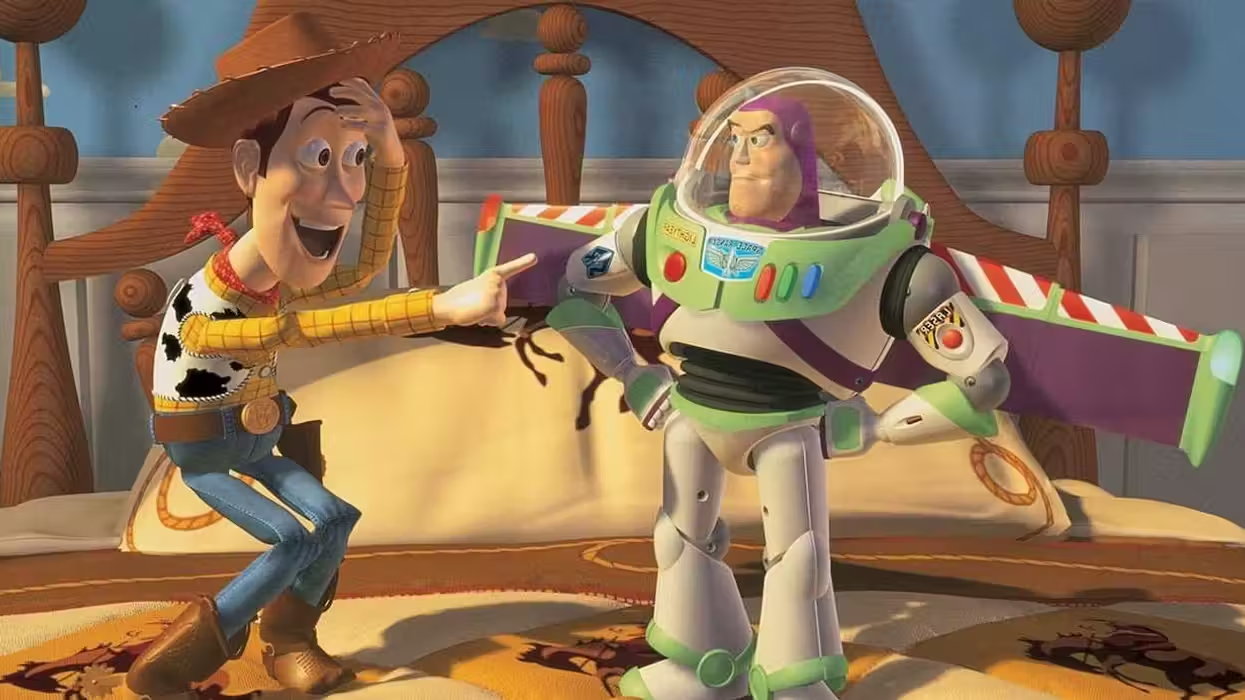
Last month, we received the 5th film in the Toy Story series. As one of the most successful, longest-running animated franchises of all time, each film has received tremendous praise over the years. The first film is now over 30 years old, and remains a cornerstone, not just in the animation medium, but in the cinematic medium overall. As the first feature film in the Pixar canon, its script remains one of the most miraculously cohesive of the 20th century.
Let’s talk about some of the most important lessons a writer can take away from the original Toy Story.
You Need Less Time With Characters Than You Think
Toy Story sits at a tight 81 minutes of total running time. It’s also a film that juggles a heavy amount of supporting characters that miraculously feel fleshed out almost completely within the first 10 minutes of the film. How on Earth is that achievable? Quite a bit of it inevitably comes down to casting the right performers to voice the characters (a feat that the film achieves with flying colors), but when you examine the opening staff meeting sequence of Toy Story, you really get a glimpse into the genius of how the dialogue is actually written.
You’ll notice that in the midst of setting up the actual meeting, and during the meeting itself, the dialogue functions in a popcorn reader sort of fashion. Characters tend to have only brief lines of dialogue as the film makes its way around the proverbial circle. Each line of dialogue further accentuates not only the personality of the character, but their “role” in Andy’s room, and their dynamic with the other toys. Rex is shown to be overly anxious and insecure, Hamm is sarcastic and often pokes fun at absurd situations, Mr. Potato Head is a grouch who doubts Woody’s leadership, Slinky butts heads with Potato Head as he absolutely adores Woody, and the list goes on.
Characterization like this should be studied not only for its efficiency, but how it affects the pacing of the rest of the film. Once Woody and Buzz are separated from the rest of the gang at the end of the first act, the film could very easily lose its momentum any time it cuts back to the rest of the toys at the house. But it never does because of how entertaining each character is to spend time with. It just goes to show how much ground you can cover in so little time.
Character Callbacks Completing Multiple Arcs
 ‘Toy Story’Credit: Walt Disney Studios
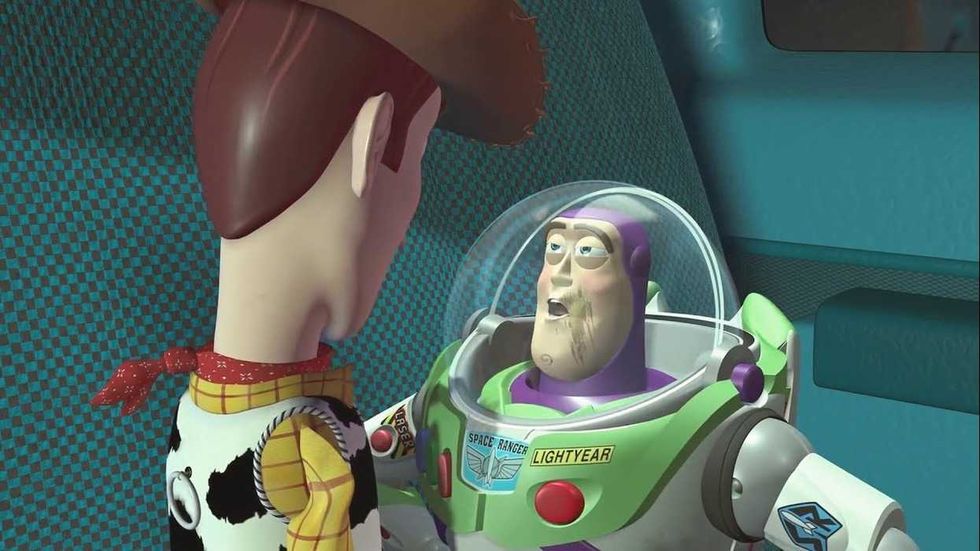
Because of how iconic their friendship has become in popular culture, it can be a bit jarring to remember that Woody and Buzz kind of hate each other for the first half of the movie. Woody is insecure about his place in the toys’ hierarchy now that Buzz is around, and is probably loved more by Andy. Buzz is pompous and delusional about his capabilities as a toy, whose ego is only more inflated by the praise he receives from the other toys. The characters are kind of like oil and water with each other.
Famously, Buzz claims to be able to fly only to get thrown around the room by a toy plane and front flip his way back to the bed, as Woody irritably claims is more “falling with style” than any sort of flight. What makes this bit so important is that its utterly iconic callback in the final minutes of the film is what completes both of their arcs.
While plunging to their doom, Buzz’s wings actually do catch air and begin gliding them to safety. Woody can’t believe it and exclaims to Buzz that he really can fly, and Buzz shrugs it off, saying all he’s doing is “falling with style”. In two lines of dialogue, both characters come around to how the other feels and are irrevocably changed. It’s perhaps the most genius piece of writing in the entire film.
Completing a Single Story While Remaining Open-Ended
Obviously, we’re about to get our fourth sequel for the film, so the off-screen introductions of Mrs. Potato Head and Buster the Dog on Christmas morning were certainly not throwaways. But what makes these intros so substantive is how inconsequential they are for the already completed narrative, while still maintaining a level of openness to be explored at a later time if need be.
Sequel setup is both a dying and underappreciated art form. With how overt and obvious sequel setups have become in recent years, it can be difficult to remember how exciting it can be when it’s done effectively. We’ll see how the newest entry fares in that department this weekend.