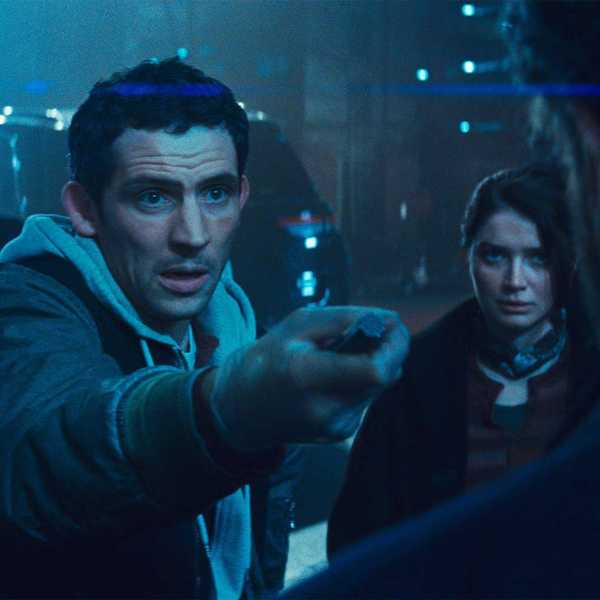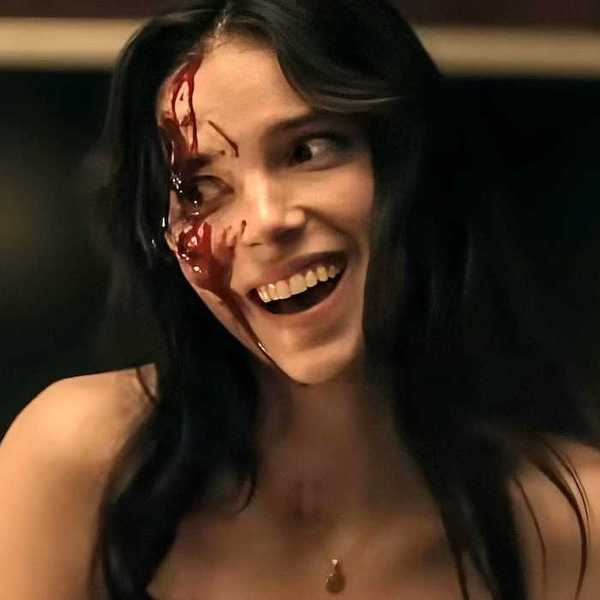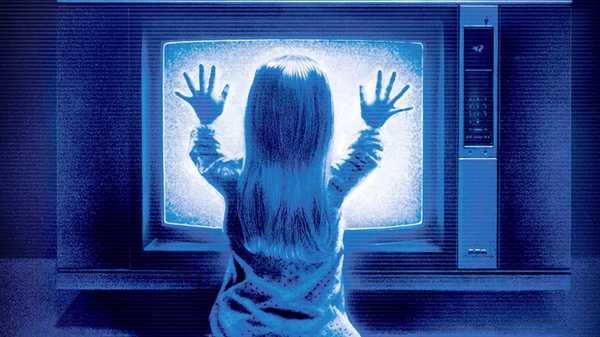
Cinematographer Ryan Thomas shot Casey Donahue's feature debut on two borrowed DVX100Bs.
Panasonic's DVX100 line was the indie workhorse of the early 2000s, and the original model was the first small camcorder to record at a film-like 24 frames per second. The DVX100B was its last revision. It shoots standard definition to MiniDV tape. That makes it a strange pick for a feature premiering in 2026. Strange, and a lot of fun.
In the film, Alice is heartbroken after a breakup, so she bargains with the devil for all the love in the world, then transforms into a siren-like figure who pulls men into her orbit before sliding into violent madness. Donahue funded it partly through Kickstarter, where 737 backers pledged $65,684 against a $50,000 goal.
The film, My Love for You Is Deep but the Devil Loves Me Deeper, world premieres at Toronto After Dark, where it opens the festival's new Late Night Program at CineCycle, a slate built around more esoteric and experimental genre work. Doughboys Media and Devil Business produced, and the cast includes cameos from alt-comedy regulars James Urbaniak, Mike Mitchell, Kyle Mooney and Beck Bennett.
If you came up on late-night cable thrillers, this one should feel familiar. We've written before about why a 20-year-old camcorder can be the right tool. Thomas tested in his living room, built a workflow with his colorist, and leaned into the noise and clipping a modern camera would hide. The old camera also helped the budget. There were no rentals, and the deep focus meant no AC was needed.
We talked with Thomas ahead of the premiere about his kit, his tests, and what he's taking to his next shoot.
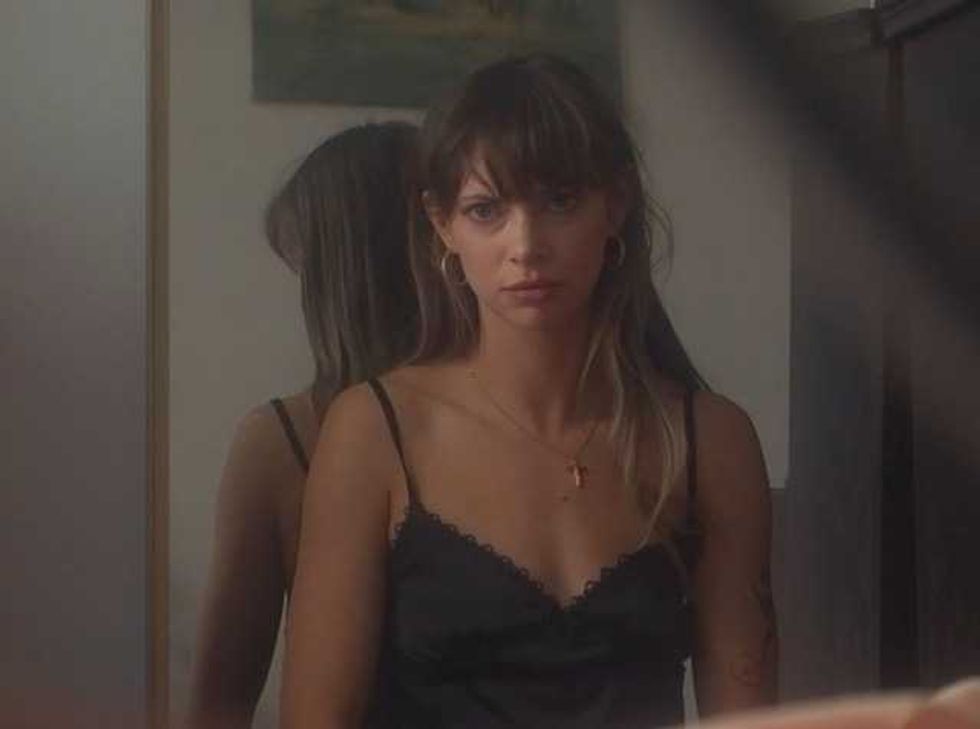 'My Love for You Is Deep but the Devil Loves Me Deeper'Credit: Ryan Thomas/Provided
Editor's note: The following conversation has been edited for length and clarity.
No Film School: What got you on board as a DP?
Ryan Thomas: I think that it's a little sad to say that it's kind of rare to have a director that has such a strong visual vision of their film. And I really liked that the director. He had researched cameras. He had done some testing, and he had shot some things and showed them to me.
And I think that made it really easy to be like, "Oh yeah, this looks really cool. I'm so on board for this." And just that he had such strong visual ideas for the film where I was like, "Okay, there's totally a lot here. I can add a lot."
And I think the most important thing is it's unlike something you've seen before.
No Film School: What was your kit like? What were you shooting on?
RT: We shot on two DVX100Bs. Both of them were just like, the director just owned one, and our friend was like, "Oh yeah, I have one of those. You guys can take it." And so we just borrowed it.
They were fairly modified to accept normal accessories, so they could be powered off of Gold Mount batteries. Off of Alibaba, I found dummy battery-to-D-Tap adapters. And so we could put rods on the camera with a Gold Mount. And then we recorded to tape, but then we also recorded to an [Atomos] Ninja, and that just gave us playback. And then that also got us HDMI so that we could feed that into a Teradek. So then we also had an 18-inch monitor on set that allowed us to view both cameras.
No Film School: It feels like a Blockbuster movie you would rent 25 years ago. What were the discussions about why you went that way visually?
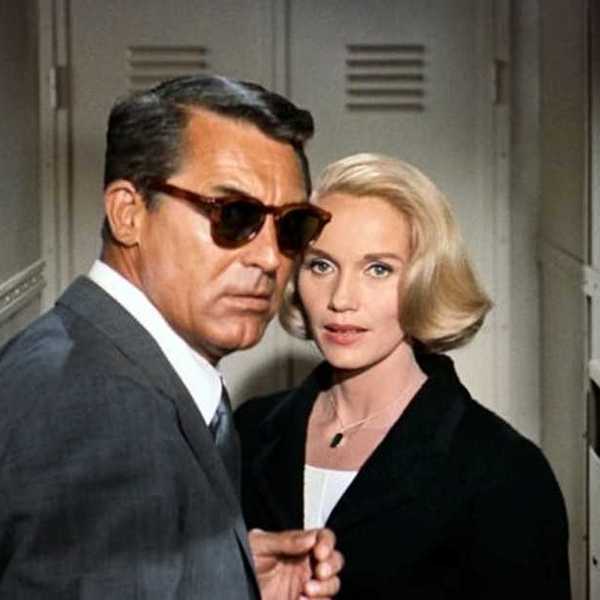
RT: It's so funny, because you nailed it exactly, where the director was just like, "Yeah, I want to make something that's like a movie you'd see on at midnight on Cinemax or something." And it's like, okay, these were the tools available to everybody at the time, and they were trying to just make something that was a little sexy, very colorful, and this is the kind of movie that you would get as a result of that.
I think the other thing too that was just related to this, because I do think the question always becomes, “Well, could you shoot this on a better camera and just dumb it down?” And I feel like one of the big things that I noticed from that was one, just helped our budget immensely. We don't have to rent cameras; people just give them to us.
And then the other thing too is that because the focus is so deep, we didn't have focus pullers. We would just pull our own focus.
And so it's like, okay, we don't have to rent cameras. We don't have to hire ACs to pull focus, and we can just have a camera. We have a camera assistant, but their duties are pretty minimal for two cameras.
No Film School: What did it change about the way that you're working as a DP when you're working with these cameras that have those limitations?
RT: I think that it was really interesting because I have a very standard process for how I do a lot of the work that I do. I'm usually either shooting on the FX6 or Alexa 35, and I know the limitations of those cameras and what you can do and what you can't do.
But with these cameras, I'm just like, "Oh my gosh, I have to start from square one a little bit." Can we shoot outside with minimal lighting? Can we get away with that kind of stuff? And I know also, okay, the dynamic range is really limited; things clip really quickly, and then [it] does not handle the color red very well.
That was just a lot of testing in prep where I just shot a ton of little test things in my house. And then I worked with a colorist, Dan Edwards, and he helped me figure out what the best way was to approach a lot of these problems and what would look and work the best.
So I think that a good example of this is the low-light thing, because the other thing too is this is not a normal movie, and so you can do things you wouldn't normally do.
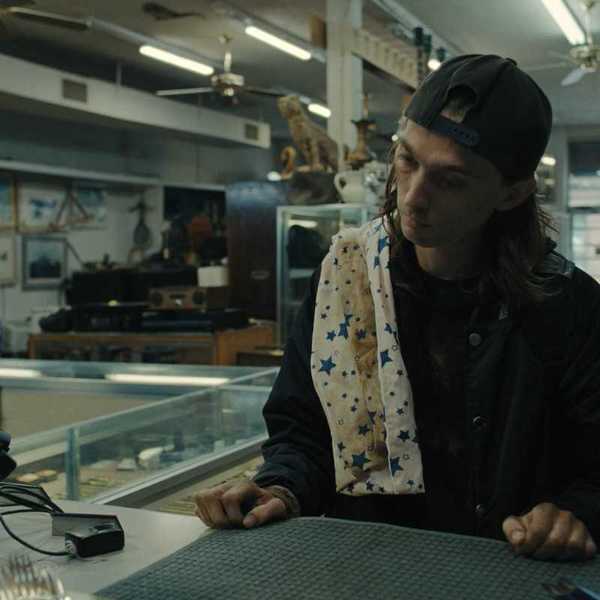
Just a quick example of that is I tried testing using the high-gain modes on the camera, and I found that using the gain in-camera was much better than brightening the image later in post. And on top of that, the noise that you got from the high-gain mode was actually interesting and cool, especially if you added a layer of film grain on top of that.
And so with that, we were like, okay, we can totally shoot very low-light situations. We can shoot on the street at night with no additional lighting. And then we get this cool noise that, I think, becomes a character in the film where there's always something in the darkness that's flickering. So yeah, I think that was an interesting experience part of it.
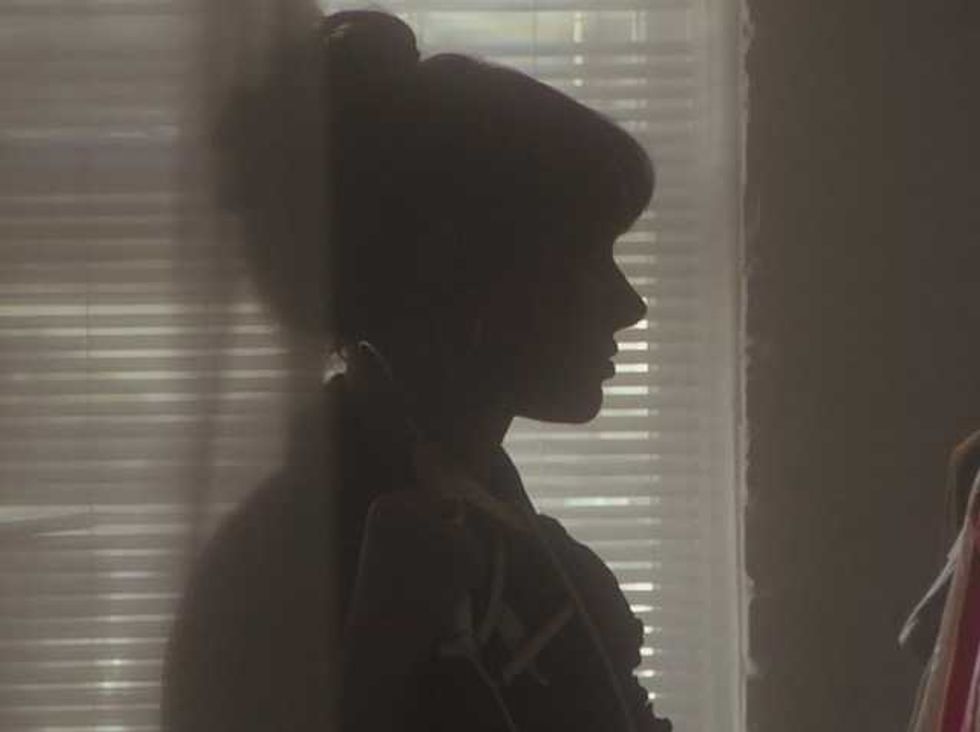 'My Love for You Is Deep but the Devil Loves Me Deeper'Credit: Ryan Thomas/Provided
No Film School: It speaks to what you were saying about not doing it in post too, because it forces you to be creative in those ways rather than just using an Alexa or a RED or whatever and putting a filter on. I'm sure it just changes the way you do everything.
RT: I think that the other thing too is we wanted it to look like video, and so I really had to be like, "Okay, needs to look like video at times." And so there were moments where it was clipping, and there are areas of the frame that are very clearly overexposed. And I'm like, "I don't know. I think it's actually kind of good because it really clues you into what we're doing."
No Film School: Was there a shot that was especially hard to get for you?
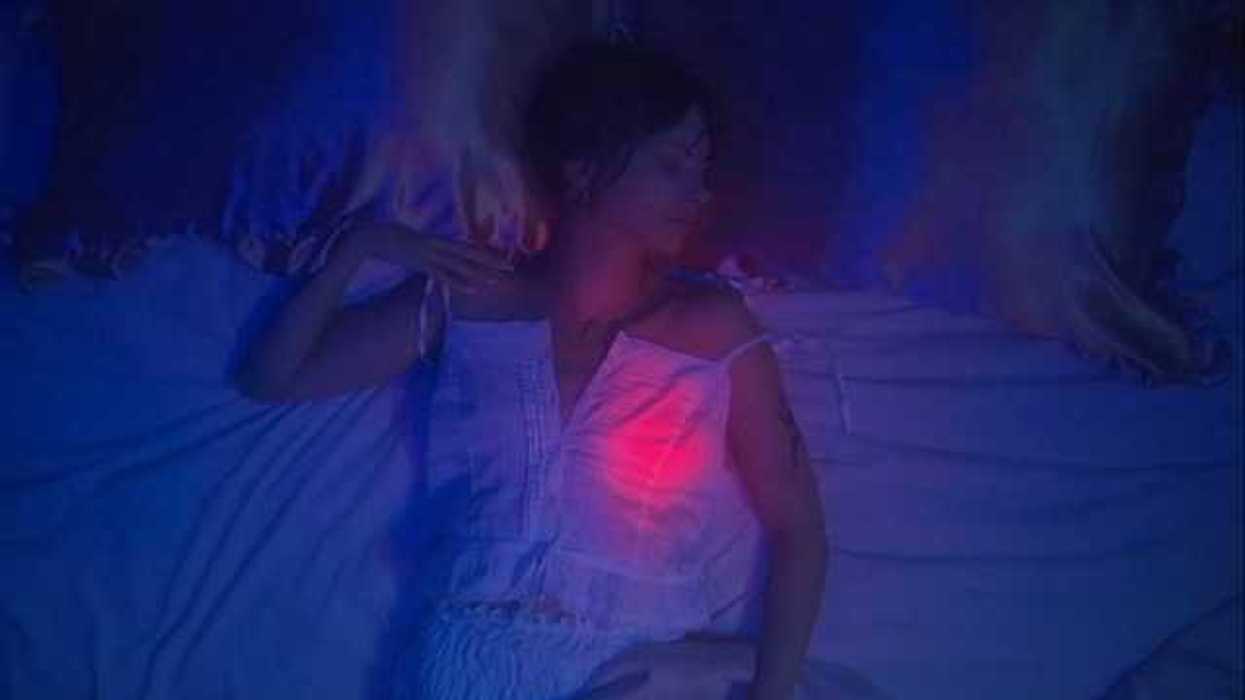
RT: Yes. I think that this is one of the shots that, I don't know, people seem to come up to me afterwards and be like, "How did you guys do that?" There's a shot where Alice is in bed, and we're looking overhead at her, and the camera zooms in and twists. Each time it zooms in, it pans left, and then it pans right, and it's her wincing in pain.
Originally, the shot was going to be much worse, where it was just overhead, and we had rigged the camera with a right-angle plate so that we're looking down at her. And then I had found on Adorama, I don't know, they had in their inventory a DVX remote zoom controller, and so I bought that. I'm sure that they had to dust it off to send it over to me, but I bought that.
And so then it was my B camera operator way off because it's still wired, so he's on the bed with me as far away as he can be. And then I rigged a gobo arm to the camera so that I can also be far away from the camera and not get in the shot. And originally it was just supposed to be zoom in, zoom in, zoom in. And then I think we were repositioning the camera, and Casey was like, "Wait, that was actually really cool. Can you do that again?" And then we just worked it out, but it's like our schedule's so tight; the amount of time to experiment is very little. So we did a few takes, and we're like, "Okay, I think actually that was incredible. We should move on."
No Film School: Even though this is a unique film and tool set, is there anything that you learned from working on this project that you can apply to other things?
RT: Yeah. And I do think that it's ultimately you have to shoot things that people haven't seen before and in a way that they haven't seen them. And so it's like for this project, sure, that may be using an old camera, but in the future I'm like, “Okay, it's like how do you always try and shake up the techniques that you use and the ways that you approach things to get a different look?”
Because it's been so great to have such a big response to the look of the film, and I think that is really because we're trying something different. And yeah, it's like we would go to set every day and I would be like, we're either doing something that is awful or incredible. I'm not sure which. And I do think that that is a really good place to be.
No Film School: Is there anything else you want people to know about the film?
RT: I think that one of the interesting things when I was doing prep for this was just a funny story: all the DPs that I talked to, I was like, "Oh, how did you guys approach color grading? What frame rate did you shoot?"
And everybody's like, they would shoot 60i, and they would also be like, "Oh, we didn't do any color grading. We didn't light it. We just wanted it to be." It was all found footage pretty much. That was how most people were using it.
And so it was just funny to see that I was like, "Oh, we are making a very different movie than everybody else where we're like, oh, it has to be 24P 100%." And not only that, but we're really paying attention to the lighting and the style of all of it.
Even the color process did really play a big part in it, and I think it helped to make it the movie that it is, where I think it could have been really tempting to just let it be. And then I guess the other thing is standard definition. You would think that that would be a problem because we had to upres to 2K for the DCP, and we just watched it in a theater last week and it looks great. I think you would never know that it was shot in standard definition. So yeah, I don't know. Those are a couple of the funny things that I feel like I found along the way that were fun.