In the lost art of ultimate action movies, there are a few rules that every standout classic from the '80s and '90s has to follow. The hero has to be unimpeachably cool; they have to play by their own rules, and—in most cases—they must overcome the slightest of challenging odds to defeat their chief foe at the end.
That’s the case for the majority of action movies of the era, and, in general, for most action movies before and after, too. However, there was one action hero who served more as a prototype for the superhero films of the 2000s and 2010s than he did for the 80s ultimate action era.
Steven Seagal stands tall on the shoulders of the Supermen who came before him as an example of the action movie hero who never gets hit. At least in his films. In real life, he’s not great, but we’re here to take a look at the Seagal action hero archetype and how it could be an option for your films and projects.
Steven Seagal: The Unassailable Action Hero
Originally born in Lansing, Michigan, to rather uneventful circumstances, Seagal grew up in California before eventually making his way to Japan, where he trained in aikido. (He also claims to have helped to train CIA agents during this time, but that’s been highly disputed.)
Eventually, Seagal made his way to Hollywood, where he almost immediately starred in his first action film Above the Law, which would set the formula for the rest of his action career and help define a prototype for a type of action hero who doesn’t come along often.
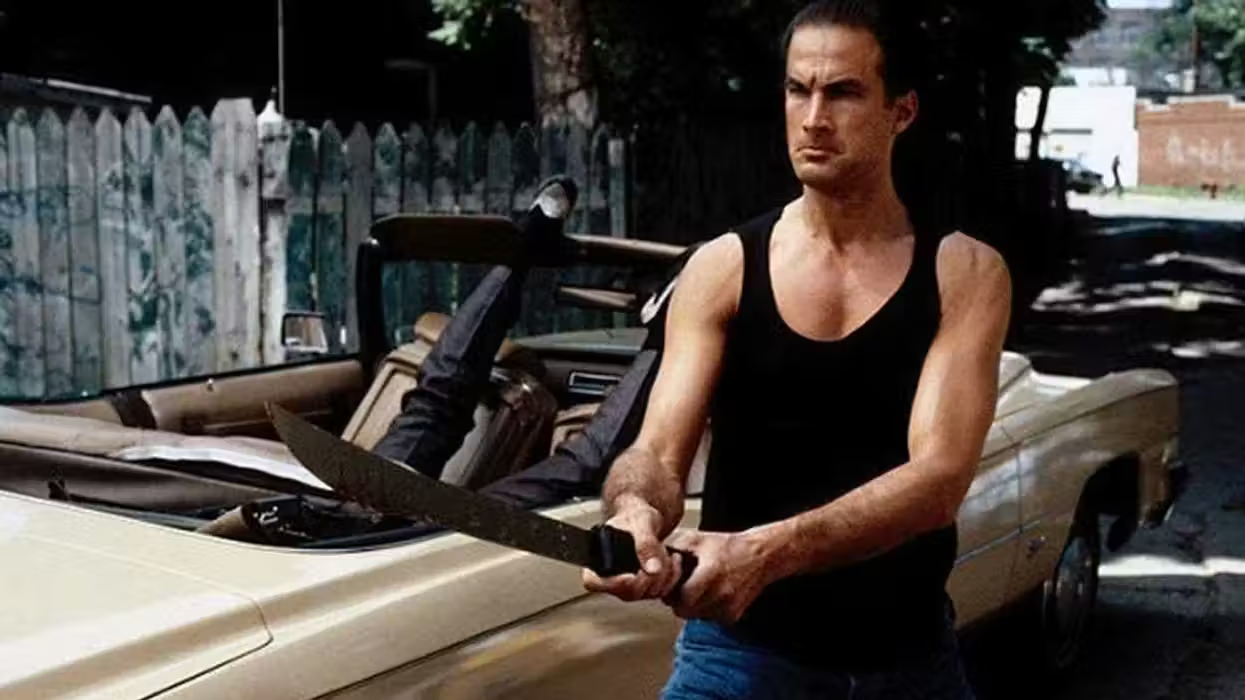
In Above the Law and in his subsequent string of action-movie classics like Hard to Kill, Marked for Death, and Out for Justice, Seagal never takes a hit. Not only that, he’s rarely ever out of control (unless he wants to be) and never in any realm of true peril.
The Prototype of a Future Action Star
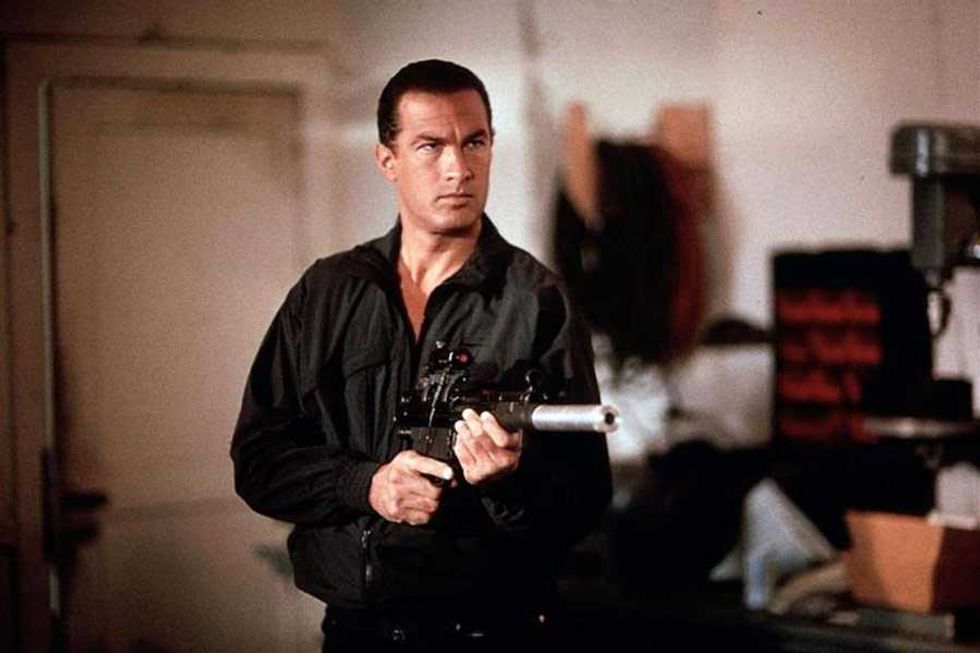
Credit: Marked for Death
While you could easily trace the origins of this godlike action-warrior style back through folklore and religion, as well as in superheroes like Superman and others, it was, at the time, rare to see a character defined on screen as so ultimate.
In the '80s and '90s, most action movie stars still followed similar formulas: being beaten up and on their last legs by the time they reached their final showdowns. Seagal, on the other hand, had nary a bruise or a cut going into his major battles.
And as the ultimate action-movie era went on, other action stars eventually followed the same path. After all, when you’re as imposing and as ripped as stars like Arnold and Stallone, it doesn’t make a ton of sense for them to be so beaten down.
The Downfall of the Ultimate Action Warrior
Still, in many ways, it was this type of action star archetype that would eventually do in the '80s and '90s-era stars, as audiences began to get bored with these over-the-top, low-stakes storylines.
And while we don’t know for sure whether Seagal insisted on having his characters presented this way, or if it was just a formula that worked early and stuck, his action star persona can be traced to the downfall of the ultimate action warrior.
After early success in his career, Seagal quickly fell into direct-to-video films and television roles before eventually relocating to Russia to avoid multiple controversies and allegations, as well as to be closer to Vladimir Putin, with whom he was close.
By the end of his career, action movies had reverted away from this unassailable warrior type archetype and once again returned to the tried-and-true, earned style of hero who went through the usual story setback paces.
Yet, every once in a while, we get a John Wick or a superhero who has a certain ultimate persona that strikes fear into their enemies at a primordial level, and audiences pick up when a style of action star presents itself—a trend worth considering when writing and creating your own action projects.