Animation is one of the most fun mediums in filmmaking because it feels like anything is possible. But not all animation is made the same or has the same philosophies behind it. It's a way to make something, not a monolith.
That's how you can have two huge companies like Disney and Studio Ghibli, which are paragons in the field, and yet be so different.
While both create breathtaking worlds, their approaches to design and storytelling are worlds apart.
In this fascinating breakdown by the Pomeroy Art Academy, we dive into the artistic nuances that make Hayao Miyazaki’s work feel so distinct from the classic Disney style.
Let's dive in.
- YouTubewww.youtube.com
Before We Get Started...
I doubt you'd find a kid in America who was not shaped in some way by a Disney movie, and the lucky ones will feel the same way about Studio Ghibli.
This is not an argument over who is better, but a case study in why they do things in their own way. Hopefully, a celebration of each.
Shape vs. Texture
One of the most immediate differences lies in how characters are built. Disney is famously shape-oriented. And Pixar famously has thicc moms, but that's a different post.
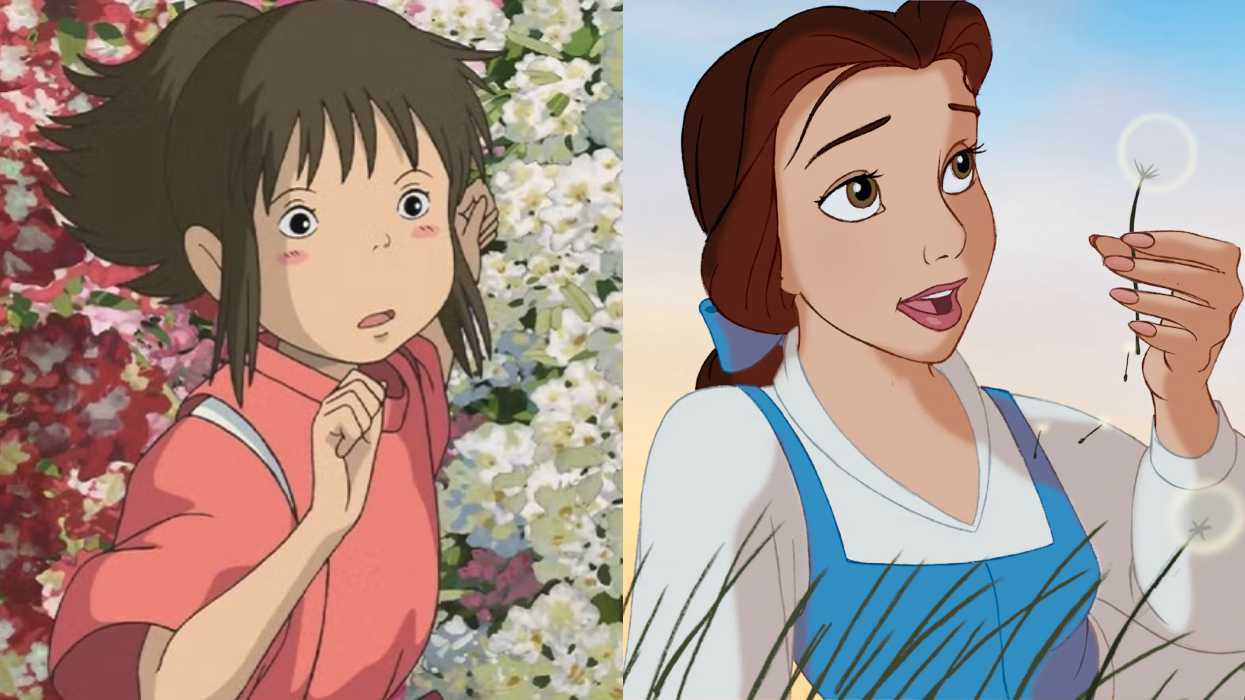
Characters like Belle from Beauty and the Beast are designed with a "formula" in mind. They made them specific, with clean silhouettes and proportions that make it easy for animators to understand how a character turns in space.
But in contrast, Miyazaki and Ghibli favor texture and rhythm.
When looking at Kiki from Kiki’s Delivery Service, you’ll notice her hair isn’t just a mass; it has a spiral pattern and broken strands that give it a sense of movement and "autonomy". These characters often feel more grounded in a "graphic universe" where the texture of the hair, clothes, and props all speak the same language.
 'Beauty and the Beast' CREDIT: Buena Vista Pictures Distribution
The Eyes
Disney eyes are "fully sculpted" and "fully linear," meaning every part of the eye is clearly defined to give the character depth. They are human, wide, and expressive.
But again, we see Ghibli often does the opposite.
Miyazaki takes a more minimalist approach. He uses flesh tones and white space to suggest the shape of an eye rather than drawing it explicitly. This subtle touch creates a softer look.
The video thinks it can be more emotive, but I don't totally agree. I do think it has to do with the situations of characters and that each place draws eyes to fit the kinds of narratives. Disney has more fairy tale eyes that emote in different ways.
 'Spirited Away' Credit: Studio Ghibli
Realistic Gestures and "Ghibli Shadows"
Okay, so I think a lot of this boils down to Disney trying to find consistency in the animation and Ghibli being okay with differences that are emotive.
Take the hands, for instance.
Disney hands follow a basic block shape, but Miyazaki leans into unique gestures. He focuses on the way fingers are placed in ways that haven't been done in Western animation before.
Another big difference is that Ghibli uses contour shading to add depth in certain scenes, where a Disney character’s hand might be a single flat color, to match the skin tone of the characters all over.
 'Snow White and the Seven Dwarfs' Credit: Disney
Embracing the "Grody" and the Old
Okay, so the video makes this case I'll present here, where they reimagine the Beast from Beauty and the Beast in a Ghibli style.
The idea is that Ghibli isn't afraid of imperfections. While Glenn Keane’s Disney Beast is a "beautiful design," a Ghibli version might include some asymmetry: Like a single snaggletooth or Warts, wrinkles, and "grody bags" under the eyes, similar to Yubaba from Spirited Away.
This is a cool way to think of it, but it also makes the beast so ugly I could see Disney balking at making toys of him or putting him on lunch boxes, Not to mentio nand audience being upset Belle makes out with him.
But that could just be my Western mind wandering.
 'Spirited Away'Credit: Studio Ghibli
Summing It All Up
As I said up top, I think the differences are interesting. But I also think you can like movies from both and that there is no right or wrong way to do this stuff.
You may like some of the whimsy from Ghibli, but also like the commercial narratives and songs that Disney bakes into tidy stories.
What will be interesting to me is how the next crop of filmmakers raised on both will have animations that incorporate everything you've seen here.
Let me know what you think in the comments.
- This Might Be the Greatest Disney Mashup Ever Made ›
- 20+ Years Later, This Miyazaki Gem is Still the Highest-Rated Animated Film ›
- Studio Ghibli Releases 400 Free Images from its Movies ›
- All 12 Hayao Miyazaki Movies, Ranked ›
- 'The Legend of Aang: The Last Airbender' Leaks Online 9 Months Before Its Release ›