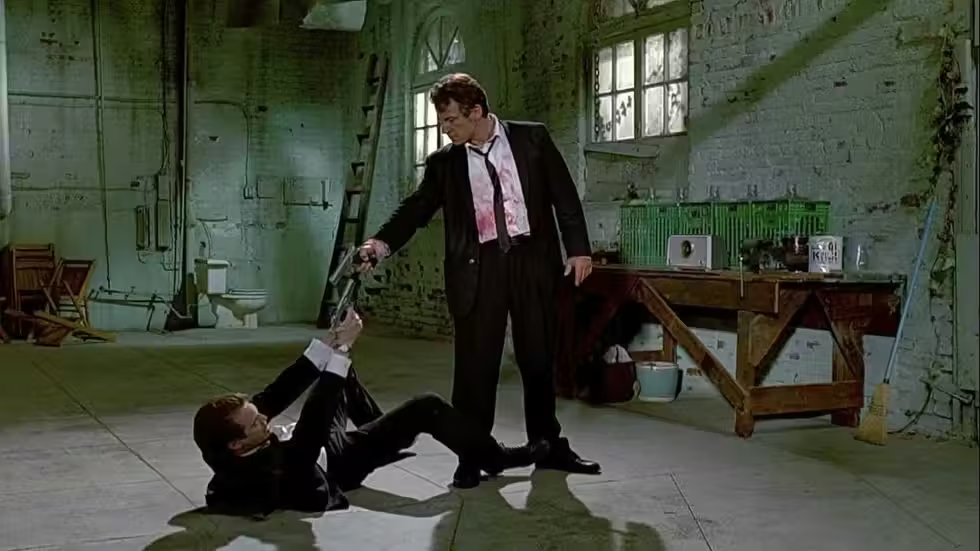
On the surface, Quentin Tarantino’s debut feature, Reservoir Dogs, is a really simple, straightforward narrative. And when he first wrote it, Tarantino thought that’s all it was. Until he was given a clear piece of advice from a mentor of his: subtext is everything. “You’ve done the writer work. You’ve got to do the director work.” What does all of this mean? Let’s talk about that, examine a sample in another one of Tarantino’s films, and then talk about how to implement it on your own.
What Actually is Subtext?
Subtext can be a bit hard to define if you’re not fluent in it. It’s essentially a broad, umbrella-like term for any sort of meaning that’s going on below the immediate action or literal dialogue being presented. Why is a character speaking like that to someone they love? What does the character actually mean when they speak that way? You can make characters do and say all kinds of crazy things until the cows come home, but until you can fully understand the deeper meaning and understanding behind it all, you haven’t fully developed your script.
The Ending of Once Upon a Time in Hollywood
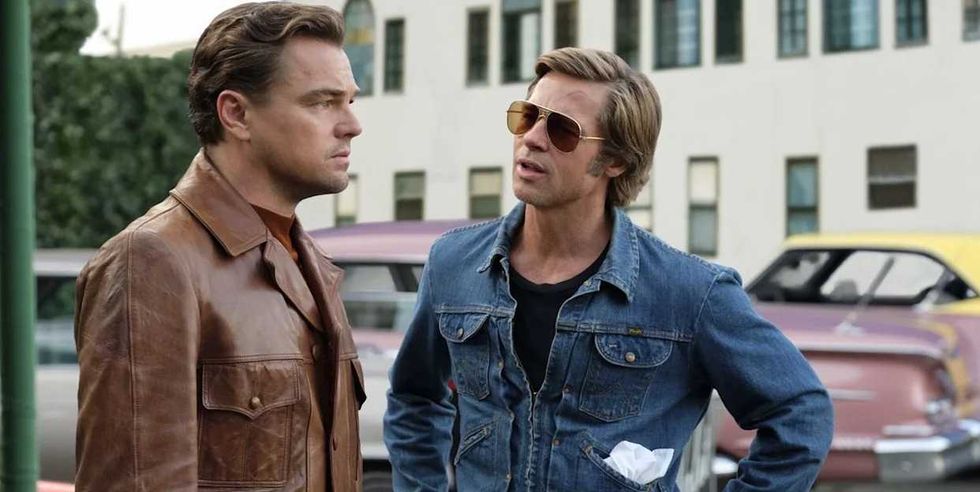 ‘Once Upon a Time in Hollywood’Credit: Sony Pictures
Tarantino’s most recent film, 2019’s Once Upon a Time in Hollywood, follows mostly fictional characters as they navigate the end of the 60s in Hollywood, as well as the lead-up to the infamously tragic Manson Family Murders. Margot Robbie plays the real-life actress Sharon Tate, who was killed in the initial murders.
Amidst the anthological, slice-of-life style of storytelling, it’s clear that the film is building towards examining the tragedy in some way. Brilliantly, Tarantino, who is known for his graphic, unrelenting violence, actually saves the vast majority of it in this film for the final ten minutes. In those final ten minutes, the members of the Manson family break into Cliff Booth’s (Brad Pitt) house instead of Sharon Tate's. It’s here that Booth, DiCaprio’s Rick Dalton, and Cliff Booth’s adorable pitbull brutally (and hilariously) slaughter them before they can do any damage.
Once all of the carnage is over, Rick Dalton is invited up to Sharon Tate’s house for a drink to catch up and debrief. He accepts, walks up the hill to her home, where he’s greeted with a big hug from her. The camera rises into the sky as the final title card for the film, and the credits begin to roll.
The subtext here is clear, yet incredibly moving. The climax of the film presents a version of events that everyone can confidently say they wished had happened instead of what really did. Amidst all of the romantic nostalgia of the film, it’s a bittersweet fairy tale that does its best to honor the lives lost to such a horrific moment in Hollywood’s history.
The timing of the title card emphasises this further with the “Once Upon a Time” portion arriving first, before a pause delays the “Hollywood” part by a few seconds. Sweet, yet melancholic music plays over the credits as you soak in the really entertaining ride you just experienced, as well as its unexpectedly moving conclusion.
How to Make Sure You Do This Too
Tarantino cites that for Reservoir Dogs, he focused heavily on the dynamic between Mr. Orange and Mr. White. The most important question when developing subtext, according to him, is “what do these characters want more than anything else in the world?” The more Tarantino dove into these questions, he realized that the film became a metaphorical father/son story.
This question is one that should always be driving your story forward, as a follow-up to whatever it is that you want to convey as a writer, both with your story and your thematics. My biggest recommendation would be to make a vastly, perhaps over-exaggeratedly detailed character map. Dissect the backstory, goals, and desires of every character in your story on this map. This might make the first draft of your script take a bit longer, since you’ll now inevitably have the subtext goals in the back of your mind every time you write a line of dialogue. But, in my experience, it’s worth it in the end. The editing process, which is always the most tedious, becomes much easier this way.
The subtext isn’t just “director work.” That description makes sense for the simplified version of Tarantino’s story, but it’s one of the most important elements of everyone’s writing process. Find out what works for you, and stick to it!
- How Quentin Tarantino Came Up With His Directing Style ›
- 9 Best Quentin Tarantino Movies, Ranked ›
- Want Tarantino's Advice? Trap Your Characters, Trap Your Audience ›
- Quentin Tarantino's Top 10 Films of the 21st Century ›
- Quentin Tarantino Thinks the 2020s Are a Cinematic Wasteland (Except for These Movies) ›