These 11 Characters Stole the Entire Movie With Just One Scene
Where some actors need a franchise, these 11 legends needed just one unforgettable scene.
'Doubt' (2008)
Usually, there are big stars in movies who run the whole show, but every once in a while, someone unassuming steals the spotlight for just a few minutes.
These breakthrough characters come, do their thing, and then leave—but their echo stays as if they were in the whole story. It’s not about how long they stay or how many scenes they have; it’s about how memorable they are while they are there.
The scene-stealer has a magnetic quality. A character who only appears in one scene and yet changes how you remember the whole movie. They don’t need any backstory or growth. What they bring is a lightning bolt of personality, performance, and presence. One sharp moment, and they are forever in pop culture.
So, in this article, we will explore 11 such performances that demonstrate that this cinematic immortality can be achieved through brevity, spanning comedy, drama, action, and horror.
The Anatomy of an Iconic Scene
The Perfect Storm
Typically, it’s not luck when a character shines in a single appearance. It’s the product of a director who understands how to frame the scene, a fearless actor, and incisive writing. The last component is the audience’s reaction, which transforms a brief appearance into a lasting part of the film’s memory.
The Cameo vs. The One-Scene Wonder
Because you recognize the actor first, cameos rely on star power. But a one-scene wonder is not the same. These fictional characters exist solely to cast a single, enduring spark. They demonstrate that a single, skillfully constructed moment can rival a lead role; they are not stunt casting.
The Legacy
These scenes continue to reappear in fan debates, GIFs, and film classes decades later. They serve as a reminder that the impact of individual scene performances is just as important as an actor’s overall screen time. The fact that the smallest parts can have the greatest impact is proven when these performances justly win big at award ceremonies.
11 Characters Who Define a Film In a Single Scene
1. The Black Knight (Monty Python and the Holy Grail - 1975)
Portrayed by: John Cleese | Written by: Graham Chapman, John Cleese, Terry Gilliam, Eric Idle, Terry Jones, Michael Palin | Directed by: Terry Gilliam and Terry Jones
With his sword in hand, the Black Knight (John Cleese) blocks King Arthur’s (Graham Chapman) path and refuses to let him pass. In the ensuing ridiculous altercation, Arthur chops off each of his limbs one by one, but the knight insists, “It’s only a scratch.”
The Black Knight became legendary in comedy because of this absurd act of denial. He has since become one of the most quoted sketches in comedy history, satirizing blind bravery by refusing to acknowledge defeat. It’s the ideal fusion of witty prose, physical humor, and pure ridiculousness.
This scene should inspire comedy writers for an effective and straightforward exaggeration. The Black Knight is deadly serious and doesn’t think he is funny. The audience, however, sees it and laughs until they cry because of this very contrast.
2. Arthur Jensen (Network - 1976)
Portrayed by: Ned Beatty | Written by: Paddy Chayefsky | Directed by: Sidney Lumet
Ned Beatty’s character, Arthur Jensen, shows up late in Network to give Howard Beale (Peter Finch) a lesson on the real nature of power. He informs Beale in a booing boardroom speech that corporations, not governments, govern the world.
It’s quite easy to understand why Beatty received an Academy Award nomination for this one scene. A straightforward monologue became a manifesto that still feels frighteningly relevant today—thanks to his commanding delivery and Chayefsky’s sharp script.
The lesson here is that if a monologue combines conviction with chilling clarity, it can become iconic. The speech’s ability to condense a complicated worldview into a few memorable minutes should be noted by writers.
3. Louise Schumacker (Network - 1976)
Portrayed by: Beatrice Straight | Written by: Paddy Chayefsky | Directed by: Sidney Lumet
In a heartbreaking display of rage and heartache, Louise Schumacker (Beatrice Straight) confronts her husband, Max (William Holden), about his affair. In doing so, she explodes rather than begging.
With the recorded shortest performance ever to win an Oscar, Straight took home the Golden Statuette. Her restrained outburst of grief and rage made a lasting impression on the film industry.
This scene shows how the explosion can be amplified by the surrounding scene’s silence, and Straight’s performance displays how one unvarnished confrontation can have a greater impact than any subplot.
4. Blake (Glengarry Glen Ross - 1992)
Portrayed by: Alec Baldwin | Written by: David Mamet | Directed by: James Foley
A coffee cup, a chalkboard, and the ruthless (quite cruel, actually) motivational statement in business history — “Always be closing”: that’s all Blake (Alec Baldwin) carries into the office, and in one clean sweep, destroys the morale of his struggling salesmen.
Baldwin left with the film’s most enduring legacy, despite only being hired for this one extra scene. The phrase “Coffee is for closers” is still used in pop culture and business because of his rapier-like delivery and Mamet’s scathing dialogue.
Here, actors can observe how rhythm and energy can be used to weaponize dialogue, and how Baldwin turns an inspirational speech into a gut-punch of cinema.
5. Captain Koons (Pulp Fiction - 1994)
Portrayed by: Christopher Walken | Written by: Quentin Tarantino and Roger Avary | Directed by: Quentin Tarantino
Christopher Walken’s Captain Koons only makes an appearance to give a monologue to a young child about a gold watch. It is simultaneously dark, humorous, and strangely poignant.
Pulp Fiction is actually a little feast of one-scene show stealers, such as The Wolf, Jimmie, and Honey Bunny. The diner scene is practically a single scene broken up into multiple parts. However, one of the most bizarre and yet engrossing story drops was Captain Koons’ monologue. Its iconic status is achieved by Tarantino & Avary’s writing and Walken’s pacing. We discover generations of survival, sacrifice, and obscene humor in a matter of minutes.
In this scene, the ability of a monologue to function as world-building is particularly noteworthy for creators. It demonstrates that a skillfully written narrative can carry a scene through even the pauses in action.
6. Casey Baker (Scream - 1996)
Portrayed by: Drew Barrymore | Written by: Kevin Williamson | Directed by: Wes Craven
When Casey Baker (Drew Barrymore) answers a phone call, she unintentionally enters the history of horror. As Ghostface/Billy Loomis (Skeet Ulrich) plays with her before ruthlessly killing her in the opening scene, her lighthearted banter turns spooky.
Years before Game of Thrones made it famous, Scream established the rule—nobody is safe—when Barrymore, the most famous figure on the poster, was killed in the opening scene, leaving the audience in shock. In the ‘90s, the horror genre was revitalized by this choice alone.
The most important takeaway from this scenario is—be bold. The future of an entire genre can occasionally be rewired by initially defying audience expectations.
7. Queen Elizabeth I (Shakespeare in Love - 1998)
Portrayed by: Judy Dench | Written by: Marc Norman & Tom Stoppard | Directed by: John Madden
Despite her brief appearance, Queen Elizabeth I (Judy Dench) makes a lasting impression as the ultimate judge of power and art.
Dench’s Oscar win for just eight minutes of screen time is evidence that power can be conveyed with a few strong words and an unwavering presence.
Craft, in this scene, is highlighted by posture, voice, and consciousness. In order to command respect, aspiring actors can learn that owning the frame is more important than giving lengthy speeches.
8. Darth Maul (Star Wars: Episode I - The Phantom Menace - 1999)
Portrayed by: Ray Park / Peter Serafinowicz | Written by: George Lucas | Directed by: George Lucas
The entire saga seems to be redefined when Darth Maul (Ray Park / voiced by Peter Serafinowicz), who appears quite sparingly, lights up his double-bladed lightsaber. One of the series’ most thrilling duels is his with Qui-Gon and Obi-Wan. The Phantom Menace is often considered one of the weakest films in the franchise, yet Maul’s presence is proof that even in a flawed movie, a single scene can be legendary.
Darth Maul didn’t have much to say in the film, but his choreography, his design, and sheer menace made him memorable and led to his subsequent resuscitation in other media.
This demonstrates that in the absence of dialogue, character movement and design can carry the burden. Words are not always as frightening as silence.
9. Edna Mode (The Incredibles - 2004)
Voiced by: Brad Bird | Written by: Brad Bird | Directed by: Brad Bird
As the quirky superhero fashion designer, Edna Mode (voiced by Brad Bird), effortlessly enters the scene and steals every laugh with her blend of self-assurance and point-blank segacity/sarcasm.
Because she embodied both satire and genuine charm, she quickly became a fan favorite. Since then, her injunction to “No capes!” has resonated throughout fandoms.
Writers and animators can learn how distinctive characters can be made by combining eccentricities and clarity. Edna shows how a supporting role can become memorable through personality-driven detail.
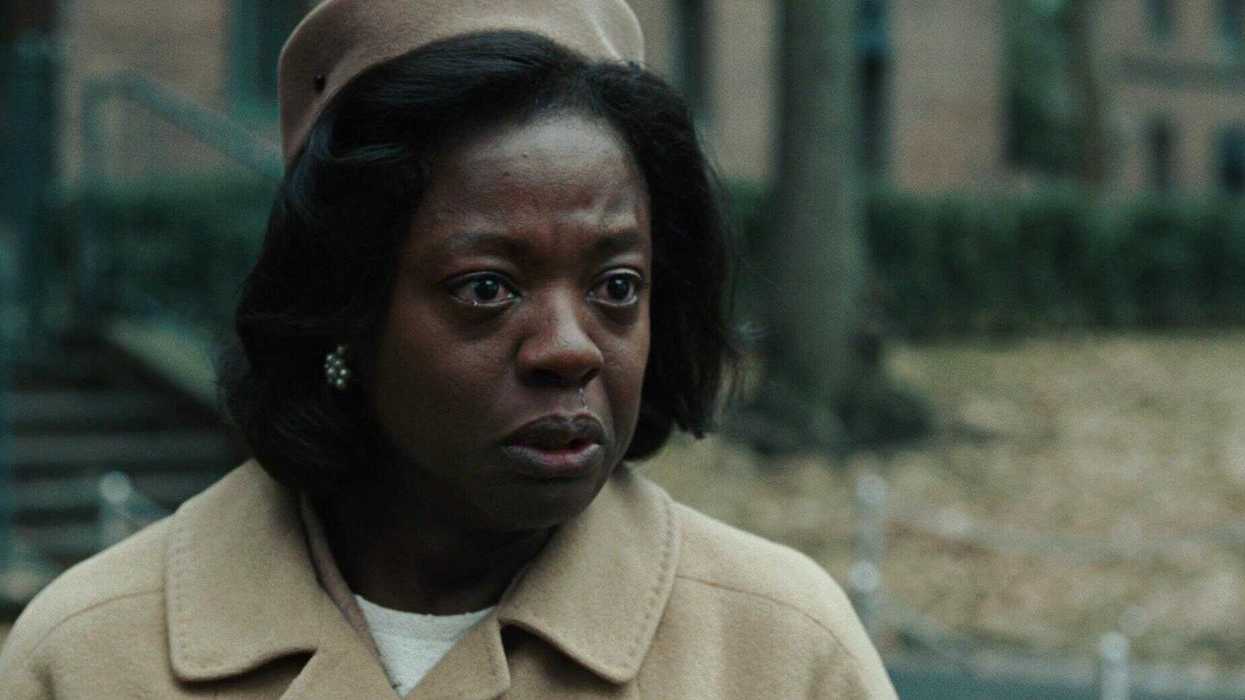
10. Mrs. Miller (Doubt - 2008)
Portrayed by: Viola Davis | Written by: John Patrick Shanley | Directed by: John Patrick Shanley
Mrs. Miller (Viola Davis) meets Sister Aloysius (Meryl Streep) in a single, devastating scene where she helplessly suggests that her adolescent son might be safer under the abusive mentorship of the priest, Father Flynn (Philip Seymour Hoffman), than he is in the outside world.
Despite spending less than 10 minutes on screen, Davis received an Oscar nod. In a single exchange, Mrs. Miller’s subdued, gut-wrenching devastation and Davis’s nuanced, layered delivery transformed the moral tension of the movie.
What starkly stands out here is subtlety. A story’s whole emotional terrain can change when vulnerability is presented truthfully.
11. Bill Murray (Zombieland - 2009)
Portrayed by: Bill Murray | Written by: Rhett Reese & Paul Wernick | Directed by: Ruben Fleischer
Bill Murray portrays himself, casually posing as an undead to hide in his mansion during a zombie apocalypse. Until he dies a sudden and hilarious death, the joke works.
Because it was both ridiculous and entirely consistent with Murray’s public persona, this cameo went on to become legendary. It is still regarded by fans as one of the funniest surprises in contemporary comedies.
Authors should be aware that meta-humor is most effective when it seems natural. Although Murray’s appearance is random, it also seems preordained—as if he was destined to live through the end of the world in order to have one final giggle.
Conclusion
If there is a recurring theme here, it is that impact is not diminished by succinctness. These characters demonstrated that a single powerful moment can rival whole narrative arcs. They left their mark on cinematic memory, whether it was with a spooky monologue, a surprising turn, or a well-timed joke.
The next time you watch these movies again, take note of how these one-scene marvels instantly change the tone of the narrative. They serve as a reminder that great storytelling is about timing, truth, and intensity rather than length.
Perhaps that’s the true legacy: just like in real life, a single, memorable moment can sometimes leave a lasting impression on a film.
- Tarantino's Best Supporting Characters (And What Makes Them ... ›
- 14 Iconic Characters Who Deserve Their Own Spin-Off ›
- Scene Stealers: 13 Supporting Characters Who Became Stars of the Film ›
- Pete Davidson & Bill Murray On The Future of Cinema and ... ›
- 5 Tips from Bill Murray on Acting, Writing, and Directing | No Film ... ›
- Why This Jean-Claude Van Damme Classic Is the Best of the 'Die Hard' Knock-Offs ›