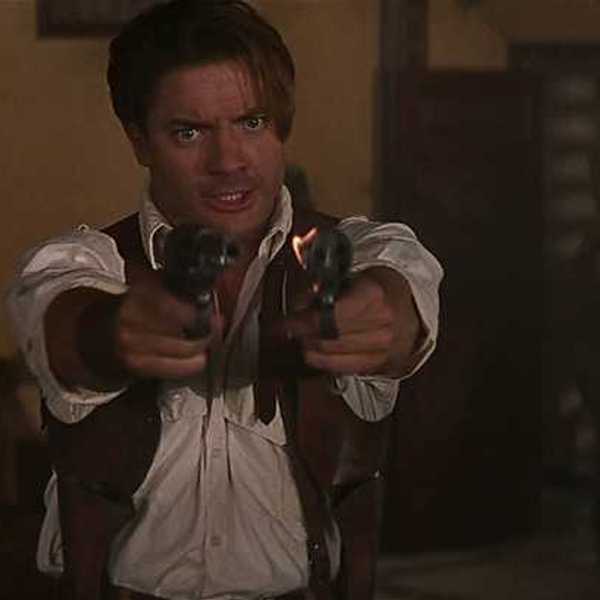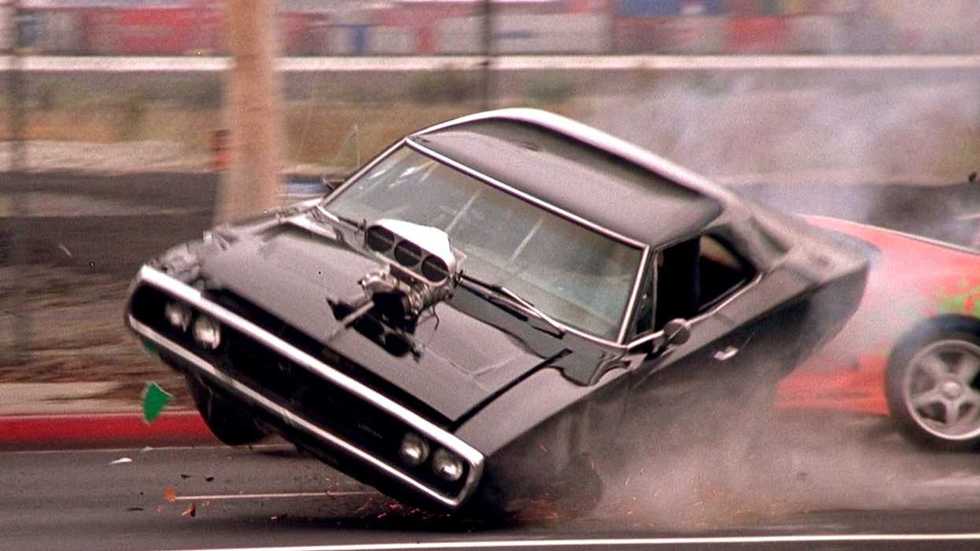
25 years ago, on June 22, 2001, The Fast and the Furious was released into an unsuspecting world. Since then, it has blossomed into a sprawling multimedia franchise that includes eight films that have collectively grossed more than $7 billion, an animated series, video games, a theme park attraction, and more. However, despite an auspicious debut, it took time for the racing movie to develop into a zeitgeist-defining box office phenomenon. Here’s how it happened.
The Box Office Looked Very Different in 2001
Although the modern blockbuster has been around since the late 1970s, thanks to the massive success of Steven Spielberg’s Jaws in 1975 and George Lucas’ Star Wars in 1977, the big-budget Hollywood movie as we know it today looks very different than it did 25 years ago.
On the current chart of the 25 highest-grossing movies of all time (not adjusted for inflation), only one of those mega-blockbusters had been released before 2001 came around (1997’s Titanic). To find the next pre-2001 movies on the list, one has to scroll down to No. 40 (1993’s Jurassic Park) and then all the way down to No. 51 (1999’s Star Wars: Episode I - The Phantom Menace).
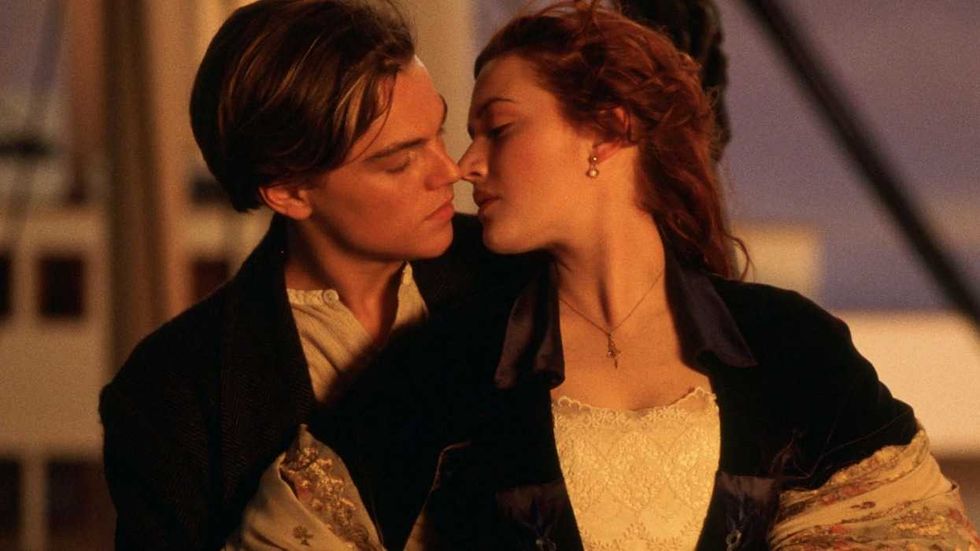 ‘Titanic’ (1997)Credit: Paramount Pictures
Franchises looked very different, as well. Interconnected universes like the MCU were more of a television phenomenon at the time (think of All in the Family spawning the spinoffs The Jeffersons and Maude, the latter of which spawned the tertiary spinoff Good Times). After all, the biggest movie franchises at that time were Star Wars and James Bond. The former had a strict continuity, while the latter had almost none, frequently swapping out the actors who played the title role.
It wasn’t until the 21st century that megablockbuster movies spawned megablockbuster franchises that could even turn in-continuity offshoots and spinoffs into major hits. It started right away at the turn of the century, in fact, as six of the 20 highest-grossing film franchises of all time kicked off between 2000 and 2003, including Spider-Man, X-Men, Harry Potter, The Lord of the Rings, Shrek, Pirates of the Caribbean, and, of course, Fast & Furious.
The Fast and the Furious Was a Hit
2001’s The Fast and the Furious instantly connected with audiences when it debuted, drawing them into the high-octane story of undercover cop Brian O’Conner (Paul Walker) being drawn into the world of underground street racing when he bonds with charismatic suspect Dominic Toretto (Vin Diesel) and his sister Mia (Jordana Brewster).
The movie had already cemented itself as a hit by the beginning of its second week in theaters. Although it debuted just eight days before the end of the month, it was the fourth highest-grossing movie at the domestic box office for June 2001. Its whopping $71.7 million gross saw it landing on the monthly chart behind just the World War II hit Pearl Harbor ($89 million), the video game adaptation Lara Croft: Tomb Raider ($96.4 million), and the runaway animated smash Shrek ($105.4 million).
By the end of its run, The Fast and the Furious had grossed $144.5 million at the domestic box office and $207.3 million worldwide, more than quintupling its $37 million budget. However, it didn’t necessarily stand out at the time, landing at No. 12 on the chart of the highest-grossing domestic movies for the year (behind American Pie 2) and No. 19 on the global chart (behind the Nicole Kidman horror movie The Others).
The Fast & the Furious Franchise Rolled with the Punches
While The Fast and the Furious was an undeniable success, it didn’t ultimately look like it was going to spawn a franchise that held any water at the box office. It naturally spawned a sequel (2003’s 2 Fast 2 Furious), and while it made slightly more ($236 million worldwide), it also cost significantly more ($76 million).
In an attempt to shake off box office doldrums, the next installment - 2006’s The Fast and the Furious: Tokyo Drift - was a standalone sequel, but it performed even worse, earning $159 million against its $85 million budget. At that point, it seemed like the franchise was well and truly dead.
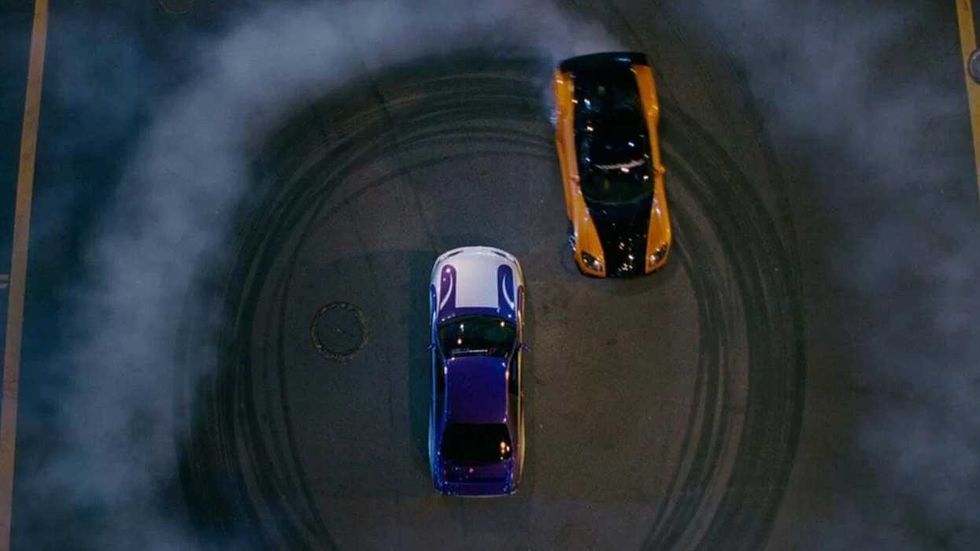 ‘The Fast and the Furious: Tokyo Drift’ (2006)Credit: Universal Pictures
So how did it rise to become the eighth highest-grossing franchise of all time? It was flexible, adapting to the changing movie marketplace and rolling with the punches. These changes included embracing international audiences as overseas markets, particularly China, became major players at the box office.
While Tokyo Drift was an early play toward non-American ticket buyers that didn’t land, the franchise cautiously rolled out an increased number of non-U.S. locales while adding globally famous stars to the mix (including Dwayne Johnson in 2011, Jason Statham in 2015, Charlize Theron and Helen Mirren in 2017, John Cena in 2021, and Jason Momoa in 2023). They also embraced the sea change caused by the MCU and introduced a shared universe in 2019 with the hit $760.7 million spinoff movie Hobbs & Shaw.
Meanwhile, they rolled with some severe punches including the disappointing returns of Tokyo Drift (which forced them to rethink their strategy in the first place) and the unexpected death of franchise lead Paul Walker in 2013 (leading to 2015’s Furious 7 becoming something of a memorial for the late star, featuring the Wiz Khalifa and Charlie Puth tribute song “See You Again,” which spent 12 non-consecutive weeks at No. 1 on the Billboard Hot 100 in the United States).
Thanks to these bold moves, the franchise exploded, with the four movies following Tokyo Drift each earning more than the last. The series has so far peaked with Furious 7’s $1.515 billion, but it was followed by another billion-dollar hit (The Fate of the Furious with $1.236 billion) and three more movies that have each grossed more than $700 million worldwide.
It All Comes Back to 2001’s The Fast and the Furious
While the success of the Fast & Furious saga is partially the result of some very clever strategizing, the franchise wouldn’t have had the success that it does without the groundwork laid by the original movie.
Ultimately, the reason that the franchise finally began to click is that it began drawing more from the well of the original hit, even as the storylines grew more outrageous and diverged from the simple crime tale told in 2001. However, the key was in the movie’s cast of characters, who formed the core of the found family around which the newer movies have been built.
Paul Walker was the only major cast member to return in 2 Fast 2 Furious, while Vin Diesel was the only familiar face in Tokyo Drift. It wasn’t until the fourth installment, Fast & Furious, that Walker, Diesel, Jordana Brewster, and Michelle Rodriguez (as Dom’s girlfriend, and later wife, Letty Ortiz) were properly reunited on-screen. It’s no accident that it was only then that the franchise began to take off, even before bringing on stars like Dwayne Johnson.
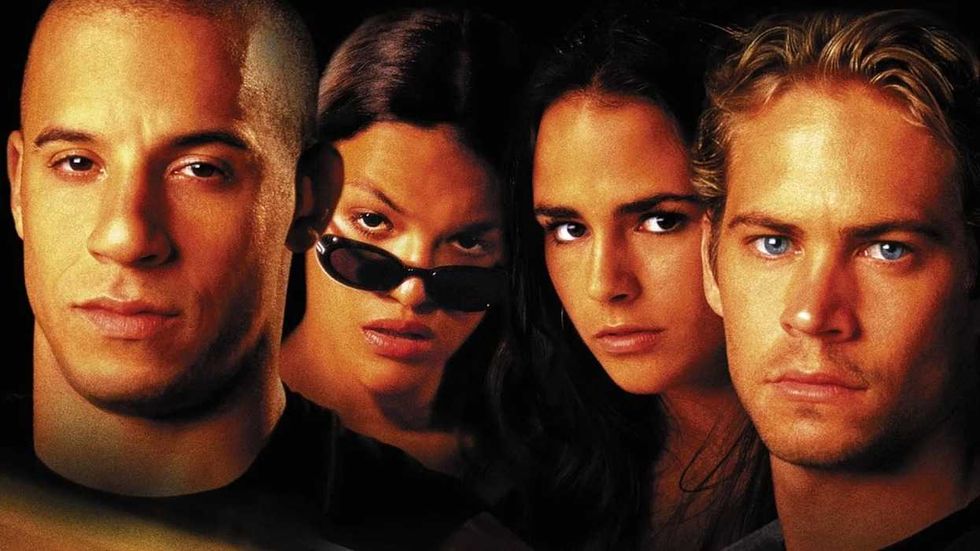 ‘The Fast and the Furious’ (2001)Credit: Universal Pictures
The chemistry that they had in the first movie, which helped drive it to become a major hit, turbo-charged the sequel and allowed the next movies to shine as the four of them (and, after the death of Paul Walker, the three of them) continued to reprise their roles in the following installments of the flagship franchise.
So, what’s your take on 2001’s The Fast and the Furious as it celebrates its 25th anniversary? Where do you think it stands among the franchise’s best, and are you surprised to learn that it wasn’t exactly a blockbuster success at the same level as its later sequels? Sound off in the comments below!
- Supercharge Your Day With The 'Fast and Furious' Screenplays ›
- Is 'Fast & Furious' Better When It Is Fast, or Furious? ›
- 'Fast and Furious' Survived Because It's About Empowerment ›
- 3 Filmmaking Lessons From the 'Fast and Furious' Franchise ›
- All 11 Fast & Furious Movies, Ranked: From Streets to Stratosphere ›