How the Most Famous Advice in 'The Graduate' Became a Cultural Warning
A single word exposed the emptiness of ambition.
'The Graduate' (1967)
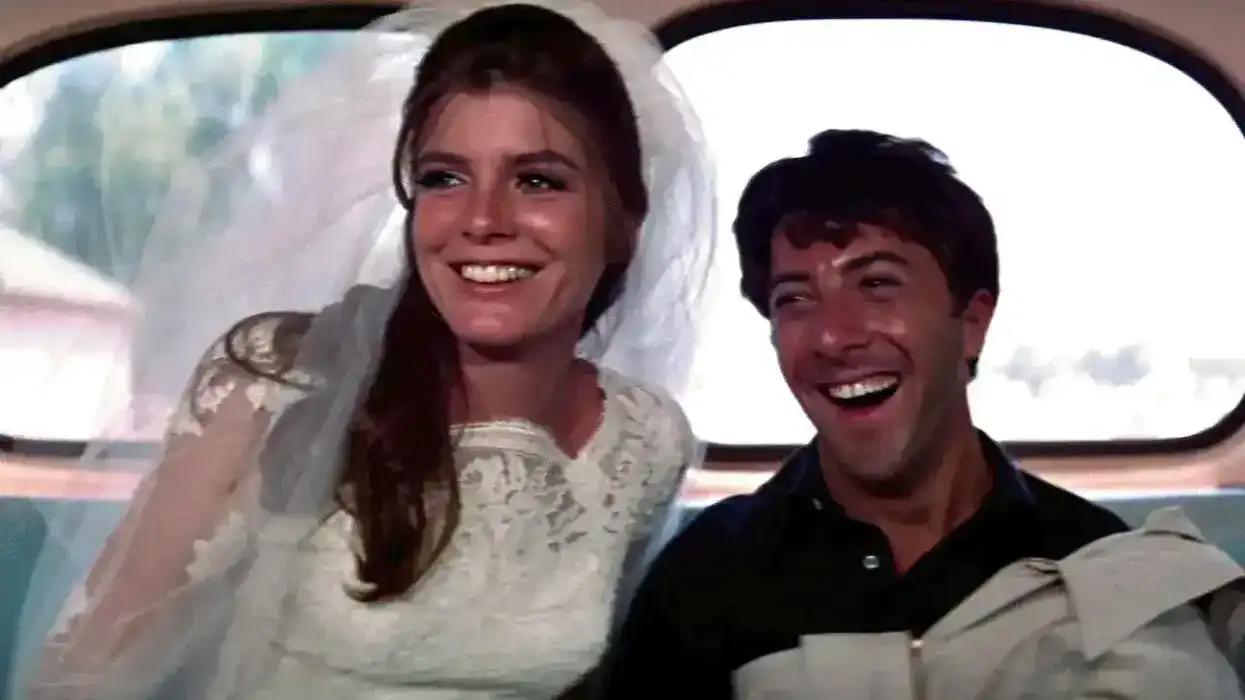
Some of the greatest lines in film history serve one purpose in the scene but mean something entirely different and deeper than what is intended by the character who says it. In The Graduate (1967), directed by Mike Nichols, a single word meant as advice to Benjamin Braddock (Dustin Hoffman) brilliantly exposes the hollowness of post-war ambition.
While the man offering advice says it with certainty, as though his words would ensure absolute success, what he thinks is wisdom comes across as misguided enthusiasm. Quite often, advice tells us more about the person offering it than what their words actually mean. This idea is perfectly crystallized in this singular moment in The Graduate.
What makes this line and this moment so powerful? What can this teach us about writing dialogue that carries cultural weight?
Let’s dive in.
Context Of The Scene
The Graduate, directed by Mike Nichols, follows Benjamin Braddock (Dustin Hoffman), who returns home from college feeling disillusioned and directionless about his future. Benjamin’s academic achievements are overshadowed by his feelings of emotional detachment and the ambiguity surrounding his future.
As the story progresses, Benjamin begins an affair with an older, married Mrs. Robinson (Anne Bancroft), which only heightens his feelings of detachment and deepens his confusion. Things change when Benjamin meets Elaine Robinson, Mrs. Robinson’s daughter, played by Katharine Ross. Meeting Elaine helps Benjamin find emotional clarity and purpose, but as expected, the relationship is complicated. The story leads Benjamin towards his attempt to escape the future he once thought was the only possibility for him.
The “plastics” moment occurs early, during a graduation party organized by Benjamin’s parents. While the goal of the celebration is to parade Benjamin’s achievements, we can’t help but notice his disillusionment. As Benjamin stands confused at his own celebration, Mr. McGuire (Walter Brooke) pulls him aside for a private conversation. McGuire’s words are filled with extreme, unrelenting confidence that almost makes us feel as though he were doing a favor for young Benjamin by simply talking to him.
Mr. McGuire goes on to say, “One word. Plastics. There’s a great future in plastics. Think about it. Will you think about it?”
Mike Nichols makes the discomfort felt by isolating the two men from the rest of the crowd. Hoffman’s incredible performance perfectly captures his deepening confusion within the emotional confines of the moment. What makes this scene so strong is perhaps how most of us can relate to this moment in our lives when a host of people gave us advice about what we should do next. The scene accurately represents this time, a moment when everyone “told” but very few “asked”.
How Nichols Masterfully Captured Post-Graduation Uncertainty
Without the need for grand gestures, Mike Nichols captured post-graduation uncertainty by mirroring society through quiet, relatable moments. In this particular scene, Nichols framed McGuire and Benjamin tightly, ensuring that everything else feels like background noise.
While Benjamin is only beginning to be familiarized with moments such as these, audiences who have had similar encounters can relate, and those who are about to face them can feel a sense of cautious optimism or pessimism, depending on their personal struggles. Nichols places Benjamin in situations where it almost feels like he is in a constant state of confusion and flux, not getting a single moment to himself to revel in the moment he has earned.
It is not uncommon for students who’ve just returned from college to immediately be burdened with ideas on what could be the “next steps”. While Benjamin is still processing this himself, he is bombarded with ideas on what he should do, completely suppressing his inner voice, whatever it may be.
Throughout this entire scene, Nichols employs brilliant blocking techniques to enable Benjamin to float around the party, which makes us empathize with his internal struggles and disconnection with adult expectations. The dialogue is awkward and suggestive of Benjamin’s state of mind.
The word “plastics” is so carefully uttered that Nichols lets its ambiguity settle before McGuire goes on to explain himself further. The intentional pause between the word “plastics” and McGuire’s explanation heightens Benjamin’s confusion as well as ours. The scene is a masterclass in capturing a very relatable phenomenon, which Mike Nichols captures with cinematic finesse.
Writing Dialogue With Cultural Weight
The “plastics” moment in The Graduate is a powerful, culturally aware scene that we can definitely learn from. Here are three important takeaways.
Cultural Awareness Is Crucial
Before becoming culturally relevant as writers, we must be culturally aware. This scene works so well because it draws from our immediate surroundings. It understands those whom it tries to depict. In doing so, this moment becomes poignant, dramatic, yet extremely relatable. The distance between Benjamin and us reduces because we can quickly empathize with him.
Build Generational Contrast
What is clear to us in this scene is the astronomical difference between McGuire and Benjamin on multiple levels. Experience, stature, financial stability, and every important aspect we can think of. This scene brilliantly distills that differentiation into a single word, “plastics”. McGuire’s belief in his own words is extremely firm, which only makes Benjamin more disillusioned, and this brings a stark, generational contrast to the scene.
The Pause Is A Masterstroke
After McGuire says the word “plastics”, he pauses for a considerable moment. This pause, obviously intentional, elevates the tension, confusion, and the cultural gap between McGuire and Benjamin. It’s not like McGuire expects the young man to understand exactly what he is saying, but he uses the pause to add more weight to what he thinks is valuable advice.
Summing It Up
The “plastics” moment in The Graduate is one of its most memorable scenes, which mirrors post-graduate struggles without being heavy-handed in the slightest. Its relatability does not reduce the scene’s dramatic powers, and that’s precisely what makes it so strong and unforgettable.
What is your favorite scene from The Graduate? Tell us in the comments.- We Almost Got a Mike Myers Version of 'The Graduate' Instead of 'Wayne's World' ›
- Watch: Learn Character Development from 'The Graduate,' the Film that Does it Best ›
- Pop Culture Heroes: 5 Hollywood Characters Who Built a Life Beyond the Screen ›
- What Are Some Iconic Movie Scenes That Impacted Pop Culture? | No Film School ›
- The Fine Line Between Cultural Appropriation and Appreciation | No Film School ›