Pop Culture Heroes: 5 Hollywood Characters Who Built a Life Beyond the Screen
When characters rob the spotlight and come live with us.
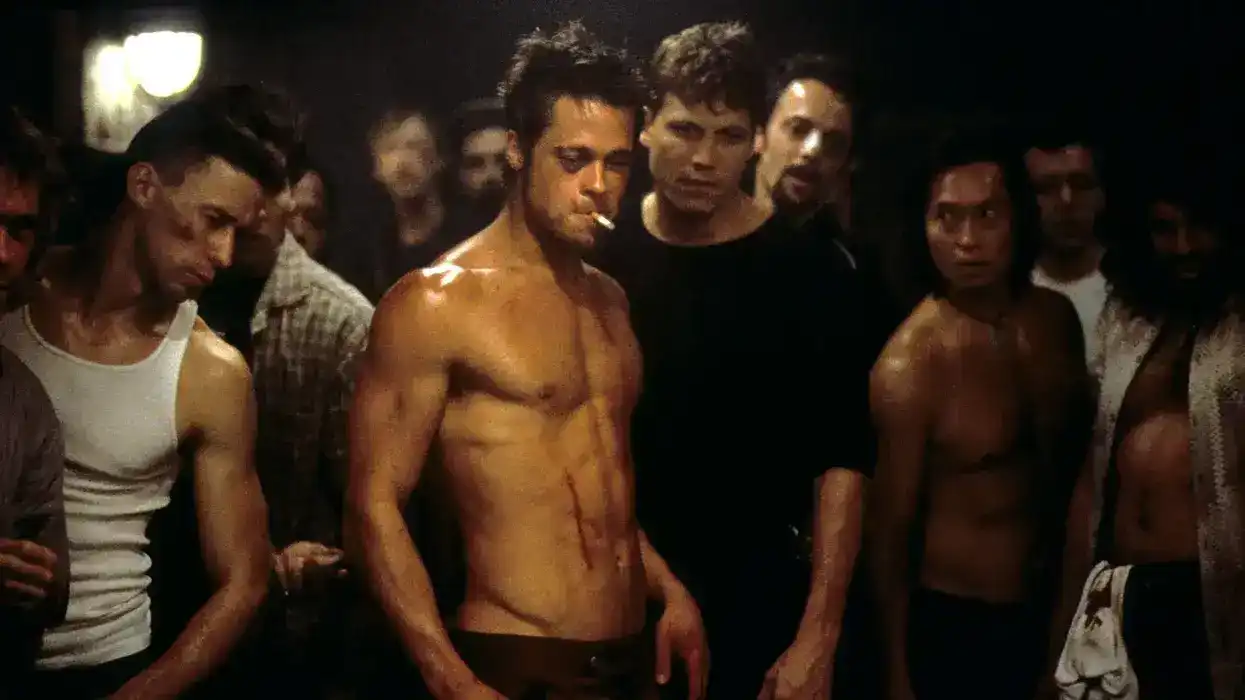
Fight Club (1999)
Sometimes a movie character becomes so iconic that they upstage the film in our memories.
These characters carve themselves into our pop culture so authoritatively; the movie humbly takes a back seat. By no means is this about ‘bad movies with great characters’. This is about ‘great movies with great characters’ who, in today’s society, find new relevance and meaning that the movies they are in may not.
Iconic movie characters are often driven by strong philosophies that define their personalities on one hand and become relatable to the modern world on the other. This relatability does not have to be direct. It simply bears a meaning that speaks to our world today.
Let’s jump in and take a look at five characters who found a new life outside their movies.
5 Movie Characters Who Found A Life Outside Their Movies
Tyler Durden in Fight Club (1999)
In this David Fincher film, an unnamed character (Edward Norton), under the influence of a soap salesman named Tyler Durden (Brad Pitt), forms an underground fight club that mutates into an anti-consumerist movement. The lead’s bond with Tyler escalates into a brutal underground sensation, only for him to realize that Tyler is his alter ego.
Tyler’s anti-capitalist rebellion, his infectious confidence, and anti-consumerist speeches turned him into a cultural icon. Quotes from Tyler Durden, such as “You are not your job,” were easy to get behind. The hyper-masculine channelization of his frustrations became a cinematic vehicle for those burdened by the corporate world or simply by the mundanity of life.
Tyler took matters into his hands, and those watching had a knack for feeling like he represented them, too. Years after the film’s release, Tyler Durden’s quotes continue to flood social media far more than other aspects of the film. Even people who haven’t seen the film recognize his philosophy and propel it further.
The Joker in The Dark Knight (2008)
- YouTube www.youtube.com
In Christopher Nolan’s film, an anarchist (Heath Ledger) with a penchant for chaos invades Gotham. He cannot be bought. He cannot be reasoned with. He terrorizes the city with his mind games and random acts of violence.
Even though The Dark Knight is probably the most loved film out of the whole trilogy, the Joker’s influence on pop culture is unparalleled. Any conversations one has about the film are likely to include the Joker or one of his iconic scenes.
“Why so serious?” has been circulated in both a terrorising and comedic way. The Joker’s love for chaos makes him a villain people try to understand. He isn’t an antagonist one can easily wrap their heads around, and that’s exactly what makes him a menacing mystery.
The thought that some people may not have clear, well-established goals but simply want to watch the world burn gave us a villain who carved his place in popular culture like few others.
Tony Montana in Scarface (1983)
In this Brian De Palma epic, Tony Montana’s (Al Pacino) fearless ambition helps him rise through a cruel, drug-infested underworld. His hunger for power makes him new enemies with every step he takes.
Tony’s immigrant-hustler philosophy: “In this country, you gotta make the money first. Then when you get the money, you get the power,” perhaps meant as a cautionary tale, also came across like a success mantra that people could relate to.
His ruthless desire to succeed and get people out of his way showed immense strength and resolve. His death at the end of the movie is remembered more for his extreme sense of courage and the willpower to take on just about any force, no matter how badly the odds may be stacked against him.
Tony instilled the idea of winning at all costs. A world in which an exception to the rule does not exist. Because “the world is yours.”
Travis Bickle in Taxi Driver (1976)
- YouTube www.youtube.com
In Scorsese’s brilliant 1976 film, Robert De Niro’s Travis Bickle believes the city is a sewer that needs “a real rain to wash away the filth”. Travis, a taxi driver, cannot explain himself eloquently. Perhaps that’s what brings out the rawness in his character and in his words.
Travis is sickened by the world around him. His idea of “real rain that will come and wash the streets” is his way of saying he wishes to stand up and take action himself.
Travis’s worldview quickly seeped into the social fabric. The idea that our world needs cleaning, and most importantly, a person who will be honest and clear about the act, became one that people could associate with.
“You talkin’ to me?” turned into one of the movie’s most referenced lines. It represented a man choosing the path of violence because he saw no other alternative. Travis is often talked about in discussions of masculinity and loneliness. A hero who is broken, real, and a character so unforgettable, he is talked about more than the film that brought him to us.
Norman Bates in Psycho (1960)
Anthony Perkins’ Norman Bates embodies the chilling thought that a dangerous killer is a normal, polite person who seems helpful to strangers and is dutiful to his mother.
The gentleness of his expressions, his obsession with birds, and his iconic line, “A boy’s best friend is his mother,” gave rise to exceptionally novel conversations about the criminal mind.
“The Norman Bates type” is often a term used to reference a killer who is shy and appears to be anything but a violent person. His character influenced decades of serial killer portrayals in cinema and television. He gave a unique face to fear and dread, and hence lived long after he first showed us his identity in 1960.
Final Thoughts
These five characters were not meant to be role models. They were neither the perfect protagonists nor the perfect antagonists. But by nature, they were inherently so unique, their worldviews and philosophies so strongly recognizable, they outlived the movies that gave birth to them.
What are some of your favorite characters that outlived their movies? Tell us in the comments.
- 4 Ways David Fincher's 'Gone Girl' Can Make You a Better Director ... ›
- Jodie Foster Tells Marc Maron That David Fincher Needs a Hug | No ... ›
- What Are Some Iconic Movie Scenes That Impacted Pop Culture ... ›
- 8 Movie Dance Scenes That Shaped Pop Culture | No Film School ›
- Just One Word: How The Graduate’s Most Famous Advice Became A Cultural Warning ›
- 8 Classics from 1986 That Still Define Pop Culture ›