“This is the way.”
If you’ve seen The Mandalorian, you know the significance of this line. If you haven’t, you’re probably wondering what it’s all about, because you've heard it mentioned around, probably at the oddest of places.
As The Mandalorian grew in popularity, this line gained more weight and meaning. It slipped its helmet and entered our world, to live amongst us. It sealed promises and became a means of ending arguments (or starting one!).
Let’s take a deep dive into this popular line, try to understand what it means, and why it became the mantra that it is today.
What “This Is The Way” Actually Means
“This is the way” was first introduced in The Mandalorian Season 1, initially only as a simple greeting. A few episodes later, this greeting became an explicit doctrine.
“When one chooses to walk the way of the Mandalore, you are both the hunter and the prey… This is the way.”
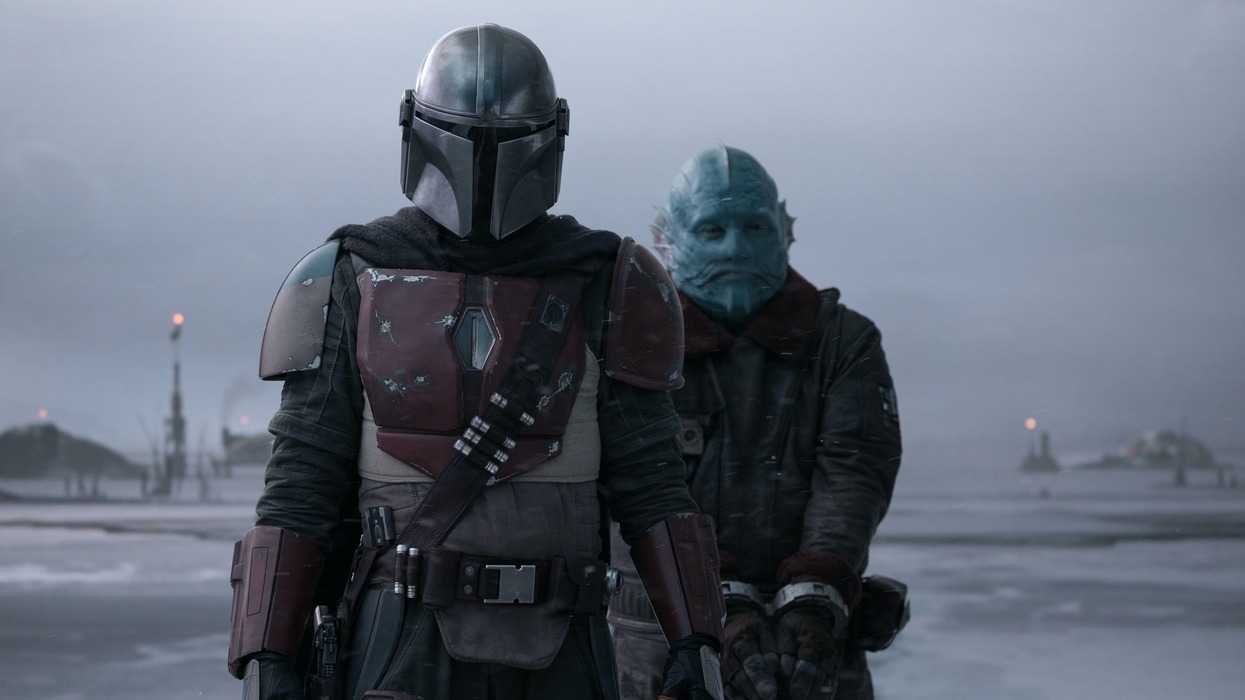
Din (Pedro Pascal) and the entire covert echo it back in unison, cementing the line as an integral part of the show. From this point on, every life or death choice is closed with the same powerful four words.
In The Mandalorian, these four words are sworn by. They are absolute and unbreakable. A warrior code akin to a religious seal. They aren’t shouted from the rooftops and shoved in our faces. They are uttered quietly, repeated respectfully, and with meaning.
The line serves as a stark reminder of what it means to be Mandalorian, which isn’t just about the guns or the armor one wears. It is about choosing to follow a path that cannot be forced upon you.
The Power of Four Words
Everyone remembers “May the force be with you.” “This is the way” is nothing like that. It’s different. Here’s why.
“This is the way” does not attempt to be poetic. It does not preach or emphasize. It just states.
It states in a simplistic manner that encapsulates an idea, a culture, and the unbreakability of an oath that binds the Mandalore together.
In today’s world, we are always looking for answers. But does this line offer one? Not really. It offers consent and authorisation – not because one should try and do something, but because one must. One must simply so that they continue to engage in a way of life and its principles.
The line, short as it may be, is high on the defiance factor. But the defiance at its core is supported by a strong sense of purpose and meaning. It is the verbal equivalent of tightening your armor and stepping back into the battlefield.
These four words are more about purpose than loudness or the assertiveness of their expression. It is a simplistic but powerful encapsulation of the Mandalorian way of life, and that is why it transcended the screen, entered pop culture, and our way of life, too.
What Writers Can Learn About Repetition And Quietness From “This Is The Way”
 The Mandalorian (2019-)Credit: Disney+
The thought of repeating a singular line of dialogue multiple times during the course of a TV show isn’t a very enjoyable one. But The Mandalorian proved to be a refreshing exception.
When four words become ingrained in the veins of a storyline, they feel more like heartbeats and less like words. They carry the story forward and keep its heart beating. Most blockbusters yearn for spotlight moments to squeeze in their best dialogue. Not The Mandalorian. Its blockbuster line is repeated multiple times with quietness, caution, and purpose, never losing its effectiveness.
The writers of The Mandalorian (Creator Jon Favreau & others) treat “this is the way” like background breathing. It’s the show’s spine, which runs through its entirety and holds it together. As writers, we are often afraid of repetition because it is looked down upon. It also sometimes makes us feel like, “Oh, come on, I can come up with something else.” But often, it isn’t about finding something else. It’s about using what you have, again and again, better and better.
Obviously, this cannot be applied to every story. Nothing can. But The Mandalorian’s world submits itself to this repetition and even demands it. The line creates a consistency that defines what we are watching and keeps us in the story’s universe, constantly reinforcing the “way of the Mandalore.”
The repetition of this line, especially at meaningful moments in the story, feels sacred to the characters who repeat it. But this isn’t just because of the repetition. It’s also because of the quietness with which these words are said. It is this quietness that allows the audience to fill the gaps with their own understanding of the story.
Audiences find consistency and rhythm in the repetitiveness and the quietness alike. It increases their association with the characters and builds a lasting bond of familiarity between them.
The Words That Outlived The Creed
 The Mandalorian (2019-)Credit: Disney+
Mandalorians fought over what “the way” even meant anymore. As the story moves forward, the creed gets fractured and messy. It demanded that you never remove your helmet, swear loyalty to the faction, and follow rules that were carved in stone centuries ago. By season 3, the rules were debated over and rewritten. But the words walked away unscathed.
The words represented an idea, an identity, a unifying thought that held meaning, even when all hell broke loose. They gave characters assurance, acceptance, and resolve, sometimes all at once. No sugar-coating, no promise that everything would be fine. A calm, unforgettable declaration about the chosen path.
And then, they transcended the screen and entered our world. No explanation needed, just “this is the way”. A quiet, humble, and at times humorous way of saying “I am walking my path!”
Final Thoughts
Great dialogue stays on screen and off it. In this case, “this is the way” belongs to the Mandalore, to Disney, but also to us, the viewers, who love it, who own it, and who say it each time with our own meaning attached to it.
These four words are a reminder to all of us: keep going, because this is the way.
- From 'Alien' to 'Blade Runner': 3 Sci-Fi Aesthetics and How to Create ... ›
- The 10 Best Star Wars TV Characters | No Film School ›
- Is 'The Mandalorian' a Western or a Samurai Show? | No Film School ›
- How Cutting-Edge ILM Technology Brought 'The Mandalorian' to ... ›
- More Than a Movie Quote: How “May The Force Be With You” Became A Cultural Phenomenon ›
- The Single Most Important Choice in 'The Mandalorian' Is Grogu Being a Puppet, Not CGI ›