It’s not too often in Hollywood that we see a film that affects not only cinema as an art form but the entire culture. Robert Mulligan’s To Kill a Mockingbird, based on Harper Lee’s best-selling novel, did exactly that
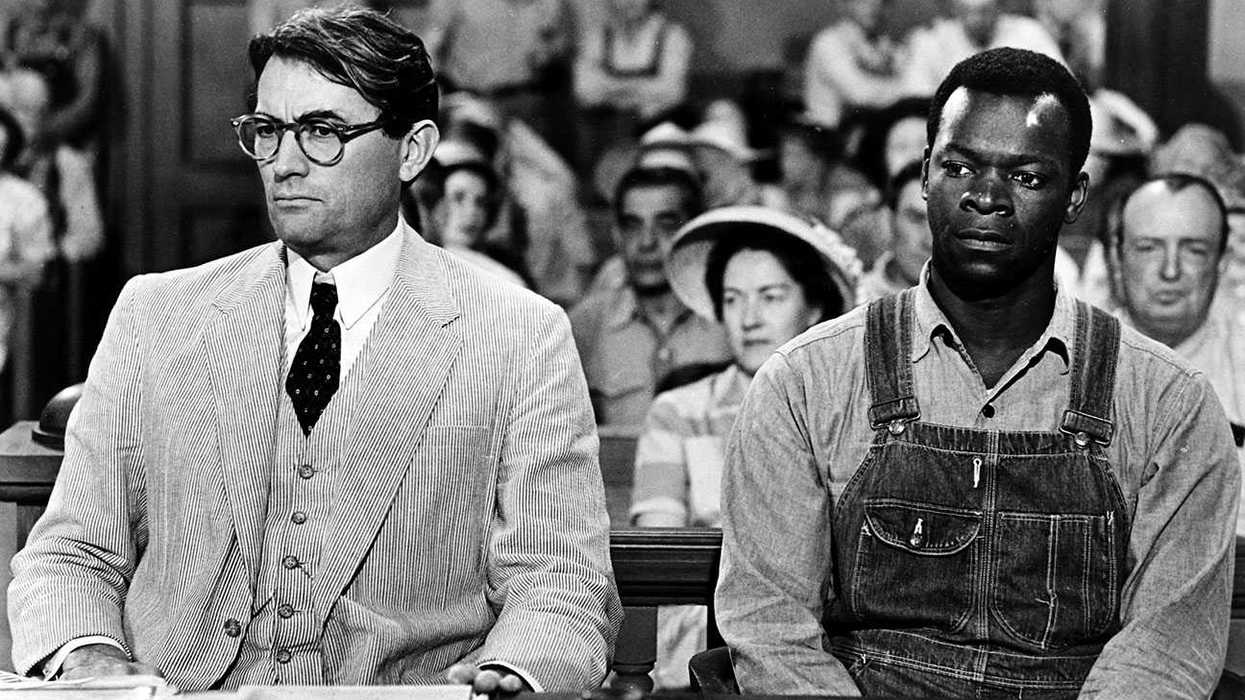
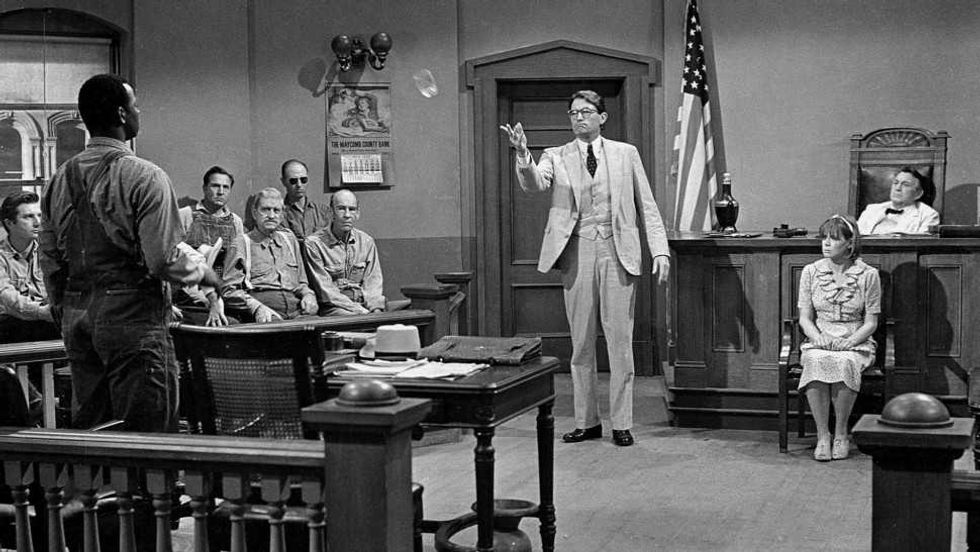
“All men are created equal.” These are the words that echoed within the courtroom proceedings when Atticus Finch (Gregory Peck) decided to give it all to defend Tom Robinson (Brock Peters) in his closing statement. For those who haven’t seen this quintessential American classic, spoiler alert!
Even though Finch’s speech couldn’t dismantle the deeply rooted hatred towards African Americans in his small southern town, he deserved two Oscars—one for his acting (which he received) and one for the speech.
Let’s break down the most iconic monologue in movie history, but start with the story.
To Kill a Mockingbird (1962)
 'To Kill a Mockingbird' (1962)Credit: Universal Pictures
Story
Set in the fictional town of Maycomb, Alabama, during the Great Depression, the movie is told through the naïve eyes of Jean Louise “Scout” Finch (Mary Badham). The central figure is her father, Atticus Finch, played by Gregory Peck, who won an Academy Award and a Golden Globe for his performance.
Atticus raises his children to be empathetic and just. He notably tells them that it is “a sin to kill a mockingbird,” implying that birds are innocent and harmless.
When Tom Robinson (Brock Peters), one of the town’s Black residents, is falsely accused of raping Mayella Ewell, a white woman, Atticus agrees to defend him in court despite the community’s efforts at mob justice. In court, Atticus presents a defense that gives a more plausible interpretation of the evidence, suggesting that Mayella was attacked by her father, Bob Ewell (James Anderson). But even after the powerful concluding statement from Atticus, Tom is convicted and is later killed while trying to escape custody.
Later in the movie, notorious Bob Ewell attacks Jem (Philip Alford) and Scout Finch for revenge, but Boo Radley (Robert Duvall), a misunderstood reclusive neighbor, intervenes and kills Bob Ewell. But Sheriff Heck Tate (Frank Overton) decides that it’s better to say Bob Ewell fell on his own knife. Scout agrees, suggesting that to do otherwise would be “sort of like shootin’ a mockingbird.”
A Monologue for Ages
The importance of this scene can’t be overstated. It shows the most courageous action a person can take. I believe even Atticus knows that winning this case would be no less than a miracle, yet he does everything to try.
A very interesting fact is that someone really tried it—Amasa Coleman Lee, a lawyer in Monroeville, the father of Harper Lee, defended a Black man in 1923. Harper Lee is the author of the novel on which the movie is based.
Moreover, Lee’s hometown, Monroeville, was her template for the fictitious town of Maycomb, where the story takes place. And in the courtroom, Harper represents the same girl who watched her father try to separate truth from prejudices, over and over.
This monologue is important for us all, as there are not many film scenes that portray the cold-blooded manner of the Old South against African Americans more forcefully than this one. And Atticus’s speech strategically dismantles that very idea.
Gregory Peck’s Impressive Performance
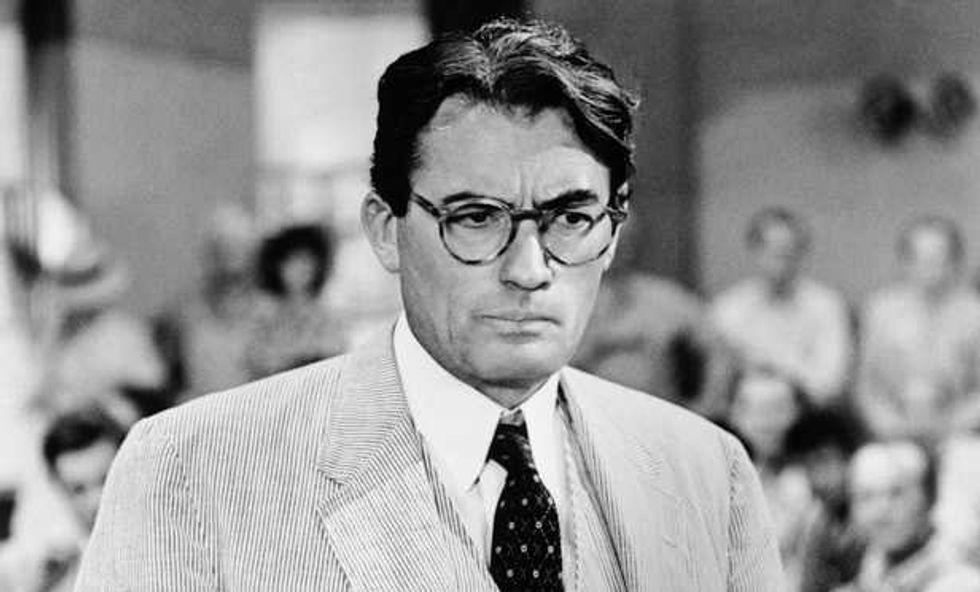
While defending Tom Robinson, Peck’s words sound so authentic that one can almost feel he really is defending someone, not just acting it out.
The nuance of nodding, which he added to his speech, is so well timed whenever he speaks of the compromised system. It psychologically conveys to us that Atticus’s character knows he is right, adding tremendous confidence and weight to his sentences.
His expressions and hand-pointing gestures, along with lifting his voice at exactly the right moments, tell you that he practiced it with all his heart. One example of his dedication to the role is that he actually visited the real Atticus—Amasa Lee—when he was 82 years old. The man literally gave his watch and chain to Peck. At that point, nothing could have stopped Peck from delivering a performance of his lifetime.
Powerful Words of the Powerful Speech
 'To Kill a Mockingbird' (1962)Credit: Universal Pictures
Although Gregory Peck’s performance influenced the scene immensely, more than half the credit belongs to Harper Lee’s Pulitzer Prize-winning work, To Kill a Mockingbird, and to an excellent adapted script by screenwriter Horton Foote. The Academy acknowledged this by awarding him Best Adapted Screenplay at the 1963 ceremony.
Important Elements of the Iconic Speech
In the latter part of his speech to defend Tom Robinson, Atticus dismantles the misuse of “All men are created equal” by pointing out the reasons why—on the basis of intelligence, opportunities, social well-being, and wealth.
“Now, gentlemen, in this country, our courts are the great levelers. In our courts, all men are created equal.”
He rhetorically acknowledges the reality of inequality outside the courtroom walls, and then doubles down on its legal obligation inside the house of justice.
Atticus Finch knows that direct facts are not enough to overcome people’s prejudices. So, by reframing the meaning of equality, he appeals to the jury’s conscience and requests them to do the right thing. His words mean that there is only one place in America where even a stupid man is equal to Einstein, or a poor person to the rich—the courts of law.
The Long, One-Take
Director Robert Mulligan asked his camera operator, Russell Harlan, to hold the camera on Gregory Peck with long, uninterrupted takes, which makes his performance look natural and provides gravity to his words. In addition, Peck’s use of silence between his lines as he says truth to a corrupt system without screaming lets us absorb every word he says.
Summing It Up
In the end, Atticus Finch is unable to help free Tom Robinson from a case that seems already decided in the eyes of the people and the jury. But he gives hope. He sets an example that justice is worth fighting for.
- What Are the Best Villain Monologues? ›
- Did You Know Tom Cruise Actually Wrote That 'Magnolia' Monologue? ›
- Breaking Down Red’s Iconic “Institutionalized” Monologue in ‘The Shawshank Redemption’ ›
- What Is a Monologue? Types with Definitions and Examples ›
- The 25 Best Movie Monologues ›
- When Courtroom Dramas Dominated Hollywood | No Film School ›