Breaking Down Red’s Iconic “Institutionalized” Monologue in ‘The Shawshank Redemption’
Let’s analyze the terrifying system that shaped Brooks’ fate.
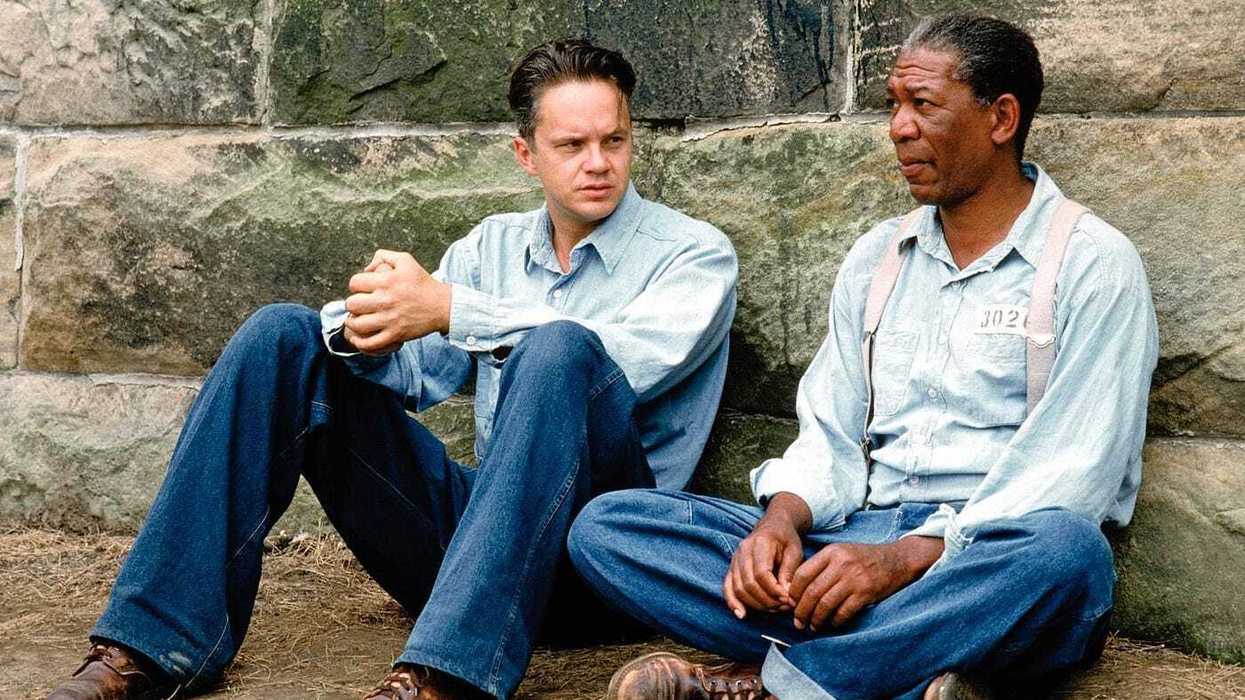
'The Shawshank Redemption' (1994)
In Frank Darabont’s 1994 classic, The Shawshank Redemption, one of the finest moments reframes our entire understanding of prison life. Red’s unforgettable speech about how Brooks became “institutionalized” carries tremendous emotional weight because it calmly elucidates what being confined to a prison for fifty years does to a man.
The monologue is one of the poetic high points of the film, which is far from being short on moments like these. However, what makes this particular one so special is how it masterfully shifts our perspective toward a prisoner’s psychological trauma.
While we often consider freedom to be the ultimate goal for every prisoner, this single moment has the power to make us rethink the hypothesis and look deeper into how different people want different things.
So, why does Brooks fear freedom? What can this monologue teach us about character perspective?
Let’s jump right in and explore.
Why Brooks Fears Freedom
When Brooks Hatlen (James Whitmore) finds out that he is paroled, his reaction is perhaps contrary to what any of us would have imagined. Unlike most other inmates in the movie, who we would presume want to get out of prison as soon as possible (such as Andy Dufresne and Red), Brooks is terrified of freedom. Let’s try to understand this through Red’s (Morgan Freeman) unforgettable monologue.
Red starts by saying, “The man’s been in here fifty years. Fifty years!”
These words quickly put Brooks’ situation into a tighter, slightly varied perspective. For Brooks, prison life is, well, life. He slowly highlights the difference between short and long-term incarceration, which is at the crux of Brooks’ fear of freedom.
Red goes on to say, “These walls are funny. First, you hate ‘em. Then you get used to ‘em. Enough time passes, and you get so you depend on them. That’s institutionalized.”
With these lines, Red’s empathy for Brooks is clear, but his reasoning is even more evident. He brilliantly draws out Brooks’ life trajectory. He talks about how, over fifty years, a prisoner goes from despising their condition to depending on it. This isn’t a mere transition by chance; it is how the system works and goes on to define a person.
The most baffling achievement of this monologue is its inherent ability to reframe our entire understanding of freedom. When the movie begins, as an audience, we are most likely to empathize with Andy Dufresne (Tim Robbins), and we see freedom as the absolute goal for him and, later, Red and other characters. Brooks’ life story almost comes as a surprise, but it is critical to the film’s core theme simply because it presents freedom as something that isn’t always a desired goal but also a burden.
How The Monologue Changes Our Perception Of Prison Life
Red’s words brilliantly flip the script on what prison actually does to a human being. While the majority of the film presents bars as punishment and something to fight against, Red’s monologue about Brooks reveals the slow, insidious flip.
These words are timed to perfection. At a point in the film when we are likely focused on how Andy and Red would find their way out of prison, the monologue masterfully makes us question the very nature of freedom. While we have already discussed the “institutionalized” aspect of Red’s words, now let’s go a bit further.
“They send you here for life. That’s exactly what they take. The part that counts anyway.”
With this line, Red speaks about the irreversible nature of the psychological damage prison does to a person. He questions what’s left of a human being when they are institutionalized for fifty years and then have to live life outside, in the real world, where little is the same as it used to be.
Red brings our attention to the idea of rehabilitation, which is often not a very sizable part of a “prison story”. By using a single example of Brooks, the film carefully paints a picture of how prison doesn’t just steal a person’s life in years but also their ability to function outside it.
Why The Scene Is A Masterclass In Perspective
Red’s famous “institutionalized” monologue in The Shawshank Redemption is a masterclass in shifting audience perspective at a time when they least expect it. Great films never appear one-dimensional. Darabont’s film is a fabulous example of this.
Instead of only focusing on Dufresne being wrongfully accused and wanting out, Red’s monologue on Brooks offers a fascinating, unexpected, and deeply philosophical take on prison life.
It shifts our perspective from viewing Brooks as just an old man who has served his time to a victim who is trapped by the very system that was designed to “correct” him. Red’s monologue isn’t just about sentimentality; it is a warning about how mental trauma could even arise from the idea of being free. What does freedom mean to a man who has been part of a system for fifty years? Red’s monologue, to this day, is one of the finest examples of a powerful yet unexpected perspective shift in a classic movie.
Summing It Up
Red’s monologue helps solidify The Shawshank Redemption’s emotional core. Through Morgan Freeman’s iconic and measured narration, it flips the script on what freedom really is and how freedom means different things to different people.
Which is your favorite quote by Red? Tell us in the comments.
- The 'Shawshank Redemption' Line That Changed How We Think About Hope ›
- The Secret Hero Blueprint Inside 'The Shawshank Redemption' ›
- How ‘The Shawshank Redemption’ Quietly Set Up Its Ending Long Before the Escape ›
- What is Poetic Justice? When Storytelling Lets Fate Write the Ending | No Film School ›
- “Hope Is a Dangerous Thing”: The Soul of 'The Shawshank Redemption' in American Cinema | No Film School ›
- Things That Might Spoil ‘The Shawshank Redemption’ Just a Little Bit for You | No Film School ›
- This Iconic Monologue From To Kill a Mockingbird Shook the Courtroom ›
- 7 Iconic Samuel L. Jackson Lines That Defined His Career, Ranked ›
- Shawshank's Caged Bird Speech ›