How do you film a scripted narrative in the middle of a massive, multi-day music festival featuring tens of thousands of hyped fans, unpredictable weather, and dynamic concert lighting?
If you’re director Jeremy Garelick and cinematographer Bradford Lipson, you capture the live environment and rebuild it on an LED volume stage.
In this exclusive interview for No Film School, DP Bradford Lipson breaks down his experience shooting Rolling Loud. We get the inside track on spotting early virtual production tech at NAB to matching real-world rain and Travis Scott stage lighting on the volume stage.
Lipson reveals the technical and artistic choices behind blending uncontrolled, chaotic live festival energy with controlled, character-focused storytelling.
Let's dive in.
- YouTubewww.youtube.com
NFS: You were involved with Rolling Loud very early on, even before the film had come together. What did you see in the project initially that made you want to explore virtual production with Jeremy Garelick?
Bradford Lipson: Jeremy and I have a long history together, and one of the things I love about working with him is that he is never afraid to think big. He sent me the script while I was attending NAB in Las Vegas. I read it one evening, and two sequences immediately stood out: the Ferris wheel scene and the finale, in which Owen Wilson’s character performs onstage with Travis Scott.
The next day, while walking the convention floor, I happened upon the Kino Flo booth. Frieder Hochheim and his team had created a virtual-production demonstration featuring, of all things, a Ferris wheel, along with Kino Flo’s new Mimik lights. The timing was uncanny. I had just read a script with a major Ferris wheel sequence, and suddenly I was standing in front of a technology that offered a practical way to accomplish it.
I shot a few clips of the demonstration and sent them to Jeremy. I told him I thought we could use this approach not only for the Ferris wheel, but also for other parts of the film, including the finale. It could give us the enormous scale and energy of Rolling Loud while still providing the control we would need for the actors, the comedy, and the storytelling.
Jeremy immediately understood the potential. We both knew we could never fully recreate Rolling Loud on a conventional stage. We had to capture the real festival as it happened and then find a way to extend that world around our actors.
That led to extensive testing. We filmed crowds and performances at Rolling Loud Los Angeles using camera arrays provided by Sam Nicholson and Stargate Studios. Our VFX supervisor, Matthew Whelan, had carefully broken down the script to identify every sequence that might benefit from virtual production. We then tested the resulting plates on several volume stages and quickly realized that achieving the necessary scale would require an exceptionally large LED volume.
For me, the attraction was never the technology for its own sake. It was the opportunity to combine something completely authentic, including the real festival, crowds, performances, and atmosphere, with a controlled environment in which Jeremy could shape the performances and tell the story. We weren’t trying to invent the world of Rolling Loud. We were capturing the real world and finding a way to continue filming within it.
NFS: You were working across a lot of different shooting environments, from the live festival to controlled sets and virtual production. What did you do to make sure the movie maintained a consistent visual identity throughout?
BL: The biggest priority was establishing a visual language that could survive across all those different environments. The actual festival was uncontrolled, fast, and chaotic. Our practical
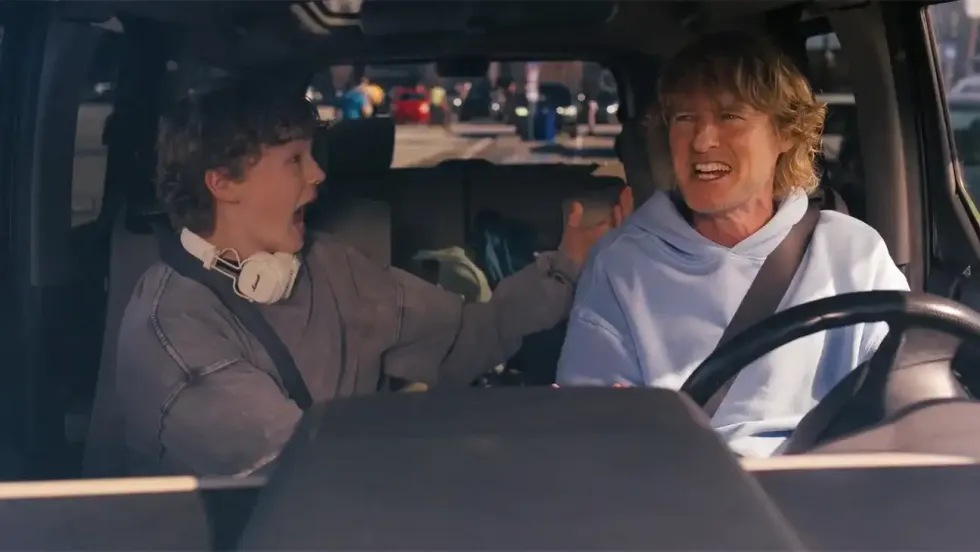
Rolling Loud festival grounds set, built in a parking lot near the volume stage, gave us more control for the scenes taking place throughout the festival. The volume served a different purpose. We used it primarily to extend the scale of the world during the concert sequences, when our actors needed to appear surrounded by tens of thousands of people watching a performance onstage. The danger was that the film could begin to feel as though it had been photographed three different ways.
We shot primarily with Sony VENICE 2 cameras and Zeiss Supreme Prime Radiance lenses. That combination gave us a consistent foundation and enough latitude to handle everything from the extreme contrast and rapidly changing light at the festival to the much more controlled conditions on the volume.
 'Rolling Loud'Credit: Ketchup Entertainment
But consistency is about much more than using the same camera and lenses. We paid close attention to lens choice, camera height, movement, contrast, color, direction of light, and the proximity of the camera to the actors. Whenever we moved onto the volume, I didn’t want the photography to suddenly become too perfect. My camera operators, Chris McGuire and Paul Krumper, did a fantastic job helping to maintain this consistency. The real festival had an immediacy and a certain amount of beautiful visual chaos, so we allowed that energy to carry over into the controlled work.
We also used tools such as the DJI Ronin 4D and DJI Inspire 3 to create movement and perspectives that belonged to the same overall visual world. The goal was never to make every environment look identical. It was to make them all feel as though they belonged in the same movie.
NFS: The sequence where Owen Wilson’s character gets onstage with Travis Scott combines footage captured at the actual festival with material shot later on the volume. What were some of the challenges of recreating that experience after the fact, and how did you approach matching the two?
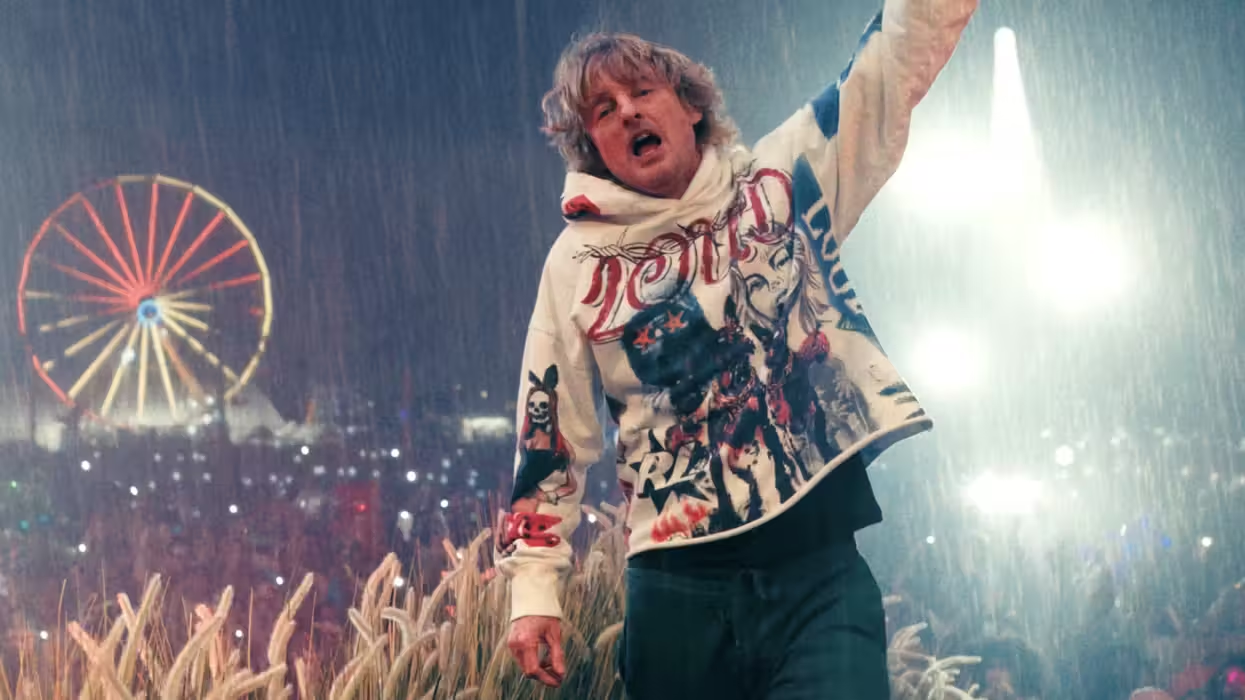
BL: The obvious challenge was scale. At the real festival, Travis Scott was performing in front of an enormous crowd, surrounded by massive video screens, concert lighting, haze, and an energy that was completely genuine. Later, we had to place Owen back into that experience and make the audience believe he was standing on the same stage at the same moment.
Matching the background imagery was only one part of it. We also had to match the perspective, lensing, camera position, movement, interactive light, atmosphere, and constantly shifting colors of the concert lighting. If any of those elements felt too clean or controlled, the illusion would begin to fall apart.
We had a phenomenal art department. Our production designer, Katherin Eder, and her team did an incredible job recreating a portion of the stage from the Rolling Loud festival. That physical set was essential to selling the illusion because it gave Owen something tangible to interact with and gave us physical surfaces to light. My gaffer, Jon Ladd, and his team also did a fantastic job creating the interactive lighting and integrating it with the light generated by the volume plates.
While we were filming Owen onstage in Miami, it began to rain. Rather than avoid it, Jeremy immediately wanted to embrace it and make it part of the performance. It added another unpredictable, visceral element to the scene, but it also meant that when we later photographed Owen on the volume stage, we had to recreate the rain and integrate it convincingly into the virtual-production environment.
We had to consider not only the rain itself, but how the concert lighting illuminated it, how it moved through the atmosphere, and how it affected the surfaces and overall texture of the image. The footage we captured at the festival gave us the visual information we needed; the Lux Stage at Trilith Studio allowed us to place that world around Owen. We primarily used Creamsource Vortex 8 fixtures, pixel-mapping them to extend and reinforce the lighting coming from the LED environment so it played naturally across Owen, the rain, and the physical stage elements. At various times for coverage, we also used Kino Flo Mimik's that were pixel-mapped.
One of the most important things was embracing the imperfections of live-event photography. Concert lighting doesn’t politely wait for an actor to hit a mark. It changes rapidly, sometimes unpredictably, and occasionally overwhelms the image. The same was true of the rain. It was an unplanned element that became part of the visual language of the sequence.
We didn’t want to smooth any of that away on the volume. We wanted the controlled photography to inherit the volatility and authenticity of what we had captured at the real festival.
NFS: The film shifts between intimate moments with the characters and the energy of a massive music festival. How did you approach those changes in scale visually?
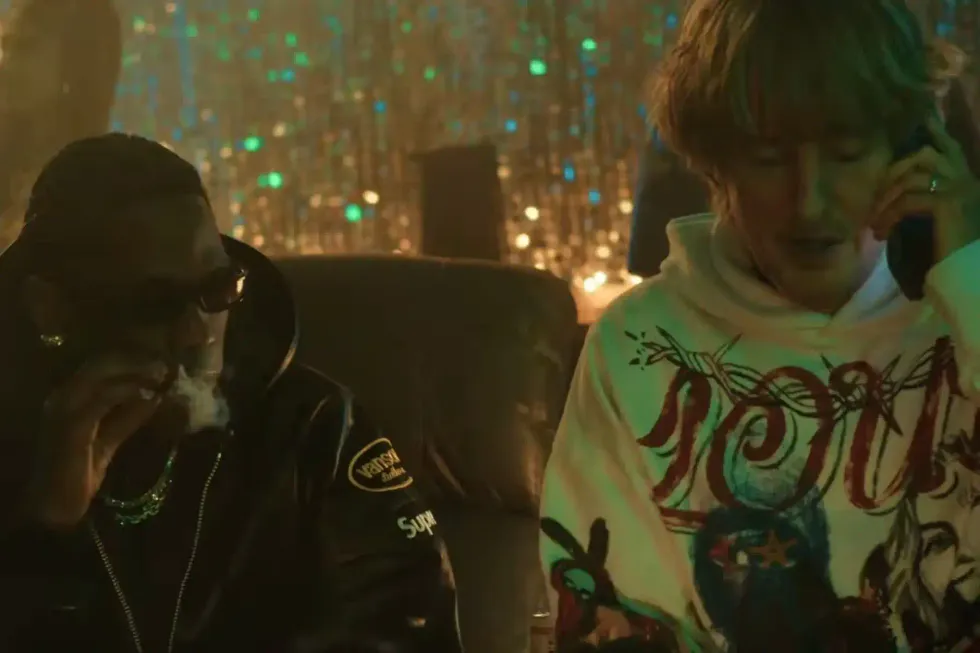
BL: I wanted the audience to experience the festival through the characters rather than simply watch coverage of a large event. The wide shots were important because they established the enormous scale and spectacle of Rolling Loud, but the movie ultimately lives with Owen’s character and his relationship with his son.
For the more intimate scenes, we could bring the camera physically and emotionally closer. The compositions became more selective, the movement could settle down, and we could isolate the characters from the activity surrounding them. Even in the middle of this overwhelming festival, I wanted to find small, human moments.
Then, when we opened the movie back up, the scale had greater impact. We could move from a face, a glance, or a quiet exchange to thousands of people, enormous stages, screens, lights, and pyrotechnics. That contrast became part of the storytelling.
Comedy also benefits from that flexibility. Sometimes the funniest place for the camera is very close to a performer, where you can see every reaction. At other times, the comedy comes from placing a character in a massive environment and allowing the audience to see just how out of place, or completely overwhelmed, he is.
 'Rolling Loud'Credit: Ketchup Entertainment
NFS: With only three days at the actual festival, you had a very limited window to capture everything you needed. How did that constraint affect the way you worked on the ground, and were there any moments where you had to improvise or rethink your approach?
BL: Three days sounds like a reasonable amount of time until you consider the size of the festival, the number of stages, the crowds, the constantly changing performances, and the reality that nothing stops for a movie crew. We couldn’t ask tens of thousands of people to reset.
Preparation was essential. We needed a clear understanding of what was story-specific, what we needed as environmental material, and what would become valuable for the virtual-production work later. At the same time, we had to remain flexible because the most extraordinary images at a live festival are often the ones you could never put on a shot list.
I can’t thank our VFX supervisor, Matthew Whelan, enough for the enormous amount of work he put into the detailed breakdowns, including exactly where the camera arrays needed to be placed and at what time. We were also fortunate to have the expertise of Sam Nicholson, owner of Stargate Studios, who oversaw the four camera-array units used to capture the plates for the volume. Between Matthew and Sam, I knew that side of the production was in exceptionally good hands.
For our first unit in Miami, we used a variety of camera platforms so we could move quickly and capture the event at different scales. The VENICE 2 gave us our primary cinematic foundation, while the Ronin 4D and Inspire 3 allowed us to work even more fluidly and capture perspectives that would have been difficult to achieve with conventional setups. After the first unit completed the portion of the Ferris wheel sequence taking place at its base, our second unit took over to capture the practical stunt work of Owen Wilson’s character jumping from one pod to another. Our stunt coordinator, Kelly Phelan, directed the second unit and did a fantastic job, giving us a wealth of material to integrate when we later shot the bulk of the sequence on the volume stage
There was a constant process of reassessing priorities. A performer’s schedule might change, access could suddenly disappear, the light could become extraordinary, or something completely unexpected could happen in the crowd. Rapid changes in weather were also a factor. You had to recognize those moments immediately and be willing to depart from the plan long enough to capture them.
My years working in television were extremely helpful. Television teaches you how to make decisions quickly without lowering your standards. At Rolling Loud, there wasn’t time to debate every possibility. You made the best creative decision you could, communicated it clearly, and moved forward.
NFS: Was there a particular shot or sequence on Rolling Loud that challenged you in an unexpected way but ultimately became especially rewarding? What made it stand out to you?
BL: The sequence with Owen and Travis Scott is the one that stands out because it represents everything the production was attempting to accomplish. It combines the unpredictability of a real festival, a major live performance, comedy, character storytelling, and virtual production.
The technical challenge was significant, but the real accomplishment was making the technology disappear. If the audience is thinking about LED walls, lighting cues, or how the backgrounds were captured, then we haven’t completely done our job. They should simply believe that Owen is standing on that stage in front of an enormous crowd.
It was especially rewarding because the sequence began long before we stepped onto the volume. It started with the choices we made at the festival: where we placed the cameras, which lenses we used, what pieces of the environment we captured and how carefully we observed the real lighting. Even an unplanned moment like the rain ultimately became part of what we needed to reproduce. All of those decisions and observations came back months later and became essential pieces of the finished sequence.
For me, it reflects what is most exciting about virtual production when it is used well. It isn’t there to replace reality. It allows you to capture something authentic and then continue telling the story within that world in a way that otherwise might not have been possible.